
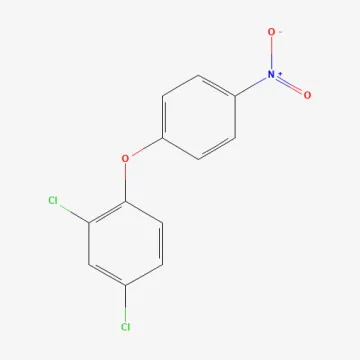
Nitrophen
Description
Mode of action
Nitrafen is a group of pesticides based on nitrophenols, which are derivatives of coal tar. It acts as a contact-type agent providing strong insecticidal, fungicidal, and herbicidal effects on agricultural crops.
The mechanism of action involves chemical denaturing of proteins. Upon contact with the parasite's surface, the active ingredients coagulate the protoplasm of the cells, causing rapid death of the pest or fungal spore.
It is specifically designed to penetrate the dense protective coatings of insect eggs and dormant fungal mycelium, making it highly effective for early-season eradication of pests.
The substance does not have systemic properties; it remains on the surface where it was applied. Therefore, total coverage of the plant bark and stems is essential for successful pest control.
Nitrafen is highly reactive and works efficiently at lower temperatures, which is why it is used during the dormant phase when the plants are less sensitive to external chemical applications.
What it targets
The Nitrafen group is primarily used against overwintering stages of various pests. It targets the eggs of aphids, suckers, scales, and mites that survive the winter in the crevices of tree bark.
As a fungicide, it is effective against fungal pathogens causing diseases like apple scab, powdery mildew, and various spots. It destroys the mycelium or spores present on the wood before the growing season begins.
The preparation also exhibits herbicidal properties against dormant weed seeds or very early weed growth in orchards, helping to reduce the overall weed pressure in the spring.
Using this group of substances helps significantly reduce the initial infection and pest load, leading to a healthier orchard environment throughout the season.
- Overwintering insect eggs (aphids, suckers).
- Scale insect larvae.
- Dormant mycelium of fungal diseases.
- Overwintering stages of various mites.
Rates and timing
Application is strictly limited to the deep dormancy stage of plants. It must be applied in early spring before buds begin to swell or in late autumn after leaf fall.
The standard solution concentration ranges from 2% to 3% (200–300 g per 10 liters of water), depending on the severity of the infestation and the specific target species.
Thorough spraying is required to cover all bark surfaces. Overdosing can lead to severe phytotoxicity and damage to the wood, so precise measurements are critical.
Do not apply this product more than once per season, as it can be harmful to the plant if overused. Always follow manufacturer's guidelines regarding local application frequency.
Environmental conditions are key; avoid application if frost is expected immediately after spraying, as this may impair the plant's recovery from winter stress.
Restrictions
The main limitation is high phytotoxicity. Nitrafen must never be applied to green, growing plants, as it will cause immediate tissue burns and plant death.
The substance is highly toxic to humans and animals. Appropriate personal protective equipment (respirators, gloves, goggles) is mandatory when handling the chemical.
Nitrafen is generally incompatible with other pesticides. Mixing it with other products is strongly discouraged to avoid dangerous chemical reactions or plant injury.
Do not allow the substance to enter water bodies or drainage systems, as it is highly toxic to aquatic life, including fish and various aquatic microorganisms.
Due to environmental persistence and toxicity issues, the use of Nitrafen is strictly regulated or banned in many regions, encouraging the transition to safer integrated pest management (IPM) alternatives.
Status in the European Union
Not approved in the EU
- CAS number
- 1836-75-5
EU status is for reference only and does not replace national registration in your country.