

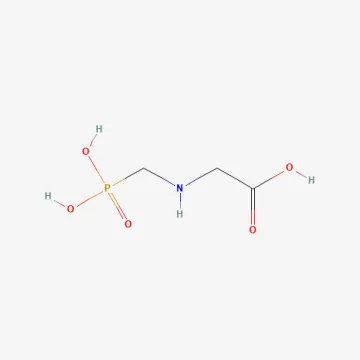
Active ingredient
Especially harmful
Glyphosate potassium salt
Description
Mode of action
Glyphosate potassium salt is a systemic, non-selective herbicide belonging to the phosphonate chemical class. It is widely used in agriculture to control a broad spectrum of annual and perennial weed species.
The substance acts by entering the plant through leaves and green stems. The potassium salt formulation is known for its high solubility, allowing for rapid absorption and translocation throughout the entire plant system.
The biochemical mode of action is the inhibition of the enzyme 5-enolpyruvylshikimate-3-phosphate synthase (EPSPS). This enzyme is crucial for the synthesis of aromatic amino acids essential for protein production.
By blocking this specific enzyme pathway, the herbicide effectively shuts down the plant's metabolic processes. This leads to the yellowing and subsequent death of the entire plant, including the underground rhizomes and roots.
Glyphosate potassium salt has no residual activity in the soil. Upon contact with the earth, it binds tightly to soil particles and is degraded by microbial activity into naturally occurring substances.
What it targets
This herbicide is effective against a vast range of weeds, including both grassy and broad-leaved species that compete with crops for nutrients, water, and sunlight.
It is specifically valued for its ability to eradicate tough perennial weeds like quackgrass, field bindweed, and Canada thistle, which often require systemic translocation to be fully destroyed.
It is also commonly used as a pre-harvest desiccant for crops such as wheat, soy, and rapeseed, facilitating faster and more uniform maturation for harvesting.
- Annual grasses and broadleaf weeds.
- Perennial rhizomatous grasses.
- Woody vegetation and scrub for land reclamation.
By providing a "clean slate" before sowing, the use of glyphosate potassium salt helps minimize early-season weed competition, thereby improving overall crop establishment and yield potential.
Rates and timing
Application rates vary depending on the target weed species, the density of the infestation, and the growth stage of the weeds. Typical spray volumes range from 100 to 300 liters of water per hectare.
Optimal results are achieved when weeds are in an active growth stage, ensuring efficient systemic translocation of the herbicide to the root zones.
For pre-harvest desiccation, applications are usually scheduled 10–14 days before harvest, when grain moisture levels have dropped to an appropriate threshold.
Environmental conditions are critical: applications should be made in temperatures ranging from 12°C to 25°C. Avoid application during drought conditions when weeds are physiologically stressed.
It is recommended to wait at least 5–7 days after application before engaging in tillage or mechanical soil cultivation to allow for the complete translocation of the chemical.
Restrictions
Glyphosate potassium salt is a non-selective herbicide. Any contact with the green parts of desirable crops will result in plant injury or death, so precision spraying is vital.
Users must wear personal protective equipment, including gloves, safety glasses, and protective clothing, to prevent dermal or respiratory exposure during handling and spraying.
Do not apply during high wind conditions to prevent chemical drift to adjacent fields or sensitive non-target vegetation.
Storage must be in a cool, dry, and well-ventilated area, kept out of reach of children and livestock, and separated from fertilizers and seeds to avoid contamination.
The quality of spray water matters; high water hardness can negatively impact the performance of the active ingredient, sometimes necessitating the use of specialized water conditioners.
Regulatory
Status in the European Union
Approved in the EU
- CAS number
- 1071-83-6
- Category (EU)
- HB - Herbicide
- Approved from
- 16.12.2023
- Approval until
- 15.12.2033
- ADI
- 0.5 mg/kg bw/day
- ARfD
- 1.5 mg/kg bw
- AOEL
- 0.1 mg/kg bw/day
Hazard classification (CLP)
Aquatic Chronic 2 - H411Eye Dam. 1 - H318
EU status is for reference only and does not replace national registration in your country.
Content graph
Connections · Glyphosate potassium salt
Most often together:
Marketplace
Products · 9


