

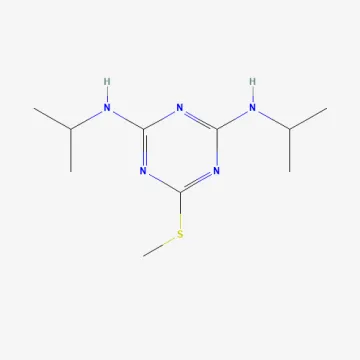
Description
Mode of action
Pre-emergence herbicides are a class of soil-applied pesticides designed to be applied to the soil surface before the target crop emerges. Their primary function is to establish a residual chemical barrier that inhibits the germination and growth of weed seeds.
The mechanism involves the uptake of the active ingredient by the emerging weed's roots or shoots. Once absorbed, the herbicide disrupts critical physiological processes such as photosynthesis, pigment synthesis, or cell division, resulting in the elimination of the weed before it reaches the surface.
These herbicides belong to various chemical classes, each offering unique residual characteristics. They are unified by their application timing and their dependence on soil-applied strategies to create a uniform coverage across the field surface.
Soil moisture is a critical factor for the activation of these chemicals. Adequate moisture ensures the herbicide enters the soil solution, allowing the germinating seeds to absorb the active ingredients effectively. In arid conditions, the performance of these products can be significantly reduced.
These herbicides provide a window of protection, typically ranging from four to eight weeks, which is vital for crop establishment. By reducing early-season competition for nutrients and water, they allow the crop to achieve superior growth rates from the start.
What it targets
This group of herbicides is primarily targeted at annual grass and broadleaf weeds during their germination phase. Common targets include species like pigweed, lambsquarters, foxtail, and various barnyard grasses that compete heavily with agricultural crops.
However, pre-emergence products generally have little to no effect on established perennial weeds or those growing from vegetative structures like rhizomes. Managing perennials requires alternative strategies, often including systemic pre-planting applications.
Rates and timing
Application rates must be adjusted based on soil texture and organic matter content. Soils with higher clay or organic content bind more herbicide molecules, requiring higher application rates to achieve the same efficacy compared to coarse-textured sandy soils.
The timing of application is strictly defined as pre-emergence, meaning it must occur after planting but before the crop breaks the soil surface. Early applications or precise integration with seeding equipment are common practices to maximize efficiency.
Restrictions
The effectiveness depends heavily on the quality of seedbed preparation. A cloddy or residue-heavy surface disrupts the herbicide film, leading to poor weed control in untreated areas and potential crop injury due to concentrated chemical spots.
Post-application soil disturbance, such as harrowing or cultivation, is strongly discouraged as it breaks the protective residual barrier. Furthermore, producers must adhere to strict crop rotation guidelines to prevent the accumulation of persistent residues that could harm subsequent sensitive crops.
Content graph
Connections · Pre-tax
Most often together:
Marketplace
Products · 125

Alfa-Prometrin
Zhejiang Zhongshan Chemical Industry Group Co., Ltd.
Herbicides
1
1
·
3K
23 offers
0.48 €per 1 l
Buy


Sefit
China National Chemical Construction Ningbo Import & Export Co.
Herbicides
0
0
·
1.3K
20 offers
0.24 €per 1 l
Buy


Segment
Три Дельта Компані Інтернешнл, Гонконг, Китай.
Herbicides
0
0
·
898
2 offers
4.44 €per 1 l
Buy


Perun, KS (permethrin, 500 g/l)
Hangzhou Ruijiang Chemical Co., Ltd.
Herbicides
0
0
·
145
6 offers
4.67 €per 1 l
Buy


Raitar k.s.
China Chemical Industrial & Rice Co. Ltd
Herbicides
0
0
·
68
1 offer
523.29 €per pack
Buy


Progard
Ф.Суперус Ко ., Лтд., Гонг-Конг, Шанхай, Китай.
Herbicides
0
0
·
67
2 offers
4.91 €per 1 l
Buy

Positive Plus c.s.
Санрайз Кемікалз Ко. Лтд., Шанхай, Китай
Herbicides
0
0
·
66
7 offers
6.1 €per 1 l
Buy


Promet
Sharda Worldwide Exports Pvt Ltd, Sharda World
Herbicides
0
0
·
64
2 offers
83.03 €per 1 l
Buy


Prometrax 50 g/l
Agan Chemical Manufacturers Ltd., f.
Herbicides
0
0
·
60
2 offers
6.99 €per 1 l
Buy


Paritet
«Нанджин Ессенс Файн-Кемікал Ко. Лтд» (Китай)
Herbicides
0
0
·
58
2 offers
5.57 €per 1 l
Buy


ALPHA-PROMETRIN CS
Ф.Меатон Лімітед, Лондон, Великобританія.
Herbicides
0
0
·
57
2 offers
4.82 €per 1 l
Buy


Gesagard 500 FW EC
Сингента Агро С.А.С.,хутір Рувіллак, Аг-Вів, Франція.
Herbicides
0
0
·
56
4 offers
9.8 €per 1 l
Buy

ALPHA-PROMETRIN K.S.
«Юнісіті Ентерпрайсіс Л.П.», Единбург, Великобританія
Herbicides
0
0
·
56
1 offer
4.52 €per 1 l
Buy

Geso k.s., (Prometrin, 500 g/l)
Jiangsu SevenContinent Green Chemical Co., Ltd.
Herbicides
0
0
·
55
1 offer
93.1 €per pack
Buy

Kapral k.s., (Prometryn, 500 g/l)
Peters & Burg Kft.
Herbicides
0
0
·
55
2 offers
18.11 €per 1 l
Buy

Geso, CS, (Prometryn, 500 g/l)
Jiangsu SevenContinent Green Chemical Co., Ltd.
Herbicides
0
0
·
55
1 offer
4.33 €per 1 l
Buy


Gambit, EC (permethrin, 500 g/l)
ZAT «August-Bel», Republic of Belarus
Herbicides
0
0
·
52
1 offer
15.38 €per 1 l
Buy


Stargesan 500
Фадер Альянс Лтд., Великобританія (Fader Alliance Ltd., England) на заводах Нідерландів, Польщі
Herbicides
0
0
·
50
2 offers
6.37 €per 1 l
Buy
Sofit, KS (permethrin, 500 g/l)
ТОВ «Фабрика агрохімікатів», Черкаси, Україна
Herbicides
0
0
·
50
1 offer
5.71 €per 1 l
Buy


POZITIV Z.P., HERBICIDE (PROMETHRIN, 500 g/kg)
Санрайз Кемікалз Ко. Лтд., Шанхай, Китай
Herbicides
0
0
·
45
4 offers
4.93 €per 1 l
Buy

Kapral, KS (permethrin, 500 g/l)
Zhejiang Zhongshan Chemical Industry Group Co., Ltd.
Herbicides
0
0
·
44
1 offer
0.3 €per 1 l
Buy


Cefalit, KS (permethrin, 500 g/l)
ТОВ «Фабрика агрохімікатів», Черкаси, Україна
Herbicides
0
0
·
36
1 offer
4.92 €per 1 l
Buy

Alfa-Prometrin
«Юнісіті Ентерпрайсіс Л.П.», Единбург, Великобританія
Herbicides
0
0
·
36
1 offer
9.08 €per 1 l
Buy


