
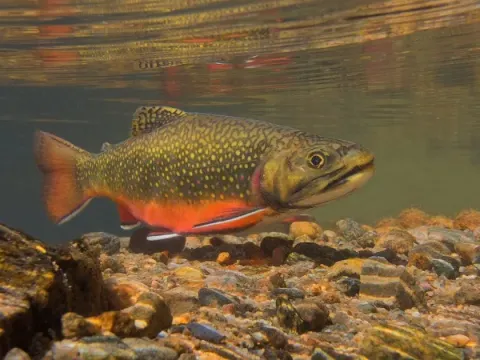
Brook trout
Salvelinus fontinalis
The Brook trout, scientifically known as Salvelinus fontinalis, belongs to the Salmonidae family and the Salmoniformes order.
What the section contains
Brook trout
It is distinguished by its mottled coloration on the back and sides, which includes light spots and vermiculated patterns resembling worms.
The body is typically slender and streamlined, well-adapted for navigating clear, cold running water in mountain streams and springs.
During the breeding season, males develop a deeper, more vibrant red or orange coloration on their bellies, making them quite distinct.
Understanding these morphological characteristics is essential for identifying the species accurately during field surveys near agricultural sites.
Brook trout are primarily aquatic predators and do not directly damage terrestrial agricultural crops, but they impact water-based agricultural systems.
They can outcompete native fish species in irrigation reservoirs and canals, leading to a decline in local biodiversity and ecological health.
The introduction of this species into non-native habitats can destabilize the aquatic food chain, which may affect water quality for irrigation purposes.
In aquaculture environments, Brook trout can disrupt the managed population of other fish species, creating economic risks for pond owners.
Their presence requires careful management to ensure that they do not proliferate into surrounding wetland areas and water delivery infrastructures.
The activity of the Brook trout is heavily dependent on water temperature and seasonal oxygen availability in the water column.
Spawning generally occurs in the autumn months when water temperatures drop, triggering reproductive migrations and territorial behavior.
Spring is a period of peak activity, as the fish feed aggressively after the winter months, utilizing increased flows and nutrient availability.
In summer, when water temperatures rise above 20 degrees Celsius, the species becomes less active, seeking out cold-water refuges.
Monitoring efforts should coincide with these cycles to identify potential breeding populations and manage them effectively.
Evidence of a Brook trout population is typically identified through systematic biological surveys and fish stock assessments.
A noticeable decrease in the population of native smaller fish species often serves as an indicator of Brook trout presence.
Specific behavioral changes in the local ecosystem, such as increased predatory pressure on aquatic invertebrates, can also be observed.
Water quality monitoring may occasionally reflect ecological shifts resulting from changes in the predator-prey dynamics within the pond.
In managed aquaculture sites, missing fry or unusual feeding patterns are key signs that warrant further investigation by fisheries experts.
Preventative measures, such as installing physical barriers on water intake pipes, are the most effective way to stop the spread of the species.
Regulatory compliance regarding the stocking of private ponds is crucial to prevent the accidental introduction of Brook trout into local waterways.
Mechanical removal through controlled fishing efforts is recommended in areas where the species is considered invasive and harmful to native stocks.
Regular ecological monitoring ensures early detection, allowing for management actions to be taken before a population becomes established.
Collaboration with local conservation authorities is essential to balance agricultural water use with the protection of the surrounding aquatic environment.