
Broad mite
Eutetranychus latus
Description
How to identify
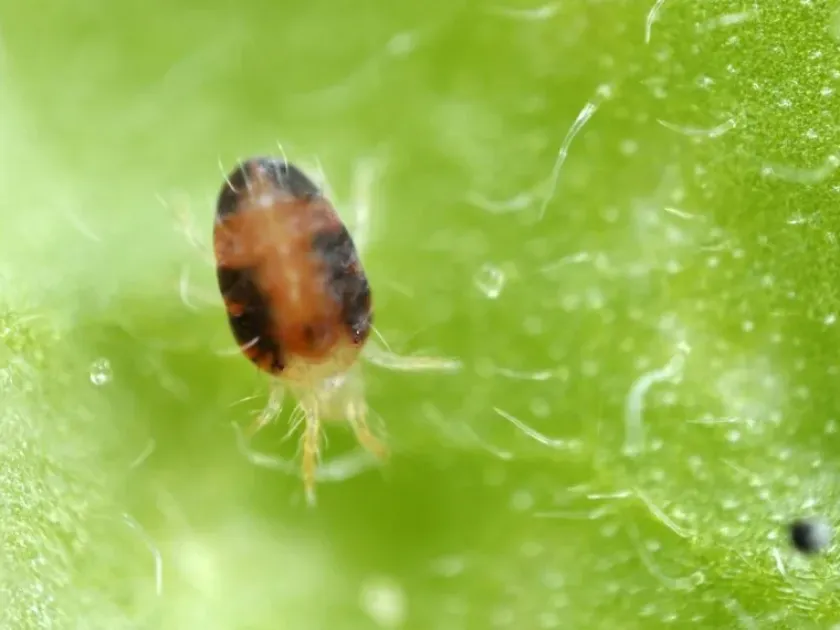
The Broad mite (Polyphagotarsonemus latus) is a microscopic member of the Tarsonemidae family. Unlike web-spinning mites, they are nearly transparent and range from pale yellow to green in color, measuring less than 0.2 mm in length, which makes them invisible to the naked eye.
They are primarily found in protected environments such as greenhouses, where they inhabit the underside of young, succulent leaves, growing tips, and developing flower buds, avoiding direct exposure to light.
What it damages
This species is a significant pest known for its wide host range. It severely impacts crops such as peppers, cucumbers, tomatoes, eggplants, strawberries, and various ornamental plants like azaleas, begonias, and dahlias in greenhouse production.
The damage is caused by the mite injecting toxic saliva into plant cells while feeding. This causes localized hormonal imbalances within the plant, leading to stunted growth and classic symptom manifestation.
When it appears
The life cycle is exceptionally fast, allowing the population to explode under optimal conditions (20–25°C and high humidity). An entire generation can develop in just 4 to 7 days, leading to rapid colonization of new host plants.
While they thrive in greenhouse environments year-round, they can also become a problem in outdoor garden settings during warm and humid periods of the growing season, spreading via wind currents or human activity.
Signs of infestation
Symptoms are often confused with herbicide damage or viral pathogens. The primary signs include the downward curling and puckering of young leaves, which often take on a leathery, thickened, or metallic appearance.
Other symptoms include:
- Stunted and distorted apical meristems.
- Abortion of flower buds and dropping of fruit.
- Russetting or corky tissue development on fruit skin.
- Severe growth retardation of the entire plant.
Control measures
Effective management requires the application of targeted acaricides. Because broad mites can rapidly develop resistance to chemicals, growers should rotate products from different chemical classes to ensure long-term efficacy.
Biological control using predatory mites, such as Amblyseius species, is highly recommended for integrated pest management (IPM) programs. Furthermore, strict sanitation, including the removal of infested plants and weed control, is essential to limit the spread of the population.
Discussion
No discussions yet — be the first.