
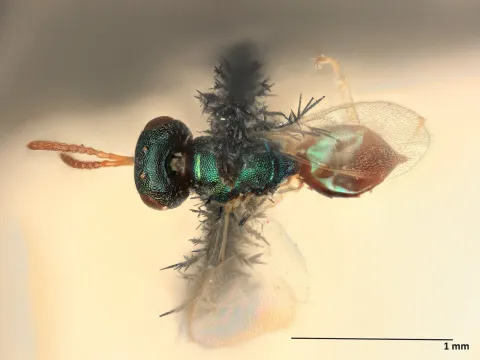
Eupteromalus parnarae
Eupteromalus parnarae
Eupteromalus parnarae is a species of parasitic wasp belonging to the family Pteromalidae within the order Hymenoptera. This tiny insect is widely recognized in agricultural research for its role as a natural enemy of various lepidopteran pests, particularly those affecting cereal crops.
What the section contains
Eupteromalus parnarae
Adults possess a metallic body coloration typical of many chalcid wasps. Their morphology is highly specialized, enabling them to locate, parasitize, and develop within the larvae or pupae of their host species, which are often significant crop pests.
The taxonomic classification of this species places it among the beneficial entomophages that naturally inhabit agroecosystems. It is frequently studied in the context of sustainable farming and integrated pest management (IPM) strategies.
Identification in the field requires specialized entomological knowledge. Professionals often use sweep nets or larval collection techniques followed by laboratory incubation to determine the presence and effectiveness of this parasitoid.
Its biological impact is significant because it provides a form of self-regulating pest control, reducing the reliance on chemical interventions that might otherwise disturb the balance of the field ecosystem.
Eupteromalus parnarae itself does not damage plants; it is a beneficial organism. However, it is fundamentally linked to the management of pests like the rice skipper, Parnara guttata, which can cause severe foliage destruction.
Pest larvae consume rice leaves, leading to reduced photosynthesis, stunted growth, and potential yield losses. By parasitizing these larvae, the wasp prevents large-scale damage, acting as a natural guard for the crop.
The economic value of this species lies in its ability to suppress pest outbreaks. In fields with high populations of this wasp, the need for prophylactic insecticide applications is significantly reduced or even eliminated.
Understanding the interaction between the wasp and its host is crucial for crop protection. When the parasitoid population is robust, the cumulative leaf area loss due to pests remains below the economic injury level.
Therefore, farmers and agronomists view the presence of this insect as a sign of a healthy agroecosystem that is capable of mitigating pest pressures through natural biological mechanisms.
The seasonal activity of Eupteromalus parnarae is synchronized with the lifecycle of its host. The emergence of adult wasps typically coincides with the peak density of pest larvae in the field during the summer months.
Environmental factors, such as temperature and humidity, play a vital role in determining the number of generations per season. Under optimal conditions, the wasp can complete multiple cycles, ensuring continuous control of pest populations.
During the transition between growing seasons, the wasp survives in a dormant stage, often within crop residues or protected microhabitats. Field hygiene and post-harvest practices are therefore essential to ensure the survival of overwintering populations.
Monitoring the wasp's activity levels during the mid-season allows for informed decision-making regarding pest management. If the level of parasitism is high, agronomists may choose to skip chemical applications.
The synchronization of the wasp's lifecycle with the rice growth stage is a critical evolutionary adaptation that maximizes the efficiency of the biological control provided by this species.
Conservation biological control is the primary strategy for managing this species. The main goal is to protect and encourage the wasp population by minimizing the negative impacts of farming practices.
The use of broad-spectrum insecticides is highly discouraged, as these chemicals often kill the beneficial parasitoids more effectively than the target pests, leading to secondary outbreaks.
Maintaining ecological infrastructure, such as field borders with flowering plants, provides necessary resources for the adult wasps, enhancing their longevity and reproductive capacity in the field environment.
Education and training are essential for the effective use of this control method, ensuring that farmers can distinguish between beneficial insects and harmful pests, thereby fostering a more sustainable approach.
- Prioritize selective and biorational pesticides.
- Implement landscape management to support natural enemies.
- Conduct regular monitoring to assess parasitism rates.
- Avoid spraying during peak parasitoid flight periods.