
Habrocytus
Habrocytus
Description
How to identify
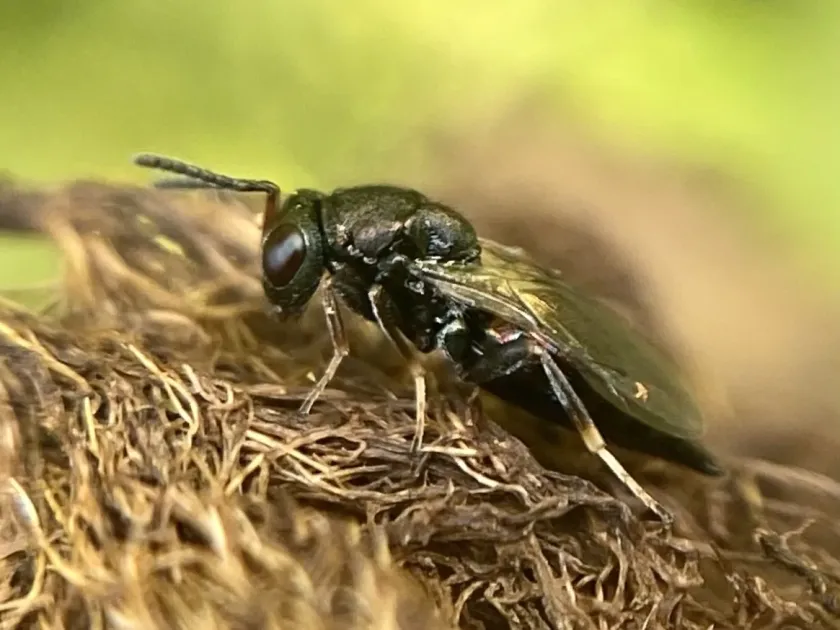
Habrocytus is a genus of parasitic wasps belonging to the family Pteromalidae. These are small insects, typically measuring between 2 and 5 mm in length, known for their metallic blue or green coloration.
They are characterized by a distinct wing venation and multi-segmented antennae, which are primary features used by entomologists for precise identification under a microscope.
As parasitoids, they play a complex role in the ecosystem, often targeting the larvae of various beetles and moths that infest agricultural crops and stored grain products.
Adult females possess a long ovipositor, which allows them to penetrate plant tissues or grain kernels to lay their eggs directly into the bodies of their host larvae.
These wasps are taxonomically classified under the order Hymenoptera and are known for their resilience and high searching capacity when seeking hosts in grain bulk.
What it damages
Habrocytus causes significant damage to cereals and legumes, primarily by parasitizing the larvae of grain-infesting beetles such as weevils inside stored grain.
The damage is indirect but severe, as the development of the wasp inside the kernel destroys the seed's embryo or endosperm, rendering it unsuitable for planting or milling.
In addition to direct damage to grain, these insects can act as hyperparasitoids, attacking other beneficial wasps used in biological control programs, thereby disrupting natural pest regulation.
Massive infestations in silos and warehouses lead to substantial economic losses, as the grain quality degrades and becomes heavily contaminated with insect debris.
Because they live hidden inside the kernels during their larval and pupal stages, infestations often go undetected until a large population of adults emerges.
When it appears
The life cycle of Habrocytus is highly temperature-dependent, with peak activity occurring during warm periods when grain storage conditions become optimal for development.
In controlled environments like warehouses or silos, these insects can maintain a continuous life cycle, producing multiple generations throughout the year regardless of the season.
They survive the winter as larvae or pupae tucked inside infested seeds, which provides them with both insulation and a protected food source during colder months.
As temperatures rise above 12-15 degrees Celsius in the spring, adults begin to emerge from the infested grain to search for new hosts to sustain the population.
The duration of each generation varies depending on the ambient humidity and the availability of suitable host larvae within the grain mass.
Signs of infestation
The most visible sign of Habrocytus presence is the appearance of small, circular exit holes on the surface of seeds, marking the spot where the adult wasp emerged.
During the warmer months, one can observe active adult wasps moving rapidly across the surface of grain piles or near storage facility walls.
Grain samples often show evidence of internal infestation through weight loss and a hollowed-out appearance of the kernels upon inspection.
Careful analysis using X-ray imaging or staining techniques in a laboratory setting can detect the presence of larvae inside the kernels before adult emergence occurs.
A musty or unusual smell in the grain store, combined with the presence of debris and insect bodies, is a clear indicator that a pest management intervention is required.
Control measures
Effective management of Habrocytus relies on strict sanitation protocols in grain storage facilities, including the removal of old grain residues and dust.
Fumigation using phosphine-based products is the standard procedure to eliminate hidden infestations within stored grain bulk and warehouse structures.
Maintaining low humidity and cool temperatures in storage units is crucial to inhibit the reproductive rate and development of the wasp population.
- Regular inspection of incoming grain lots for hidden infestation.
- Use of pheromone traps to monitor adult wasp activity.
- Professional cleaning and disinfection of silo equipment.
- Proper sealing of storage facilities to prevent cross-contamination.
Biological monitoring and regular laboratory testing for grain viability are essential steps for seed producers to ensure the quality of their planting material.
Taxonomy
- Latin name
- Habrocytus
- Order
- Hymenoptera
- Family
- Pteromalidae
- EPPO code
- HABCSP
Discussion
No discussions yet — be the first.