
Horse-flies
Tabanus
Description
How to identify
Horse-flies (Tabanidae) are a family of large, robust flies known for their painful bites. They belong to the order Diptera and are considered significant pests in the agricultural sector.
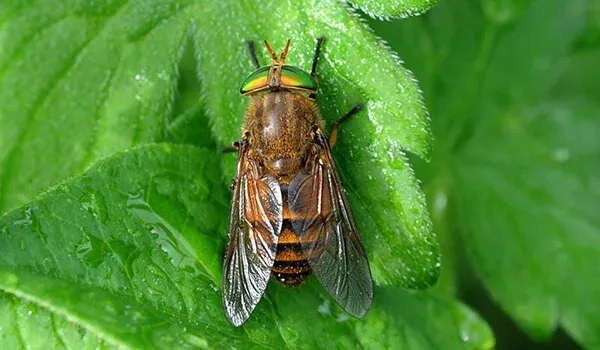
These insects are characterized by their large, iridescent compound eyes, which are highly efficient for detecting movement. Their bodies are typically stout, ranging from 10 to 25 mm in length.
The mouthparts of female horse-flies are specially adapted for slicing through the thick skin of mammals, which makes their bites particularly distressing for livestock.
Larvae of horse-flies inhabit moist soil, swamps, or water edges. They are legless, cylindrical, and possess a pale, whitish appearance, acting as predators in their aquatic or semi-aquatic habitats.
The wings of adult horse-flies are often clear, but some species exhibit dark patterns or markings, which aids in species identification and camouflage within their natural environment.
What it damages
Horse-flies are notorious for the severe distress they cause to horses, cattle, and other domestic animals. Their impact is primarily focused on the health and welfare of farm animals.
The bite of a horse-fly is not only physically painful but also causes significant blood loss when the insects attack in large swarms, leading to anemia in severe cases.
The constant annoyance and stress caused by these pests disrupt the natural grazing cycle of livestock. Consequently, affected animals exhibit lower feed intake, reduced milk production, and slower weight gain.
Secondary infections often develop at the site of the bites, as the wounds can remain open and attract other insects or allow pathogens to enter the bloodstream of the animal.
Horse-flies act as mechanical vectors for numerous diseases, including anthrax, tularemia, and equine infectious anemia, posing a major risk to biosecurity on farms.
When it appears
The activity period for horse-flies typically begins in late spring and peaks during the hot summer months, often subsiding as temperatures drop in early autumn.
These pests are highly dependent on sunlight and heat. They are most aggressive on warm, sunny, and humid days, especially near bodies of water or woodland edges.
The lifecycle of the horse-fly is complex and can take one to three years to complete. Eggs are laid in masses on vegetation, often near the water's surface.
Once the larvae hatch, they drop into the soil or water, where they feed on small invertebrates and organic matter until they are ready to pupate into adults.
Adult flies are highly mobile and capable of flying long distances to locate food sources, which makes localized control difficult to manage without wide-scale area treatment.
Control measures
Managing horse-fly populations requires a multi-pronged approach that includes direct protection of animals and environmental habitat modification.
Applying topical insecticides or repellents specifically formulated for livestock is the primary method for protecting animals during grazing hours.
The deployment of visual and heat-based traps across pasture areas has proven effective in capturing large numbers of flies, thereby reducing the pressure on the herd.
Environmental management involves draining small pools of stagnant water and clearing excess vegetation near ponds, which deprives the flies of their preferred egg-laying sites.
- Utilizing fly sheets and masks for horses and cattle in heavily infested areas.
- Scheduling grazing in early morning or late evening when fly activity is lower.
- Maintaining clean barn environments to minimize attractants.
Taxonomy
- Latin name
- Tabanus
- Order
- Diptera (flies)
- Family
- Tabanidae
- EPPO code
- TABASP
Discussion
No discussions yet — be the first.