
Horse fly (Hybomitra)
Hybomitra
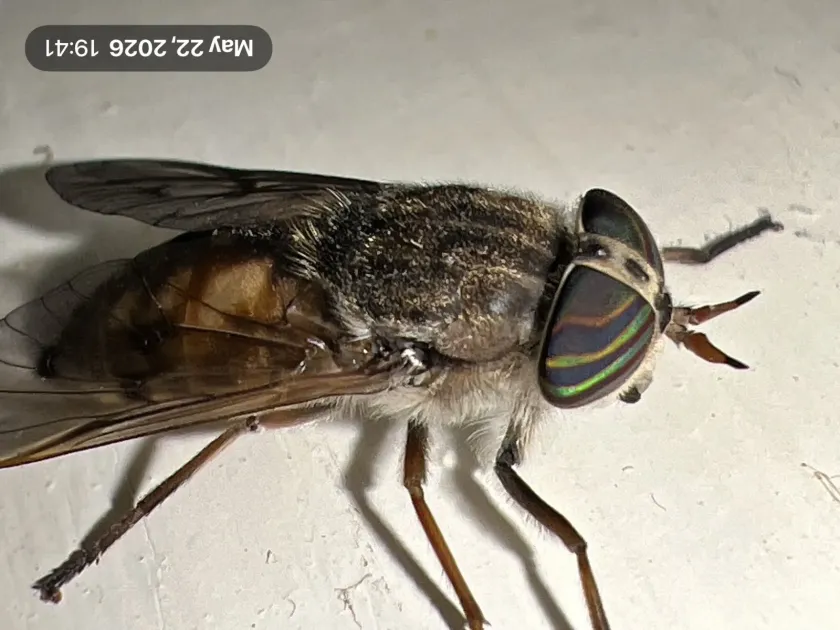
Description
How to identify
Hybomitra is a genus of large biting flies within the family Tabanidae. They are easily recognized by their robust bodies and large, colorful eyes, which often exhibit iridescent gold, green, or purple hues when alive.
Unlike many other insects, these flies are highly visual hunters. Their mouthparts consist of sharp, blade-like structures that allow females to slice through the skin of large mammals, inducing rapid bleeding.
The body is typically covered in dense hairs, which aids in thermal regulation and provides camouflage in natural environments. They are categorized under the order Diptera, representing a significant group of pests in agricultural landscapes.
Adult females are the primary focus of control efforts, as they require blood meals to develop their eggs. Males, in contrast, are non-biting and feed exclusively on plant nectar and pollen.
There are numerous species within the Hybomitra genus, each adapted to specific habitats, ranging from wetlands to meadows, making them ubiquitous across many pastoral regions during the warmer months.
What it damages
The primary economic damage caused by Hybomitra is linked to the massive irritation of livestock. Animals constantly attacked by these flies experience heightened stress levels, preventing them from grazing effectively.
Heavy infestations can lead to significant blood loss. Over time, this results in anemia, reduced body weight, and decreased milk production in dairy cattle, directly impacting the profitability of farming operations.
These flies serve as vectors for various diseases, including anthrax, tularemia, and several animal-specific viral or parasitic infections, which can spread rapidly through a herd during peak fly activity.
Bite sites are prone to secondary bacterial infections. The physical trauma caused by the slicing mouthparts creates open wounds that can attract other flies or lead to tissue inflammation.
Farm management is often disrupted during the peak season, as animals must be kept indoors or treated frequently to avoid the intense pressure exerted by the fly population.
When it appears
The biological cycle of Hybomitra is closely tied to water. Eggs are laid in masses on vegetation overhanging water or moist soil, where the larvae can easily access the environment necessary for their development.
Larvae are predatory, feeding on small invertebrates found in damp soil or mud. They typically undergo several molts before pupating in drier soil near their aquatic birthplaces.
The emergence of adults occurs in late spring and peaks throughout the summer. They are most active on hot, sunny days with low wind, as these conditions are optimal for their flight and host-seeking behavior.
The lifecycle can take one to two years to complete, depending on ambient temperatures and moisture levels. This ensures that the population can persist even if one season is less favorable than the others.
Adult lifespan is relatively short, usually lasting a few weeks, during which the female must locate a host, feed multiple times, and lay several batches of eggs to ensure successful reproduction.
Control measures
Effective control of Hybomitra requires an integrated approach. The use of insecticidal sprays and pour-ons on livestock is the most common method to reduce direct attacks on the animals.
Trapping systems, such as Malaise traps or target-based traps that simulate host movement and heat, can be highly effective in reducing local populations around pastures and barns.
Environmental management is essential, particularly focusing on the elimination of larval habitats. Draining small, stagnant water bodies or clearing dense brush near grazing zones can significantly decrease the local population.
Protective clothing for animals, including fly masks and mesh sheets, can be used in high-risk areas to protect sensitive skin and reduce the overall stress burden on the livestock.
- Strategic use of systemic insecticides.
- Habitat modification (draining wetlands).
- Utilization of pheromone or visual attractant traps.
Taxonomy
- Latin name
- Hybomitra
- Order
- Diptera (flies)
- Family
- Tabanidae
- EPPO code
- HYBOSP
Discussion
No discussions yet — be the first.