
Chrysops relictus
Chrysops relictus
Description
How to identify
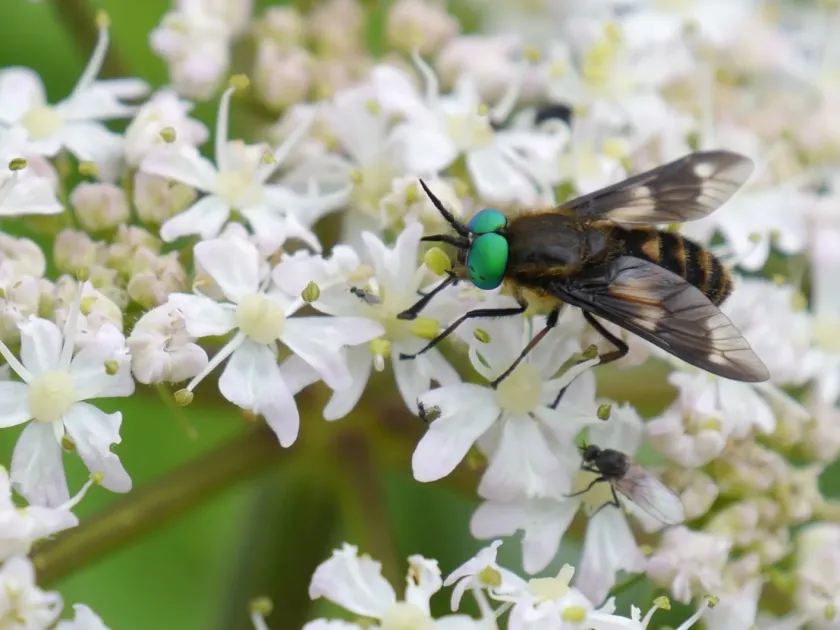
Chrysops relictus, commonly known as the twin-lobed deer fly, is a species of dipteran belonging to the Tabanidae family. It is easily recognized by its striking gold-green eyes with intricate dark patterns.
The adult insect reaches a body length of 10 to 14 mm. The abdomen exhibits a distinct pattern of black and yellow spots, while the wings feature characteristic dark bands that serve as a primary diagnostic feature for identification.
Females are hematophagous, requiring blood meals to develop their eggs, whereas males feed exclusively on floral nectar. Their mouthparts are specially adapted for piercing the skin of mammals.
Larvae develop in the moist soil of wetlands, marshes, or near water bodies. They lead a predatory lifestyle, feeding on various small invertebrates found in their humid habitat throughout their development.
The life cycle encompasses several stages: egg, three larval stages, pupa, and adult. Depending on environmental temperatures and humidity, the total development time can span from one to two years.
What it damages
The primary concern regarding Chrysops relictus is the painful nature of their bites, which cause significant distress to livestock. Animals, including cattle and horses, suffer from constant irritation.
Bites often lead to edema, inflammation, and intense itching, causing animals to move constantly to repel the insects. This behavior disrupts grazing, leading to weight loss and reduced milk yields in dairy cows.
Deer flies act as mechanical vectors for various infectious diseases, such as tularemia and anthrax. Pathogens are transmitted through contaminated mouthparts during the blood-feeding process.
Persistent attacks cause significant physiological stress, which weakens the immune systems of livestock, making them more susceptible to secondary bacterial and viral infections.
During peak seasons, the economic impact on pasture-based farming can be severe, with productivity losses reaching up to 20% due to the animals' inability to rest and feed properly.
When it appears
The activity of adult Chrysops relictus typically occurs from late June through mid-August. They thrive in warm, sunny weather with low wind speeds, which are ideal for their flight.
The species prefers habitats with high humidity, often found near marshes, rivers, or lakes. Proximity to these water sources significantly increases the density of the fly population.
Activity levels peak during the early morning and late afternoon hours. During the intense heat of midday, they may seek refuge in shaded areas such as trees or tall brush to avoid desiccation.
Females begin their search for hosts immediately after mating to acquire the necessary proteins for egg maturation. They are persistent and can attack the same host multiple times.
As temperatures decline in late August and September, the population of adults diminishes. By autumn, the life cycle is restricted to the larval stages, which overwinter in protected soil environments.
Control measures
The use of pyrethroid-based repellents applied directly to livestock is the most effective way to protect animals while they are out on pasture, creating a temporary barrier against bites.
Deploying specialized traps that utilize visual cues, such as dark moving targets, can effectively capture large numbers of adult flies and reduce local population pressure on farms.
Good land management, including the draining of small stagnant water pools or marshes near grazing fields, helps eliminate breeding grounds and significantly reduces future generations.
Housing livestock in well-ventilated, screened shelters during peak activity hours is a recommended practice to minimize exposure and stress, preserving the overall health of the herd.
Biological control methods involve supporting natural predators, such as dragonflies and specific predatory wasps, which help keep deer fly populations in check within the ecosystem.
Taxonomy
- Latin name
- Chrysops relictus
- Order
- Diptera (flies)
- Family
- Tabanidae
- EPPO code
- CHSORE
Discussion
No discussions yet — be the first.