
Atlantic deer fly
Chrysops atlanticus
Description
How to identify
The Atlantic deer fly (Chrysops atlanticus) belongs to the Tabanidae family, order Diptera. These insects are medium-sized flies, easily recognized by their distinctive appearance and behavior typical of the genus Chrysops.
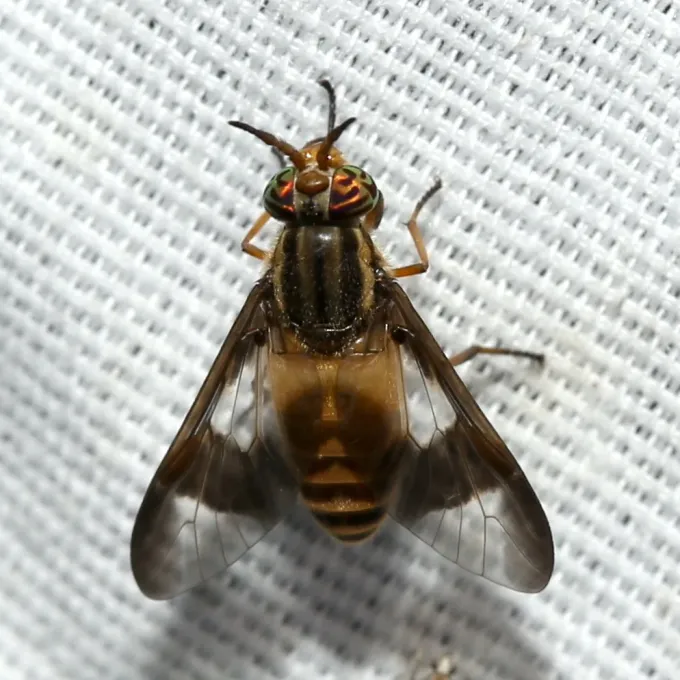
Adults possess striking compound eyes with a colorful pattern, often featuring golden-green or bronze iridescence. Their bodies are dark with prominent yellowish or black bands on the wings, which are critical features for accurate identification of the species.
Females of this species are blood-feeders, a trait that sets them apart from many other flies that rely solely on nectar. Their mouthparts are specially adapted to pierce the skin of mammals to obtain the protein-rich blood necessary for egg production.
Larvae of the Atlantic deer fly live a semi-aquatic existence, residing in the moist soil of coastal zones, marshes, or near freshwater bodies. They possess an elongated body shape characteristic of many fly larvae.
Pupation typically occurs in drier soil layers near their breeding sites. Adult insects emerge during the warmer months, preferring sunny, calm weather to fly and search for hosts.
What it damages
While the Atlantic deer fly does not cause direct damage to plant crops, it inflicts significant harm on livestock, which is a vital part of agricultural ecosystems. The bites of these flies are extremely painful, causing significant distress to cattle and horses.
Constant harassment by these insects leads to severe stress in animals, which directly impacts milk yield and weight gain in livestock. Animals spend excessive energy trying to avoid bites rather than focusing on growth and development.
Through their saliva, injected during the bite, deer flies can mechanically transmit various pathogens, including viral and bacterial infections, posing a continuous threat to the overall health of the herd.
During periods of high population density, these pests can significantly reduce the efficiency of working animals, creating logistical challenges for farmers and field workers in affected areas.
Wounds caused by bites can lead to secondary infections or the development of abscesses, requiring professional veterinary intervention and the use of antiseptic treatments to prevent further complications.
When it appears
The peak activity of the Atlantic deer fly occurs during the second half of summer when weather conditions are consistently warm and humid. These environmental conditions are optimal for both larval development and adult emergence.
Maximum insect activity is observed during the morning and evening hours when air temperatures are most comfortable for flight. During the hottest part of the day, their activity may decrease significantly.
The lifecycle is closely linked to the availability of wetlands, ponds, or damp soil; therefore, in drought years, population numbers may drop sharply due to the mortality of larvae in dried-out habitats.
An adult fly typically lives for a few weeks, during which the female manages to complete multiple blood-feeding and egg-laying cycles on vegetation located near water sources.
Adults often migrate from breeding sites to surrounding pastures in a radius of several kilometers, meaning the highest concentration of pests is usually found in low-lying meadows and floodplains.
Control measures
Effective management of deer flies requires a multi-faceted approach, including both adult population control and the modification of larval breeding grounds. Draining excessively wet areas around farms is a key step to reducing numbers.
The application of repellents on livestock is the primary defense strategy during peak activity seasons. The use of insecticidal ear tags and systemic treatments helps to significantly reduce the number of successful bites.
Installing specialized traps on pastures that utilize visual or pheromone-based lures can help suppress the adult population in specific grazing areas, providing relief for the livestock.
Maintaining high sanitary standards at livestock facilities, including the regular removal of stagnant water and waste, inhibits the potential for these pests to breed in close proximity to human structures.
- Installation of protective screens in stables.
- Regular insecticidal treatment of livestock.
- Land reclamation of wetlands.
- Population monitoring using specialized fly traps.
Taxonomy
- Latin name
- Chrysops atlanticus
- Order
- Diptera (flies)
- Family
- Tabanidae
- EPPO code
- CHSOAT
Discussion
No discussions yet — be the first.