
Haematopota crassicornis
Haematopota crassicornis
Description
How to identify
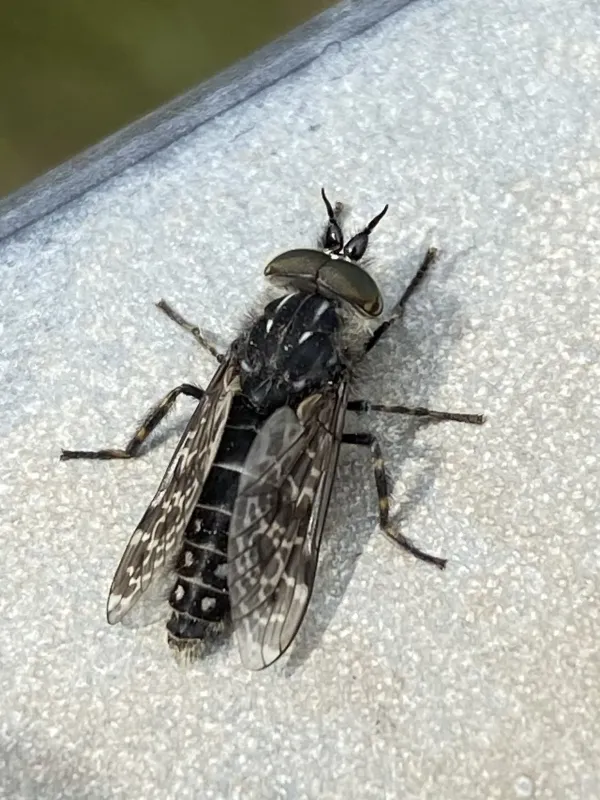
Haematopota crassicornis, commonly known as the notch-horned cleg, is a species of horsefly belonging to the family Tabanidae. They are easily recognized by their distinctively patterned wings.
The species is named for the unique appearance of its antennae, which are thickened and notched. Adult flies typically range from 9 to 12 mm in length with a greyish, patterned body.
Like all Tabanids, they undergo complete metamorphosis. The larvae are elongated, cylindrical, and white or yellowish, typically found in damp or marshy soil environments.
Adults are strong fliers, and while males feed on floral nectar, females are notorious blood-feeders, requiring protein from blood to develop their eggs.
The eyes of the females are often green or coppery with zigzag patterns, which is a common diagnostic feature for identifying members of the Haematopota genus.
What it damages
The primary damage caused by H. crassicornis is the extreme annoyance and blood loss they inflict upon grazing livestock, including cattle, horses, and sheep.
Their mouthparts are designed to slash the skin rather than pierce it, creating a painful, open wound that bleeds for a significant period due to anticoagulant saliva.
Frequent attacks cause significant stress, reducing the grazing time of animals, which leads to decreased milk yield and reduced weight gain in livestock.
Furthermore, the persistent biting creates open sores that can become infected or attract other opportunistic insects, further deteriorating the animal's physical condition.
These flies are documented mechanical vectors for several veterinary pathogens, capable of transmitting diseases like tularemia or various parasitic infections between animals.
When it appears
Adult H. crassicornis are most active from late spring to early autumn, with population peaks usually occurring during the warm summer months of June and July.
These flies thrive in humid environments, particularly near wetlands, ponds, and marshy pastures, which provide the essential moisture for their larval development.
Activity is highly influenced by barometric pressure and humidity levels; they are particularly aggressive on warm, calm days before rainfall, hence their colloquial association with storms.
The life cycle can span from one to two years depending on environmental conditions, with larvae surviving in saturated ground where they act as predators of small soil invertebrates.
As the season progresses, environmental factors such as temperature changes and rainfall patterns significantly dictate the emergence and lifespan of the adult fly population.
Control measures
Effective management begins with the application of approved topical repellents or insecticides to livestock to deter flies from landing and feeding.
In grazing scenarios, providing access to shelters or darkened barns during peak fly activity hours (typically mid-day) can offer animals much-needed respite.
Modifying the landscape to drain small, standing water pockets or marshy areas can limit the available breeding sites for the larvae, reducing local population pressure.
- Strategic use of insect traps around stables and watering points.
- Application of long-lasting pyrethroid-based pour-ons.
- Regular monitoring of animal behavior for signs of extreme fly stress.
Integrating these methods helps to break the fly's lifecycle and minimize the economic impact on farming operations caused by persistent infestations of biting flies.
Taxonomy
- Latin name
- Haematopota crassicornis
- Order
- Diptera (flies)
- Family
- Tabanidae
- EPPO code
- HAMPCR
Discussion
No discussions yet — be the first.