
Striped deer fly
Chrysops vittatus
Description
How to identify
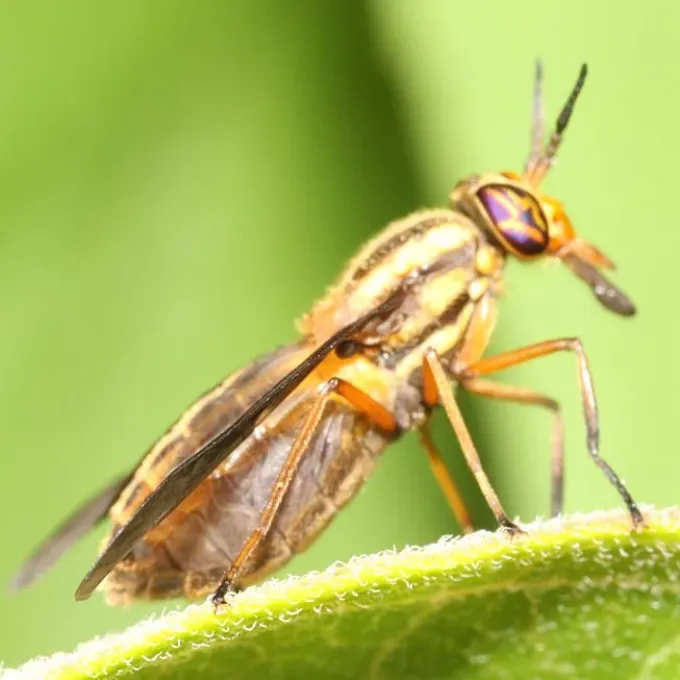
The striped deer fly (Chrysops vittatus) belongs to the Tabanidae family, order Diptera. These insects are easily recognized by their large, iridescent, golden-green compound eyes that feature distinct patterns.
The species is named for the characteristic dark, striped pattern on its wings, which serves as a primary identification mark. The body is covered in fine hairs with a yellow and black coloration.
Only the female striped deer fly possesses piercing-sucking mouthparts, which are necessary to obtain a blood meal for egg development. Males are harmless, feeding exclusively on nectar and pollen.
Larvae of this species are semi-aquatic, developing in wet soil, mud, or near the edges of ponds and marshes. They possess a spindle-shaped body with specialized protuberances for movement.
The life cycle typically spans one to two years, depending heavily on environmental temperature and the availability of moist habitats for larval development.
What it damages
The striped deer fly is a significant pest in the livestock industry, causing substantial economic loss through its parasitic behavior on cattle, horses, and sheep.
The bite of a female deer fly is sharp and painful, causing intense irritation and panic among grazing livestock. This persistent harassment reduces feeding time and overall animal comfort.
Economic impacts include a marked decrease in milk production and weight gain, as energy is diverted to fighting off the flies and coping with the stress of repeated bites.
The wounds inflicted by the flies can become entry points for secondary bacterial infections, and the insects are known to transmit various pathogens between animals.
In high-density areas, the annoyance caused by these insects can force farmers to keep livestock indoors during peak daylight hours, disrupting normal management practices.
When it appears
Adult striped deer flies are most active during the summer months, typically appearing in late spring and reaching peak population levels throughout June and July.
They prefer warm, sunny weather conditions and are most aggressive during the heat of the day. Wind and rain significantly reduce their activity and flight capability.
Because their larvae require high moisture, adult populations are most dense in the immediate vicinity of wetlands, rivers, lakes, and poorly drained pastures.
Egg-laying activity is concentrated on emergent aquatic vegetation near the water's edge, ensuring the larvae drop into a suitable habitat upon hatching.
Long-term weather patterns influence the seasonal timing of their emergence; a cool, wet spring can delay the maturation and subsequent activity of the adult flies.
Signs of infestation
The most evident sign of a deer fly infestation is the behavioral change in livestock, which includes tail switching, leg stamping, and restless movement around the pasture.
Close observation of cattle often reveals small, bleeding punctures on the skin, particularly around the head, neck, and shoulder regions where the flies prefer to land.
Visible distress and a refusal to graze during peak sunshine hours are key indicators of high insect pressure in the field.
The presence of the flies themselves, which are often heard buzzing before they bite, confirms an active infestation of Chrysops vittatus.
Searching near the edges of nearby bodies of water or marshy areas will often reveal swarms of adults during the peak of their activity season.
Control measures
Applying pyrethroid-based insecticides or approved repellents directly to the coats of livestock is the primary method for providing immediate relief from bites.
The use of stationary sticky traps or light-sensitive insect traps in pasture areas can help reduce the local population of adult flies significantly.
Adjusting grazing schedules to avoid pastures during peak flight hours — typically midday — can help protect animals from the most intense periods of fly activity.
Managing the pasture environment, such as draining stagnant water or clearing heavy brush near water sources, helps reduce the availability of larval breeding sites.
- Utilizing insecticide-impregnated ear tags on cattle.
- Providing shade structures to minimize livestock exposure to sunlight.
- Maintaining healthy, high-nutrition pasture to improve cattle resilience to stress.
Taxonomy
- Latin name
- Chrysops vittatus
- Order
- Diptera (flies)
- Family
- Tabanidae
- EPPO code
- CHSOVI
Discussion
No discussions yet — be the first.