
Splay-eyed fly
Chrysops caecutiens
Description
How to identify
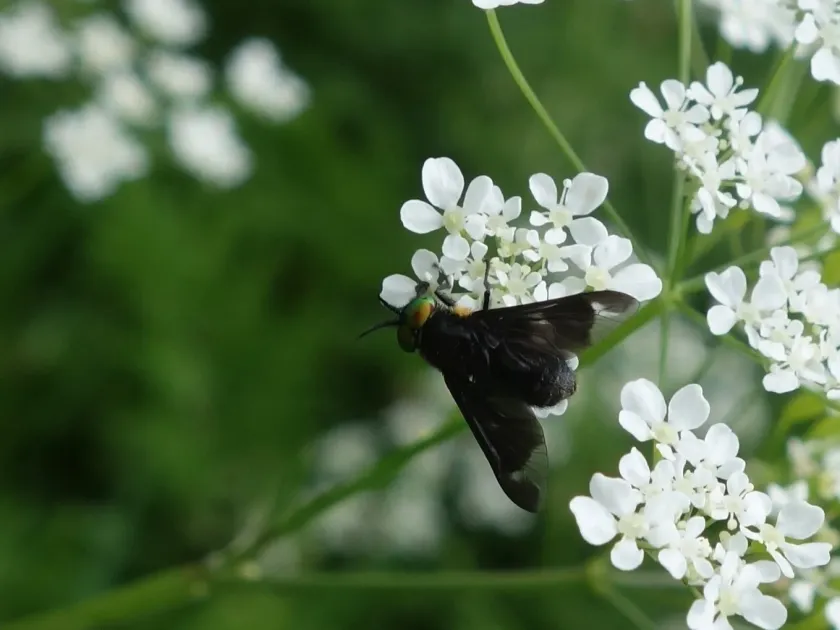
The Splay-eyed fly (Chrysops caecutiens) is a species of horse fly belonging to the family Tabanidae. It is easily recognized by its striking golden-green eyes and the prominent dark band or pattern on its wings, which is a distinctive characteristic of the genus Chrysops.
Adult flies typically measure 9–11 mm in length. The body is generally dark with yellow markings on the abdomen. While males feed on plant nectar, females are blood-feeders, requiring a protein-rich meal to develop their eggs effectively.
Larvae develop in moist, muddy environments such as the edges of ponds, streams, or boggy soil. The larvae are predatory and spend a significant amount of time underground or in aquatic vegetation before pupating.
The life cycle encompasses four stages: egg, larva, pupa, and imago. The species is highly resilient, and the duration of the cycle can vary depending on environmental temperatures and moisture availability, often lasting one or two years.
These flies are strong fliers and can travel considerable distances to locate hosts, making them persistent pests in rural and pasture-based livestock environments.
What it damages
The Splay-eyed fly does not damage plants directly, but it is a significant pest in animal husbandry. Its primary impact is the physiological and economic stress placed on livestock, which can significantly decrease agricultural efficiency.
Females inflict painful bites on cattle, horses, and other livestock. These bites cause intense irritation and distress, leading to animal restlessness, decreased grazing time, and lower weight gain, which results in substantial financial losses for farmers.
Beyond the pain of the bite, Splay-eyed flies act as mechanical vectors for various diseases. They can transmit harmful pathogens, including the bacteria responsible for anthrax and tularemia, posing a severe threat to animal welfare.
When infestation levels are high, milk production in dairy herds can drop by 15–20%. The constant harassment from flies creates a state of chronic stress in animals, weakening their immune systems and overall herd productivity.
Effective management of this pest is essential for maintaining a profitable livestock business, particularly in regions with high soil moisture or nearby water bodies.
When it appears
The activity of the Splay-eyed fly is concentrated in the summer months, spanning from June to August. They are most active during warm, sunny, and calm days, as they rely on light and heat to fuel their flight activity.
Throughout the day, they exhibit peak activity levels, but they are less active during windy or overcast conditions, preferring to hide in dense vegetation or shrubs when the weather is unfavorable for flight.
The seasonal onset is tied to soil temperature, as larvae require specific conditions to pupate and emerge. A warm, humid spring often correlates with an early emergence and higher populations of the fly throughout the summer season.
An adult female's lifespan is several weeks, during which she will attempt to feed and lay eggs multiple times. This leads to a sustained period of pressure on livestock throughout the summer months.
Monitoring seasonal activity using trap data allows farmers to predict peak flight times and prepare protective measures for their herds before the fly population reaches critical levels.
Signs of infestation
The most noticeable sign of a Splay-eyed fly infestation is the restless behavior of livestock in the pasture. Animals may be seen constantly switching their tails, stomping their feet, and grouping together tightly in an attempt to avoid the flies.
Close inspection of the animals often reveals bite marks, which appear as swollen, inflamed spots, sometimes with droplets of blood. These bites can lead to dermatitis if the animals are repeatedly targeted in the same areas.
A decline in productivity, such as decreased milk yields or stalled weight gain in calves, serves as a significant indicator of high fly pressure. When animals spend more energy avoiding bites than grazing, the farm's efficiency drops.
The flies themselves are often visible near water sources or on the animals during bright hours. Their distinctive wing pattern and brilliant eyes make them identifiable upon closer inspection of the pasture area.
Implementing trap counts on the farm can help quantify the presence of these flies, providing the necessary data to decide when to initiate large-scale protective treatments.
Control measures
Control of the Splay-eyed fly requires a multi-faceted approach combining animal protection with environmental management. The goal is to minimize the number of flies that successfully feed and reproduce.
Applying topical insecticides or repellents to livestock is a standard method of protection. It is crucial to choose products that are veterinary-approved to ensure the safety of the livestock and the quality of dairy or meat products.
Environmental management involves draining small, stagnant pools and clearing dense, unnecessary vegetation along stream banks to eliminate the larval habitat. This long-term strategy helps to suppress the population at its source.
Using specialized traps, such as those that attract flies visually or through warmth, can significantly reduce the number of adults in the vicinity of the animals. These should be placed strategically around the pasture perimeter.
- Using systemic or topical insecticides on animals.
- Selecting pasture locations with better airflow.
- Cleaning drainage ditches and clearing breeding sites.
- Placing traps to monitor and reduce adult fly populations.
Taxonomy
- Latin name
- Chrysops caecutiens
- Order
- Diptera (flies)
- Family
- Tabanidae
- EPPO code
- CHSOCA
Discussion
No discussions yet — be the first.