
Zulia entreriana
Zulia entreriana
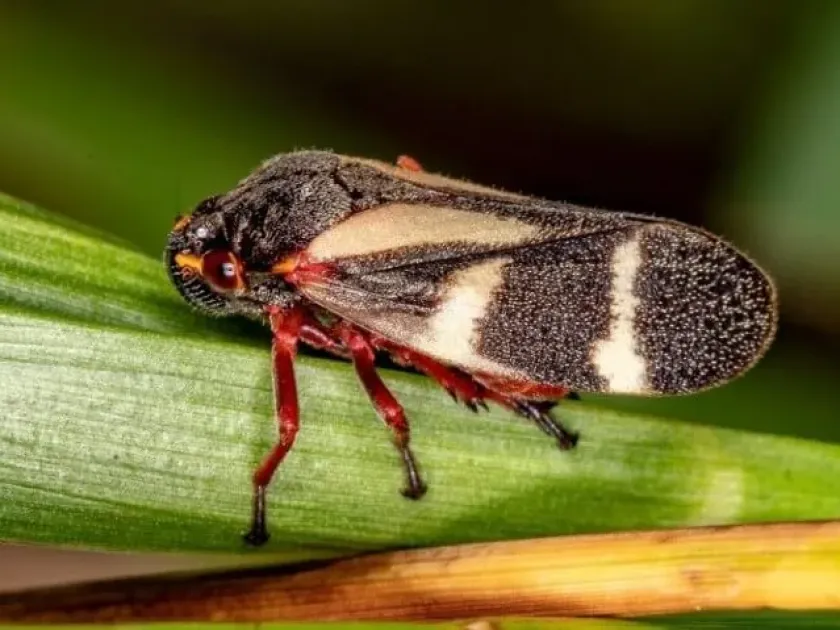
Description
How to identify
Zulia entreriana is a species of spittlebug belonging to the family Cercopidae within the order Hemiptera. These insects are widely recognized in agricultural regions for their impact on grass-based ecosystems and pastures.
Adult insects are characterized by their strong jumping ability and wings, allowing them to migrate across fields efficiently. Their body coloration is often adapted to blend into the foliage, making them difficult to detect during initial stages of infestation.
The nymphal stage is unique due to the production of a frothy, spittle-like mass. This foam serves as a vital shelter, protecting the nymphs from predators, extreme temperatures, and desiccation while they feed on plant sap.
The life cycle consists of the egg, five nymphal instars, and the adult stage. Eggs are typically laid in the plant crown or soil cracks, ensuring survival through harsh environmental conditions before hatching in the warmer season.
Zulia entreriana populations can expand rapidly under favorable weather conditions, particularly in regions with high humidity and abundant grass hosts, leading to significant outbreaks in managed forage systems.
What it damages
The primary hosts of Zulia entreriana are tropical and subtropical forage grasses, such as those in the Brachiaria, Digitaria, and Paspalum genera. These grasses are critical for livestock grazing, making the damage economically severe.
Both adults and nymphs feed by inserting their stylets into the plant vascular tissue to extract sap. During this process, they inject saliva containing enzymes that cause localized necrosis and disrupt the plant's physiological functions.
Affected plants exhibit widespread yellowing, wilting, and eventually total desiccation. This leads to a severe loss of leaf biomass, reducing the overall nutritional quality and availability of forage for grazing animals.
Large-scale infestations can kill entire patches of grass, causing the pasture to degrade and become susceptible to invasion by weeds. The damage is often misinterpreted as drought stress, leading to delays in intervention.
Economically, this results in significant production losses for dairy and beef operations due to reduced weight gains in cattle and the need for expensive supplementary feed to replace the lost pasture productivity.
Signs of infestation
The presence of frothy, white spittle masses at the base of grass stems is the most definitive sign of an active infestation. These masses are most visible during the early morning hours before dew evaporates.
Plants infested by these spittlebugs show distinct chlorotic patterns, starting from the tips of the leaves and moving downwards. As damage progresses, the leaves turn brown and brittle, eventually leading to plant collapse.
Adult spittlebugs are often detected by their sudden, erratic jumping behavior when the grass is disturbed. A quick walk through a pasture infested by Zulia entreriana usually reveals many adults taking flight simultaneously.
Visible patches of dead or drying grass are characteristic of advanced infestation. These patches tend to expand outwards as nymphs continue to feed and mature, leaving behind a scarred and unproductive field.
A foul, musty odor may be detected in fields with high pest density, caused by the decay of plant tissues and the large volume of metabolic waste produced by the high number of nymphs present in the root zone.
Control measures
Biological control using entomopathogenic fungi, specifically Metarhizium anisopliae, has proven highly effective. Applying these fungal spores during humid conditions significantly reduces nymphal and adult populations.
Cultural control measures, such as rotational grazing and strategic mowing, are essential. These practices physically disrupt the spittle masses, exposing nymphs to sunlight and predators, which significantly increases their mortality rate.
Chemical control involving systemic insecticides is an option when populations exceed the economic threshold. However, strict adherence to pre-grazing waiting periods is mandatory to ensure the safety of livestock and the final food product.
Monitoring using yellow sticky traps is recommended to track adult activity and determine the optimal timing for insecticide applications. Early detection allows for targeted treatments, which are more environmentally and economically efficient.
- Selecting forage grass species with higher tolerance to spittlebug damage.
- Maintaining optimal soil fertility to promote rapid regrowth after pest attacks.
- Preserving natural enemy habitats to encourage the presence of predatory insects.
Taxonomy
- Latin name
- Zulia entreriana
- Order
- Hemiptera (bugs, aphids, leafhoppers)
- Family
- Cercopidae
- EPPO code
- TOMAEN
Discussion
No discussions yet — be the first.