
Sugarcane spittlebug
Aeneolamia lepidior
Description
How to identify
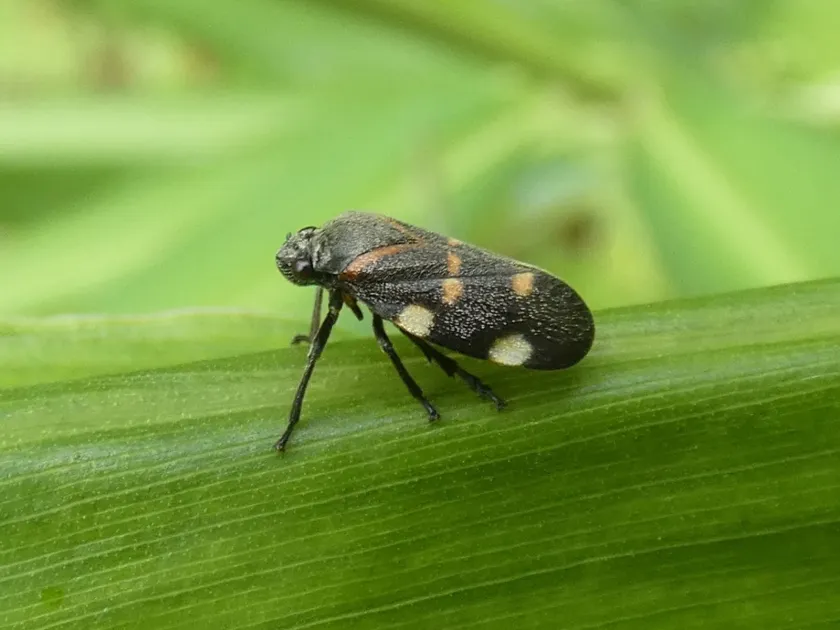
The sugarcane spittlebug (lat. Aeneolamia lepidior) belongs to the order Hemiptera and the family Cercopidae. It is a small insect with distinct characteristics that facilitate its identification.
Adults possess functional wings, enabling them to migrate across fields, while their bodies often feature dark coloration with lighter stripes.
Larvae are primarily known for their unique habit of creating protective foam or "spittle" masses at the base of host plants, which protects them from predators and dehydration.
The lifecycle includes several developmental stages, starting from eggs deposited in the soil, which are highly sensitive to environmental moisture levels.
Effective identification relies on spotting both the adults on the foliage and the characteristic foam masses located near the plant stems.
##damage##The primary host plants for this pest include sugarcane and various grass species, which are frequently affected in tropical and subtropical climates.
Larvae feed on the sap from the root system, causing significant stress to the host and reducing its ability to absorb water and nutrients.
Adults consume sap from the leaves, leaving puncture marks that impair photosynthesis and lead to the development of necrotic lesions.
Heavy infestations lead to stunted growth, yellowing foliage, and a substantial decrease in sugar accumulation, directly affecting yield quality.
In severe cases, the weakened plants are susceptible to secondary infections, potentially leading to total crop loss if left untreated.
When it appears
The activity of the sugarcane spittlebug is closely tied to the onset of the rainy season, which triggers egg hatching and larval development.
The population reaches its peak during the most active growth phases of the sugarcane crop when the plants offer the highest nutritional value.
The pest's lifecycle is highly synchronized with the regional climate, ensuring that its development coincides with the presence of host plants.
During dry seasons, the insect enters a diapause state as eggs in the soil, allowing the population to survive unfavorable environmental conditions.
Early season monitoring is essential, as the first signs of foam indicate the start of a potential outbreak that requires immediate attention.
Signs of infestation
The most reliable sign of an infestation is the presence of white, foamy spittle masses found at the base of stalks or within leaf whorls.
Leaf yellowing, which typically progresses from the tip downward, serves as an indicator of the sap-sucking damage caused by the insect.
Reduced vigor and poor development of the crop compared to uninfected adjacent areas suggest the hidden presence of larvae in the root zone.
Physical inspection of leaves reveals yellow to brown spots caused by adult feeding punctures, which can cover large sections of the canopy.
A sudden increase in adult insect flight activity upon disturbing the plants indicates that the pest population has reached a critical level.
Control measures
Integrated Pest Management (IPM) is the most effective approach, combining cultural practices with biological and chemical interventions.
Biological control using entomopathogenic fungi, such as Metarhizium anisopliae, is highly successful in managing larval populations in the field.
Chemical control involving systemic insecticides is recommended only when thresholds are exceeded to minimize the impact on beneficial insects.
Cultural methods, including field hygiene and proper residue management, are crucial for destroying egg-laying sites and limiting future generations.
- Field monitoring programs;
- Use of biological control agents;
- Targeted insecticide applications;
- Crop rotation and residue destruction.
Taxonomy
- Latin name
- Aeneolamia lepidior
- Order
- Hemiptera (bugs, aphids, leafhoppers)
- Family
- Cercopidae
- EPPO code
- TOMALE
Discussion
No discussions yet — be the first.