
Cercopis
Cercopis
Description
How to identify
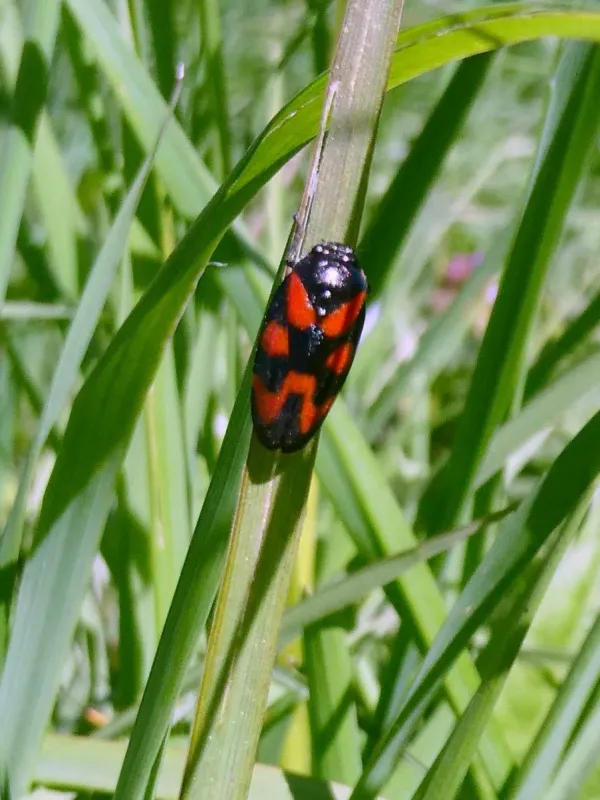
Cercopis (common name: froghopper or spittlebug) belongs to the order Hemiptera, family Cercopidae. Adults are easily recognized by their distinct, often black and red, warning coloration, which serves as a defense mechanism.
The adult insect features a wedge-shaped body, typically measuring 8–10 mm in length. It possesses a piercing-sucking mouthpart, which is highly efficient at extracting sap from various plant hosts throughout the growing season.
Nymphs are unique due to their ability to produce a protective mass of bubbles, commonly referred to as "spittle." This foam protects the juvenile stages from desiccation, heat stress, and predation by larger insects or birds.
The life cycle encompasses the egg, nymph, and adult stages. Eggs typically overwinter within plant tissues or the soil surface, hatching in early spring to initiate the new generation's feeding cycle.
Understanding the phenology of Cercopis is crucial for agronomists, as it allows for the precise timing of scouting and potential intervention strategies during the early stages of nymphal development.
What it damages
Cercopis species affect a wide range of agricultural crops, including cereals, legumes, forage grasses, and numerous ornamental plants. Both nymphs and adults extract vital nutrients, causing significant stress to the host plant.
Constant sap depletion leads to stunted growth, reduced leaf surface area, and impaired photosynthetic activity. This metabolic imbalance ultimately reduces the overall yield potential and vigor of the crop.
Feeding sites frequently become entry points for secondary pathogens. The mechanical damage caused by the insect's mouthparts can facilitate the transmission of viral and fungal infections that further weaken the plants.
Heavy infestations often result in twisted stems, distorted foliage, and the premature wilting of terminal shoots, which can lead to significant economic losses in sensitive crop varieties.
The cumulative effect of these pests is particularly detrimental during drought conditions, as the plants are less capable of recovering from sap loss and pathogen exposure.
Signs of infestation
The most diagnostic sign of an infestation is the appearance of white, frothy masses of foam on stems, leaf axils, and flower heads. These "spittle" patches are where the nymphs are actively feeding.
Plants under pressure from Cercopis often exhibit overall yellowing (chlorosis), wilting, and a visible decline in health compared to unaffected parts of the field.
Distortion of plant growth, including curled leaves and crooked stems, indicates the presence of large colonies of nymphs, even if the spittle is not immediately obvious.
Adult froghoppers are highly mobile and will perform sharp, rapid jumps when disturbed. Observing these jumping insects is a reliable indicator of adult population density during field inspections.
Early season detection of spittle masses is essential, as these indicators allow growers to manage populations before they multiply and reach levels that significantly damage crop quality.
Control measures
Effective management begins with robust cultural practices, including crop rotation and the systematic removal of weeds that serve as alternative hosts during the early stages of the insect's life cycle.
Agricultural techniques such as maintaining clean field margins and optimizing planting dates can disrupt the breeding cycle of Cercopis and reduce the overall pressure on the main crop.
Chemical control involving systemic insecticides is recommended when population thresholds are exceeded. These products are particularly effective against sucking insects if applied during the early nymphal stages.
Biological control, focusing on the conservation of natural predators such as lady beetles, spiders, and parasitic wasps, plays a vital role in maintaining the balance of the agro-ecosystem.
- Regular monitoring with yellow sticky traps to gauge adult activity.
- Applying insecticides during cool morning or evening hours for better efficacy.
- Ensuring proper crop nutrition to bolster plant natural defense mechanisms.
Taxonomy
- Latin name
- Cercopis
- Order
- Hemiptera (bugs, aphids, leafhoppers)
- Family
- Cercopidae
- EPPO code
- CRCOSP
Discussion
No discussions yet — be the first.