
Sugarcane spittlebug
Aeneolamia varia
Description
How to identify
The sugarcane spittlebug (Aeneolamia varia) is a serious pest belonging to the Hemiptera order and the Cercopidae family. It is widely recognized for the characteristic foam secreted by its nymphs.
Adult insects are highly mobile, featuring strong hind legs for jumping and wings for short flights. Their bodies are typically dark, often marked with transverse bands, which aids in camouflage.
The life cycle encompasses egg, five nymphal stages, and adult phases. In tropical regions, breeding occurs year-round, leading to overlapping generations that complicate control efforts.
Eggs are typically deposited in soil or organic litter, remaining dormant during dry periods. Nymphs emerge when moisture conditions are suitable, immediately seeking root systems to begin feeding.
High population densities are often observed during the rainy season. A single female can lay hundreds of eggs, contributing to rapid colonization of new sugarcane fields.
What it damages
Aeneolamia varia primarily targets sugarcane, causing severe physiological stress to the plant. Other grasses and forage crops can also serve as alternative hosts for the pest.
Damage is caused by both nymphs and adults feeding on plant fluids. Nymphs suck sap from roots, while adults feed on the leaves, injecting toxins that disrupt plant metabolism.
The feeding process results in reduced sucrose accumulation in the stalks, directly impacting industrial sugar yield. Severely affected plants show signs of stunted growth and chlorosis.
Tissue necrosis often occurs at feeding sites, which can lead to secondary infections by various fungal and bacterial pathogens. In extreme cases, complete stand destruction is possible.
The pest's impact is cumulative, starting from the early developmental stages of the crop. Continuous feeding significantly weakens the plant's structural integrity and overall vigor.
Signs of infestation
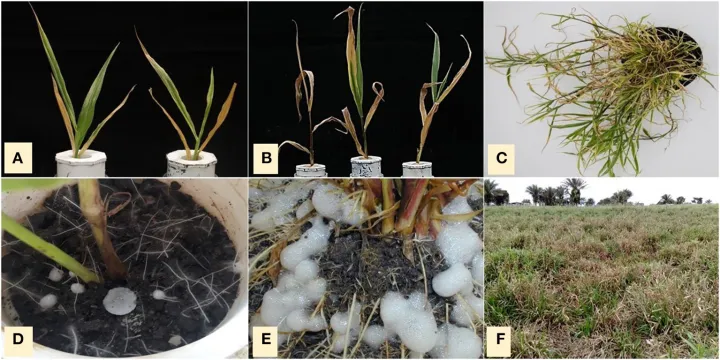
The most distinctive sign of infestation is the presence of white, frothy spittle at the base of the sugarcane stalk. This foam protects the nymphs from desiccation and predators.
Leaf symptoms include the development of yellow streaks, browning at the margins, and eventual death of the foliage. These signs are often mistaken for drought stress or nutritional deficiencies.
Infested fields exhibit patches of uneven growth or stunted development. The plants may appear less resilient and prone to lodging due to root damage caused by the nymphs.
Adult spittlebugs can be easily detected by gently shaking the sugarcane stalks, which triggers the insects to jump. They are most active during the early morning and late afternoon.
In cases of high infestation, a burnt appearance of the foliage is common. Visual inspection of the root zone and canopy is essential for early detection and timely management.
Control measures
Management of the sugarcane spittlebug requires an integrated pest management (IPM) strategy. Early monitoring is critical to prevent the population from reaching economic threshold levels.
Chemical control involves the application of systemic or contact insecticides during peak adult activity. Precision timing is necessary to maximize efficiency and minimize environmental impact.
Biological control utilizing entomopathogenic fungi, such as Metarhizium anisopliae or Beauveria bassiana, has proven effective in reducing nymphal populations in the field.
Good agricultural practices, including proper weed management and irrigation control, are vital. Removing weeds helps eliminate alternative food sources for the spittlebug during the off-season.
- Regular field scouting and population monitoring.
- Deployment of pheromone traps for early warning.
- Use of resistant sugarcane varieties where available.
- Sanitation measures to reduce egg-laying sites.
Taxonomy
- Latin name
- Aeneolamia varia
- Order
- Hemiptera (bugs, aphids, leafhoppers)
- Family
- Cercopidae
- EPPO code
- TOMAPR
Discussion
No discussions yet — be the first.