
Zeoliarus
Zeoliarus
Description
How to identify
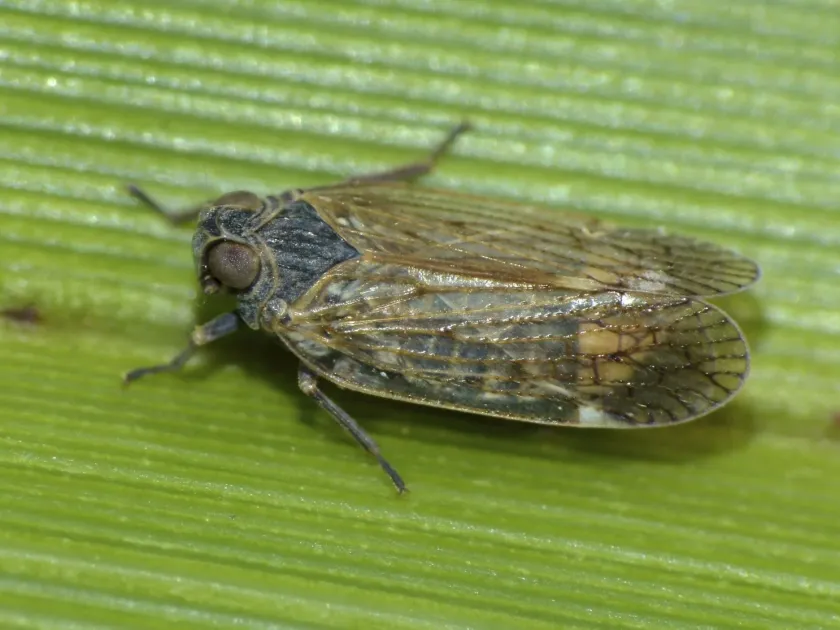
Zeoliarus belongs to the family Cixiidae, suborder Auchenorrhyncha. These are small insects that, in the adult stage, possess a characteristic wing structure held tent-like over the body.
The appearance of adults includes a well-developed proboscis for sap-feeding. The coloration usually ranges from brownish to dark shades, providing excellent camouflage on stems and leaves.
Nymphs of Zeoliarus live a hidden life, primarily inhabiting the soil or the root zone of plants. They have light-colored bodies and specialized mouthparts for sucking sap from roots.
Systematically, these pests are related to other planthoppers but differ in specific genital morphology and wing venation, which is crucial for precise species identification.
This genus of insects is widely distributed across various climate zones, adapting to both open-field and greenhouse conditions depending on the specific species.
What it damages
Zeoliarus damages a wide range of agricultural crops, including vegetables, berries, and some woody species. Most damage occurs on young plants during the active growth phase.
Primary damage is caused by both adults and nymphs feeding on cell sap. This leads to metabolic disruption, stunted growth, and a significant decrease in the plant's overall vigor.
Besides direct mechanical damage, these insects are potential vectors of phytoplasma and viral plant diseases. Saliva injection during feeding often triggers tissue toxicosis.
Severe infestation of the root system by nymphs can lead to the wilting of the entire plant, premature leaf drop, and a substantial reduction in crop yields.
During mass outbreaks, the wilting of specific plant parts and the loss of market quality make control measures absolutely critical for growers.
When it appears
The life cycle of Zeoliarus typically involves several generations per year, depending on regional temperature regimes and soil moisture levels.
In spring, as the soil warms up, nymphs begin active feeding in the root zone. Adults appear in late spring or early summer, starting the migration and reproduction process.
Peak population levels are usually recorded during the summer months when weather conditions are most favorable for rapid development and multiple generations.
In autumn, insects either enter diapause or lay eggs that overwinter in the soil or on plant debris, waiting for the return of favorable conditions.
Monitoring for the pest should begin at the seedling stage, utilizing sticky traps to control the density of adult populations.
Signs of infestation
The presence of Zeoliarus is indicated by general plant suppression: plants become stunted, leaves lose turgor and develop a chlorotic shade.
Upon careful inspection of the root collar and roots, one may discover nymphs or their waste products in the form of specific waxy secretions.
The above-ground parts of the plant may show signs of viral infection, such as leaf curling or abnormal branching, caused by the vector's activity.
- Yellowing of leaf edges
- General slowdown in vegetative growth
- Adults visible upon shaking stems
- Secondary fungal infections at puncture sites
If clusters of sudden plant wilting are observed in the field, a thorough root system examination should be conducted to check for Cixiidae nymphs.
Control measures
Effective control of Zeoliarus requires an integrated approach, combining agrotechnical, biological, and chemical methods to influence the population.
A key agrotechnical measure is regular weed control, as weeds serve as reservoirs for the pest, along with deep autumn plowing to destroy overwintering stages.
Chemical control involves the use of systemic insecticides during periods of mass nymph emergence and adult migration, effectively reducing numbers below economic thresholds.
Biological control includes the use of entomophages, natural predators of planthoppers, or microbial-based products that target insects within the soil profile.
Prevention involves strict crop rotation and the use of high-quality, virus-free planting material to minimize the risk of diseases transmitted by Zeoliarus.
Taxonomy
- Latin name
- Zeoliarus
- Order
- Hemiptera (bugs, aphids, leafhoppers)
- Family
- Cixiidae
- EPPO code
- ZEOLSP
Discussion
No discussions yet — be the first.