
Common froghopper
Cixius nervosus
Description
How to identify
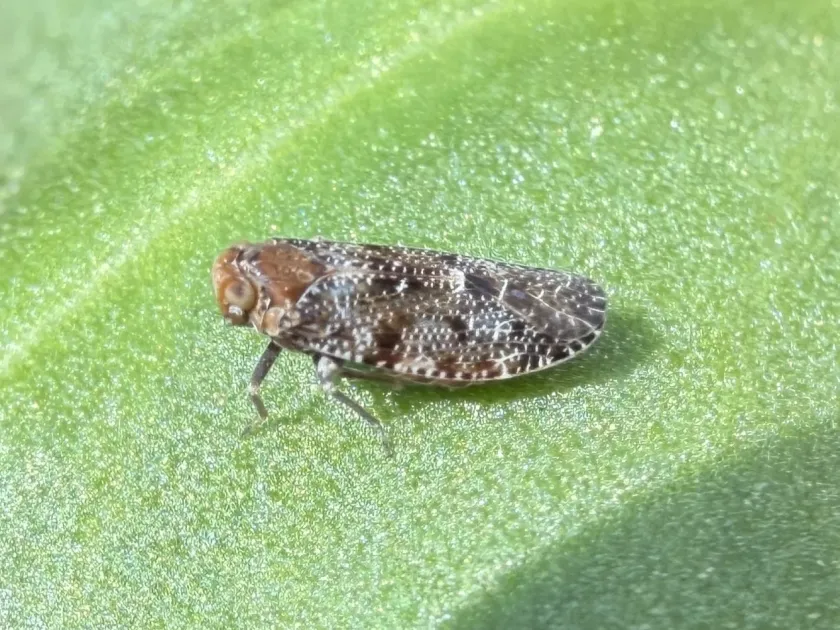
The common froghopper, Cixius nervosus, is a species of planthopper belonging to the family Cixiidae. Adult insects are typically 7-9 mm long and have a distinct appearance.
They are known for their clear wings with very prominent dark veining, which is the most reliable feature for identification. Their body color is generally brown or dark brown with lighter markings.
The nymphs of this species are rarely seen because they live in the soil or under layers of leaf litter, where they feed on the roots of various host plants.
Adult froghoppers are highly agile and possess strong jumping legs, allowing them to escape quickly when disturbed by human presence or predators in the canopy.
These insects are widespread in temperate regions, commonly inhabiting forest edges and hedgerows, from where they can easily migrate into orchards and garden spaces.
What it damages
This pest affects a wide range of woody plants and fruit trees, including apple, pear, plum, and cherry, as well as various ornamental shrubs in the garden.
The primary damage occurs when adults use their piercing-sucking mouthparts to feed on plant sap, which deprives the plant of essential nutrients and energy.
A significant risk associated with this species is its role as a vector for various plant diseases, including phytoplasmas, which are transmitted during feeding.
Damaged leaves often show signs of chlorosis, curling, and deformation, which can lead to premature leaf drop and reduced photosynthetic capacity of the tree.
Heavy infestations can significantly weaken young trees, making them more susceptible to environmental stress and secondary infections by fungi or other pests.
When it appears
The species completes one generation per year. They overwinter as nymphs in the soil or sheltered spots under tree debris, surviving the cold season in this protected stage.
In spring, as soil temperatures rise, the nymphs begin feeding on roots and continue their development before preparing to emerge as adults at the start of summer.
Adult activity peaks during the months of June and July, when they are most visible in the canopy, moving between branches to feed and find mates.
Egg-laying takes place in the second half of the summer, with females depositing eggs in the soil or into crevices in the bark of trees, often near mossy areas.
By autumn, the eggs hatch into the next generation of nymphs, which retreat into the soil to begin their overwintering process, ensuring the cycle continues.
Signs of infestation
The presence of honeydew on the foliage is a primary sign of infestation. This sticky substance is secreted by the insects as they feed on the sap.
Sooty mold growth often develops on the honeydew, turning leaves black and further reducing the plant's ability to undergo normal gas exchange and photosynthesis.
Careful inspection of the tree canopy in the morning can reveal the jumping adults, which scatter rapidly when the branches are gently shaken by the gardener.
Wilting of leaves and general stunted growth of terminal shoots, despite adequate soil moisture, suggest that sap-sucking insects are active within the canopy.
Small chlorotic spots or mottled appearances on the leaf surfaces are frequent symptoms caused by the localized feeding of Cixius nervosus nymphs or adults.
Control measures
Effective management relies on a combination of cultural practices and targeted interventions to reduce the pest population below the economic damage threshold.
- Remove leaf litter and weeds from around the base of trees to eliminate overwintering sites for nymphs.
- Scrape off moss and loose bark from tree trunks to reduce suitable egg-laying sites.
- Use insecticidal soaps or horticultural oils for direct contact control of adult populations in the canopy.
- Encourage natural predators such as ladybirds and lacewings that feed on planthoppers in the garden.
- Monitor tree health regularly to detect early signs of infestation and prevent secondary pathogen transmission.
Application of systemic or contact insecticides should be timed to coincide with the peak adult emergence in early summer for maximum efficacy.
Maintaining strong plant health through proper fertilization and irrigation helps the trees withstand the stress caused by minor levels of pest feeding.
Always source nursery stock from certified providers to ensure that you are not introducing infested plant materials into your garden environment.
Taxonomy
- Latin name
- Cixius nervosus
- Order
- Hemiptera (bugs, aphids, leafhoppers)
- Family
- Cixiidae
- EPPO code
- CIXINE
Discussion
No discussions yet — be the first.