
Zelus renardii
Zelus renardii
Description
How to identify
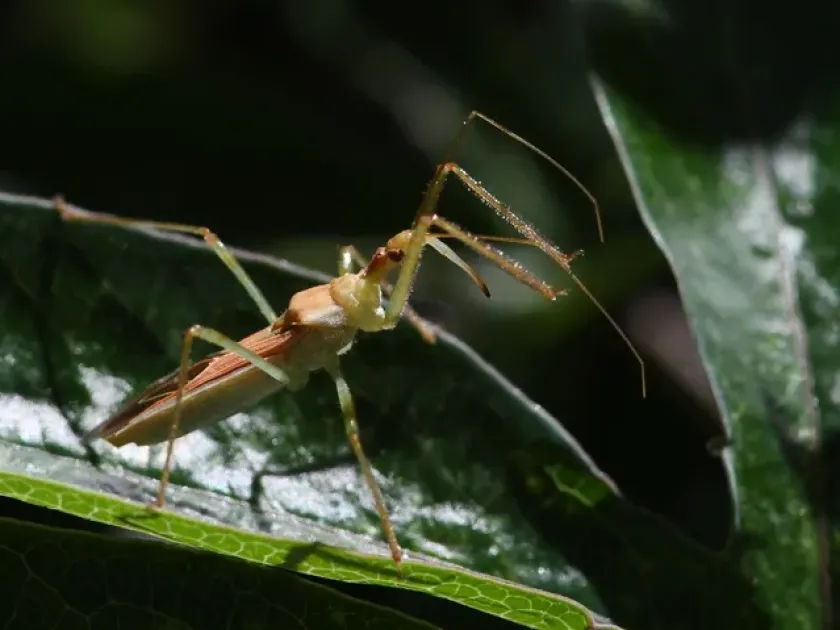
Zelus renardii, commonly known as the leafhopper assassin bug, is a member of the Reduviidae family. Adult bugs are typically 11–13 mm long and possess a distinctive yellowish-orange or brown body.
The key morphological characteristic is a prominent spine on the pronotum. Their legs are elongated and slender, optimized for roaming across vegetation while hunting or searching for mates.
The life cycle involves several nymph stages. Nymphs resemble miniature versions of adults but lack functional wings. They are highly mobile and become aggressive predators early in their development.
Eggs are deposited in batches, often glued to the undersides of leaves. These egg clusters are usually protected by a sticky secretion that makes them resistant to environmental stressors.
While often categorized as a beneficial predator, in the absence of prey, this species can turn to sap-feeding, which classifies it as a potential agricultural pest in various regions.
What it damages
This bug affects a wide array of crops, including tomatoes, grapes, citrus fruits, cotton, and ornamental flowers. It uses its sharp rostrum to pierce plant tissues.
Upon feeding, the bug injects enzymes that break down plant cells. This process causes localized necrosis, visible as small spots or larger necrotic lesions on the leaves and stems.
Feeding on reproductive parts, such as buds and young fruit, can lead to stunted growth or even premature shedding of flowers, directly impacting the final yield.
The damage often facilitates the entry of secondary pathogens, such as fungi or bacteria, which can cause rotting of fruit and further weaken the host plant's structure.
On a commercial scale, the aesthetic damage to crops reduces market value, particularly for high-quality fruits and flowers intended for export or retail sale.
When it appears
The seasonal activity of Zelus renardii is strongly correlated with regional temperature. In warmer climates, it can remain active and reproduce throughout the entire growing season.
Population density typically peaks during mid-summer when high temperatures and abundant prey availability allow for rapid completion of successive generations.
During the cooler months, adults undergo a form of dormancy, seeking shelter in plant debris, tree crevices, or man-made structures to survive the winter period.
As spring begins, overwintering adults emerge and migrate to available green foliage to begin the cycle of mating and oviposition on young crops.
Variations in humidity and rainfall significantly influence population dynamics, as both nymphs and adults require stable environmental conditions for optimal survival.
Signs of infestation
Visual identification starts with spotting small, necrotic punctures on leaves. Over time, these spots can expand, leading to chlorosis and subsequent drying of the leaf tissue.
The presence of egg masses on the undersides of leaves is a primary indicator. These masses appear as small, tightly packed capsules, often dark or metallic in appearance.
Accumulation of black excrement droplets on leaf surfaces is another clear sign of a significant infestation, marking the areas where the bugs have been actively feeding.
Deformation of young shoots and stunted terminal growth are common secondary symptoms that indicate the plant is struggling due to chronic sap-sucking and tissue damage.
Presence of bugs on plant tips during early morning or evening hours is a reliable observation method for determining the extent of the infestation on your plot.
Control measures
Integrated pest management (IPM) is recommended, starting with maintaining field hygiene by removing crop residues and weeds that harbor overwintering populations.
Biological control involves fostering natural predators such as birds, spiders, or parasitic wasps that help keep the bug population below the economic injury level.
Chemical intervention should be considered a last resort. Use selective insecticides that target the pest while minimizing negative impacts on non-target beneficial insects.
Yellow sticky traps or pheromone monitoring can be highly effective in both greenhouses and open fields to track migration patterns and reduce adult bug numbers.
For protected cultivation, installing fine-mesh netting on ventilation systems is a physical barrier method that prevents adult bugs from colonizing the crop area.
Taxonomy
- Latin name
- Zelus renardii
- Order
- Hemiptera (bugs, aphids, leafhoppers)
- Family
- Reduviidae
- EPPO code
- ZELURE
Discussion
No discussions yet — be the first.