
Acholla multispinosa
Acholla multispinosa
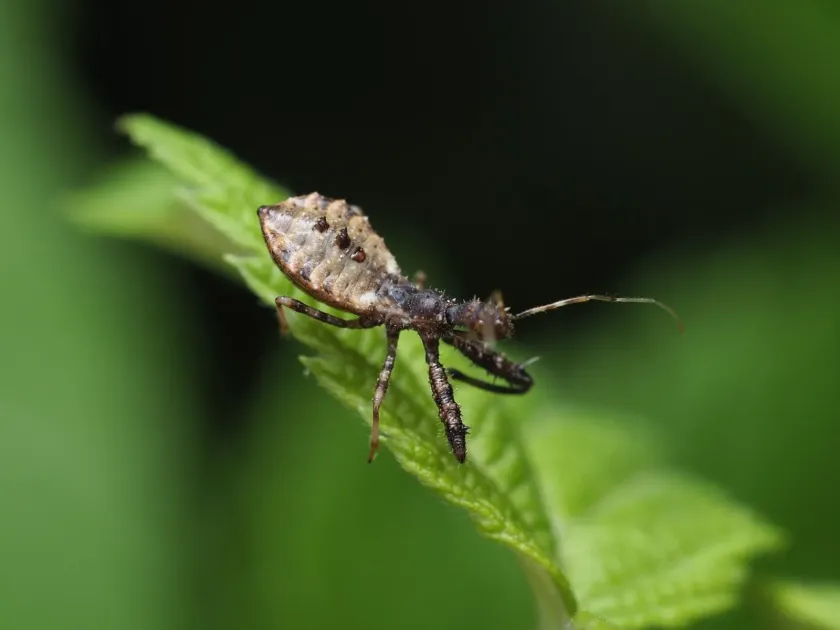
Description
How to identify
Acholla multispinosa, commonly known as a type of assassin bug, belongs to the Reduviidae family. It is characterized by its elongated body and distinct spines located on the pronotum.
Adult specimens typically reach 12–15 mm in length. Their coloration ranges from yellowish-brown to dark brown, providing excellent camouflage against bark and plant stems.
The head is elongated with a robust proboscis designed to pierce the cuticle of its prey. The eyes are large and well-developed, playing a crucial role in locating prey during hunting.
Nymphs resemble smaller, wingless versions of adults. They progress through several instars, increasing in size as they feed on available insects within their habitat.
As a predatory species, it plays a complex role in the food web, sometimes acting as an antagonist to other beneficial insects in agricultural settings.
What it damages
While Acholla multispinosa is primarily a predator, it can disrupt local ecosystems by preying on beneficial insects such as lacewings or lady beetles, which are vital for natural pest control.
In orchards and agro-ecosystems, their presence can indirectly lead to an increase in other pest populations if they eliminate the natural enemies of those pests.
They do not cause direct damage to fruit or vegetable tissues, as they are not herbivores. Their impact is strictly related to predator-prey dynamics within the ecosystem.
Excessive populations of this species may create competition for limited prey resources, forcing other beneficial predatory insects to migrate from the area.
In nursery settings, high densities of these bugs can be a nuisance during manual plant maintenance, although they are generally not considered major agricultural pests.
When it appears
The activity of Acholla multispinosa begins in the spring once temperatures remain consistently above 15 degrees Celsius.
Peak activity and reproductive periods occur during the summer months when there is an abundance of soft-bodied prey insects in gardens and fields.
As autumn approaches, the bugs search for suitable overwintering sites, such as bark crevices, leaf litter, or debris under trees.
These insects overwinter primarily as adults in a state of diapause, allowing them to survive cold winters and emerge in the following spring.
Their life cycle is highly synchronized with the availability of prey, making them most active during periods of high insect activity in the garden.
Signs of infestation
Detection is often difficult due to the bug's sedentary behavior and natural camouflage that blends perfectly with tree bark and branches.
The use of light traps at night is a common method for researchers and farmers to monitor the presence and population density of these insects.
Observing a decline in the population of other beneficial predatory insects may serve as a secondary indicator that a predator like this is active in the area.
During daylight inspections, one might spot individuals remaining perfectly still on branches, waiting for potential prey to come within striking distance.
Nymphs are sometimes found in small clusters on the underside of leaves or within dense foliage, where they seek protection from larger predators.
Control measures
Specific chemical control is rarely necessary for Acholla multispinosa as it is not a direct threat to crop health and often acts as a beneficial predator itself.
Management should focus on integrated pest management practices that prioritize maintaining a healthy balance of all predatory species in the area.
If population control is needed in greenhouse environments, physical removal or exclusion methods are safer than broad-spectrum insecticide applications.
Avoiding unnecessary pesticide use is essential, as these chemicals often harm beneficial insects more severely than the predatory bugs themselves.
- Maintain clean orchards by removing excessive debris and weeds in late autumn.
- Promote bird habitats to encourage natural regulation of insect populations.
- Use light traps only for monitoring purposes rather than eradication.
Taxonomy
- Latin name
- Acholla multispinosa
- Order
- Hemiptera (bugs, aphids, leafhoppers)
- Family
- Reduviidae
- EPPO code
- ACLLMU
Discussion
No discussions yet — be the first.