
Wheel bug
Arilus
Description
How to identify
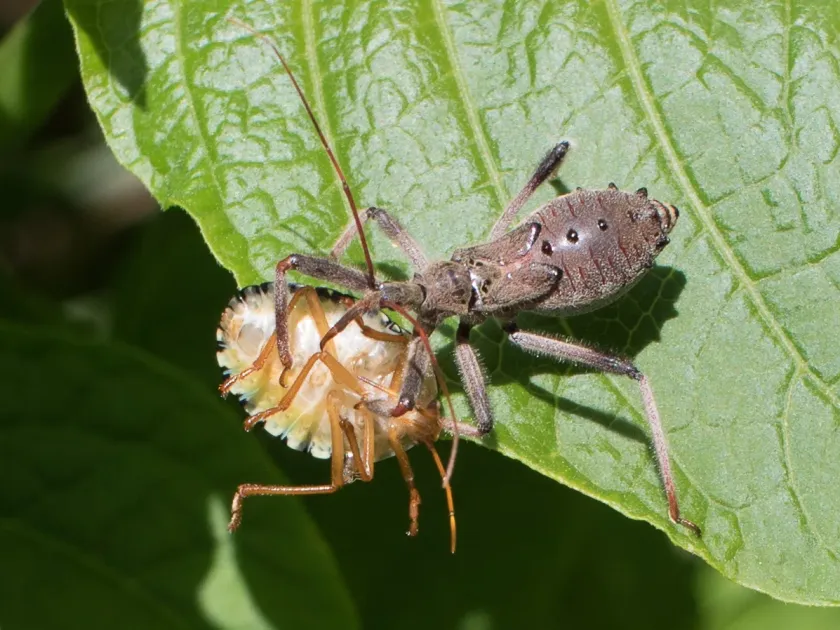
The genus Arilus comprises large predatory insects, with Arilus cristatus, commonly known as the wheel bug, being the most recognized species. Adults grow up to 3-4 centimeters in length and are distinguished by a prominent, cogwheel-like crest on their thorax.
These insects have a gray or brownish coloration, allowing them to blend seamlessly with tree bark. Their head is elongated, featuring powerful antennae and a strong, curved beak used to pierce the exoskeleton of prey and inject digestive enzymes.
Eggs are laid in clusters, resembling honeycomb structures, and are protected by a thick, hardened casing. Nymphs look like smaller versions of adults, often featuring bright red or orange spots on their abdomens, which serve as a warning to potential predators.
Taxonomically, they belong to the family Reduviidae, the assassin bug family. As ambush predators, they wait for their prey to approach before striking, which makes them highly effective in natural pest control within agricultural settings.
While they are formidable predators, they are not phytophagous and do not feed on plant tissues. However, their painful bite is a significant consideration for gardeners and farmers who interact with them regularly during harvest or maintenance.
What it damages
Wheel bugs do not cause direct damage to cultivated plants. They are strictly predatory and hunt a wide variety of garden pests, including caterpillars, Japanese beetles, and various other harmful insects, effectively maintaining ecosystem balance.
Under rare circumstances, if prey is scarce, they may be found on crops, but they do not consume plant juices. Their presence in the garden is generally a sign of a healthy, biodiverse environment that can naturally suppress pest populations without chemicals.
Indirect harm is minimal; while they might occasionally prey on beneficial insects like bees, field observations confirm that they prefer larger, more destructive pest larvae, which are a major concern for crop production.
The primary issue regarding human interaction is their defensive behavior. If handled or provoked, they can deliver a very painful bite that may cause inflammation or swelling. Thus, they are seen as "beneficial but touchy" inhabitants of the farm.
Therefore, managing wheel bugs is rarely about control but rather about caution. Keeping them in the landscape provides free biological pest control, which is far more valuable than the minor risk they pose to human hands when careful techniques are used.
When it appears
Wheel bugs typically have one generation per year. Adult activity is most noticeable from mid-summer through late autumn, during which time they are actively hunting and preparing for the mating season.
Eggs are deposited in the fall and remain dormant through the winter, often attached to branches or stems. Hatching occurs in the spring as temperatures rise, signaling the start of the nymphs' rapid growth phase as they seek out food sources.
Nymphs undergo several molting stages over the summer months. During this developmental period, they require significant protein intake, making them highly active hunters on fields and garden beds during the peak growing season.
The insects' lifecycle is perfectly synchronized with the peak abundance of many common crop pests. As temperatures drop and the first frost approaches, their activity wanes, and they enter the egg-laying phase to ensure the next generation survives.
While the exact timing can vary slightly by region and climate, the general seasonal progression remains consistent, reflecting the temperature-dependent nature of their developmental cycle.
Control measures
There is no reason to apply active control measures against wheel bugs, as they are considered beneficial predatory insects. In integrated pest management (IPM), protecting and fostering their population is often encouraged to reduce reliance on insecticides.
If they must be removed from high-traffic areas, such as near children's play zones or harvest areas, manual removal using thick gloves is the most practical and safe approach to avoid bites.
Avoid broad-spectrum pesticide applications, as these will kill the wheel bugs along with other beneficial natural enemies, potentially triggering a resurgence of actual plant pests that the wheel bugs were previously keeping in check.
Gardeners are encouraged to learn to recognize these beneficial predators and protect them. Creating habitat refuges for them, such as leaving some areas of the garden undisturbed, can enhance the natural biological regulation of the environment.
- Maintain wheel bug populations as natural pest control.
- Use protective gloves when working in areas where bugs are present.
- Avoid chemical insecticide use to protect beneficial species.
- Monitor the garden for actual pests rather than eliminating predators.
- Foster a diverse garden ecosystem to support insect balance.
Taxonomy
- Latin name
- Arilus
- Order
- Hemiptera (bugs, aphids, leafhoppers)
- Family
- Reduviidae
- EPPO code
- ARILSP
Discussion
No discussions yet — be the first.