
Empicoris
Empicoris
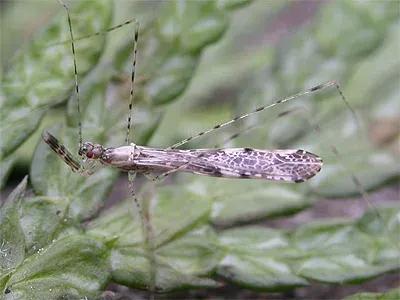
Description
How to identify
Empicoris is a genus of thread-legged bugs belonging to the family Reduviidae (assassin bugs). These insects are characterized by their extremely slender, elongated bodies and long, delicate legs, often mimicking crane flies in their general appearance.
Typically, adult specimens measure between 5 to 7 millimeters in length. Their heads are elongated, featuring a well-developed proboscis used for feeding, which remains tucked against the underside of the body when the insect is at rest.
Their coloration usually ranges from pale brown to grey, providing excellent camouflage against tree bark, dried leaves, or plant stems where they reside. This cryptic appearance makes them difficult to spot with the naked eye.
Systematically, they are part of the subfamily Emesinae. Unlike the common assassin bugs that people might expect, these insects lead a very hidden lifestyle, often residing in cluttered environments like cobwebs or bark crevices.
While they are primarily predators, they can be found on various plants, and their presence is often viewed with caution by agronomists due to their potential to disrupt plant tissues during their search for moisture or prey.
What it damages
Empicoris bugs are occasionally found on a variety of fruit trees, ornamental shrubs, and greenhouse crops. The damage they cause is primarily mechanical, resulting from their piercing-sucking mouthparts.
They often frequent the bark of trees, where they hunt smaller insects like aphids or spider mites. However, during periods of prey scarcity, they may feed on plant fluids, causing localized tissue damage.
In ornamental gardens and greenhouses, they can damage young shoots and flower buds. These small, puncture-like wounds can lead to localized necrosis, which reduces the aesthetic value and physiological health of the plant.
Their movement across foliage can also contribute to the spread of plant pathogens, as they may carry bacteria or fungal spores on their long legs from one plant to another.
Severe infestations are rare, but cumulative damage from multiple individuals can weaken plants, making them more susceptible to environmental stress and secondary pathogen colonization.
When it appears
The activity cycle of Empicoris is closely linked to seasonal temperatures. Adults emerge in spring when temperatures consistently rise above 12–15 degrees Celsius.
Summer months represent the peak of their lifecycle, during which they actively reproduce and develop through several nymphal stages. Population density is usually highest during mid-summer.
As autumn approaches and temperatures drop, adults seek shelter for hibernation. They typically overwinter in protected areas such as bark cracks, leaf litter, or crevices in garden structures.
The number of generations per year is influenced by the local climate. In warmer southern regions, multiple generations may occur annually, while cooler climates likely support only a single generation.
These bugs are predominantly nocturnal or crepuscular, showing higher activity levels during the evening hours, which often leads to them being overlooked during daytime horticultural inspections.
Signs of infestation
The presence of Empicoris is often indicated by tiny, pinpoint-sized necrotic spots on young leaves. These marks may yellow over time as the plant tissue dies around the puncture point.
One of the most reliable signs of their presence is the discovery of discarded exoskeletons (exuviae). These thin, translucent shells are often left behind on the underside of leaves after the nymphs molt.
A cluttered appearance on stems or branches, involving bits of debris or strange webbing, may suggest a nesting site or a hunting ground for these thread-legged bugs.
Since they do not form large, conspicuous colonies, growers must perform thorough inspections using a magnifying glass to identify individuals resting on plant stalks or veins.
- Small, dark, or yellow necrotic spots on foliage.
- Translucent cast-off skins on stems or leaves.
- Unexpected wilting of small branches despite adequate soil moisture.
Control measures
Managing Empicoris populations begins with good horticultural hygiene. Removing old, loose bark from fruit trees in winter can destroy prime overwintering sites.
Sanitation in and around greenhouse facilities is critical. Clearing weeds and debris from the perimeter eliminates refuge areas and reduces the likelihood of pest migration into the growing zone.
Chemical control is rarely necessary but can be implemented using broad-spectrum insecticides if populations reach levels that compromise crop health or marketability.
Biological control, such as encouraging local insectivorous bird species or preserving natural predators, is generally preferred to maintain an ecological balance in orchards and gardens.
Applying sticky bands around tree trunks can help monitor and trap adult insects as they move, effectively reducing their ability to access higher branches and foliage.
Taxonomy
- Latin name
- Empicoris
- Order
- Hemiptera (bugs, aphids, leafhoppers)
- Family
- Reduviidae
- EPPO code
- EMPISP
Discussion
No discussions yet — be the first.