
Wheel bug
Arilus cristatus
Description
How to identify
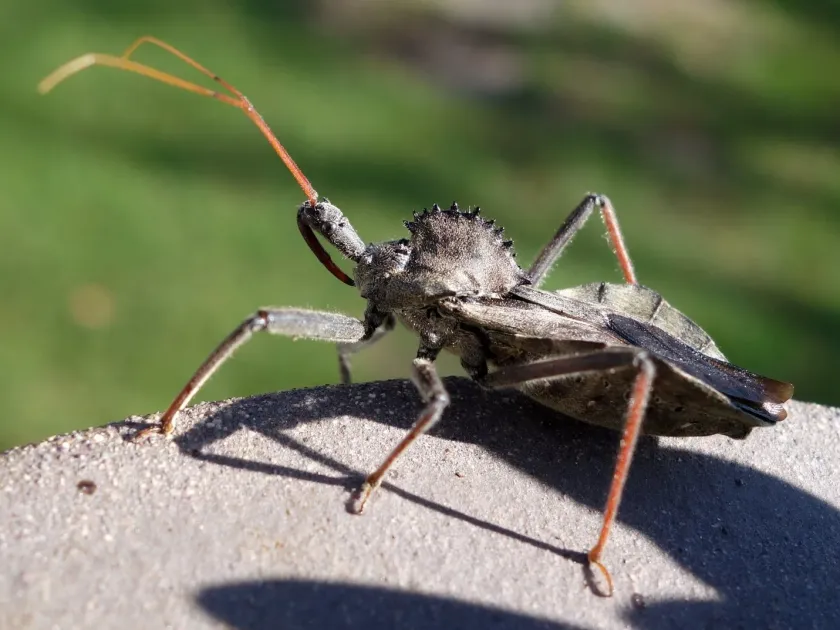
The wheel bug is a large member of the assassin bug family (Reduviidae). It is most easily identified by the unique, semi-circular crest on its thorax, which resembles the cog of a gear or a wheel.
Adults typically reach 1.2 to 1.5 inches in length. They are usually grey or brownish in color, with long legs and a very distinct, menacing appearance that helps them blend into tree bark.
Nymphs go through five distinct stages of development, often appearing bright red with black markings. This coloration is a classic example of aposematism, warning predators of their toxicity or defensive capability.
The mouthparts consist of a strong, curved proboscis that stays tucked beneath the thorax. This structure is used to pierce prey and inject saliva containing enzymes that liquefy internal tissues for consumption.
Wheel bugs are solitary hunters. They are commonly found on tree trunks, branches, and among foliage in gardens and woodlands where they wait patiently for unsuspecting prey to pass by.
What it damages
The wheel bug is not a crop pest. In fact, it is considered a beneficial insect because it feeds on a wide range of garden and forest pests, including caterpillars, beetle larvae, and aphids.
It does not feed on plant sap or foliage. Its predatory nature makes it an ally for organic gardeners, as it effectively helps to reduce the populations of insects that cause structural damage to plants.
The only concern regarding "damage" is its impact on humans. If handled or provoked, the wheel bug can deliver a bite that is described as extremely painful, often causing swelling and lingering discomfort.
In rare instances, if the population is overly high, they might prey on other beneficial insects, such as pollinators. However, this is rarely seen as a major ecological problem compared to the benefit they provide.
Overall, the economic impact is positive. They function as natural biological control agents, providing free pest management services that reduce the need for chemical insecticides in the orchard.
When it appears
Wheel bugs have a single generation per year. They overwinter in the egg stage, which are laid in clusters of up to 200 on tree trunks or branches, held together by a glue-like cement.
Hatching occurs in the spring, typically around late April or May, depending on the temperature. The young nymphs begin hunting almost immediately, targeting small soft-bodied insects.
Throughout the summer, the nymphs mature into adults. By mid-summer and early autumn, they reach their peak activity levels, and adult bugs become significantly more noticeable as they search for mates.
Mating occurs during the late summer or autumn. After mating, the females deposit their egg clusters in protected areas, ensuring that the next generation is ready for the upcoming spring cycle.
This life cycle is well-synchronized with the presence of prey species, ensuring a constant food supply throughout the growth stages of the nymphs and the adult bug's active season.
Control measures
Generally, no control measures are necessary. Wheel bugs are valuable predatory insects that contribute to the health of the local ecosystem and help suppress populations of true plant pests.
If you need to avoid contact for safety reasons, simply wear gloves and long-sleeved clothing when working in areas where these bugs are known to reside, particularly while pruning trees.
The use of broad-spectrum pesticides is highly discouraged, as these chemicals kill beneficial insects like wheel bugs, potentially causing a surge in the populations of the pests you are trying to control.
If a population is causing excessive concern, physical removal is a safe and environmentally friendly option. Simply relocate the individuals to a nearby wooded area where they can continue their hunting.
Promoting a balanced garden ecosystem is the best approach. By avoiding harsh chemical inputs, you allow the natural population of wheel bugs to thrive and perform their role as biological pest managers.
Taxonomy
- Latin name
- Arilus cristatus
- Order
- Hemiptera (bugs, aphids, leafhoppers)
- Family
- Reduviidae
- EPPO code
- ARILCR
Discussion
No discussions yet — be the first.