
Coranus subapterus
Coranus subapterus
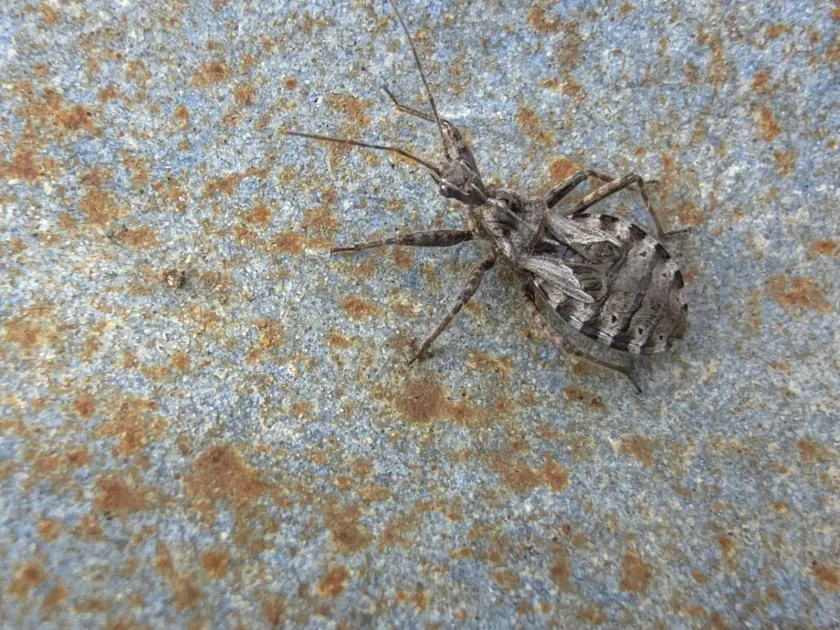
Description
How to identify
Coranus subapterus is a species of predatory insect belonging to the order Hemiptera and the family Reduviidae, commonly known as assassin bugs. It is primarily a ground-dwelling species found in meadows and agricultural fields.
Adults exhibit the characteristic elongated body of Reduviidae, equipped with a strong, curved rostrum designed to pierce the cuticle of their prey. Their coloration varies from brown to greyish, serving as effective camouflage against soil and plant debris.
A notable feature of this species is wing polymorphism, where many individuals possess reduced or brachypterous wings. This anatomical trait limits their flight capabilities, forcing them to remain terrestrial foragers within their habitat.
Nymphs resemble smaller versions of the adults but lack developed reproductive organs. They are predatory throughout all nymphal stages, actively searching for food in the lower strata of vegetation and on the soil surface.
These bugs prefer sunny, warm microclimates. They are frequently observed in pastures, field margins, and cultivated areas where the abundance of other arthropods provides a steady food source.
What it damages
Although Coranus subapterus is primarily a predator, its classification as a pest is complex. It acts as an entomophagous insect, playing a role in regulating the populations of various smaller invertebrates.
Their primary diet consists of aphids, leafhoppers, caterpillars, and other small insects. They ambush their prey and inject digestive enzymes, liquefying the internal tissues for consumption.
Direct damage to agricultural crops is rare. However, in scenarios where their usual prey density is low, they may exhibit opportunistic feeding behavior, occasionally piercing soft plant tissues for moisture or nutrients.
In most agroecosystems, their presence is considered beneficial or neutral, as they help suppress outbreaks of harmful phytophagous insects without causing significant economic losses to the farmer.
Economic damage only becomes a concern in high-density populations where their hunting activities on vegetable or berry crops might cause minor mechanical injury or stress to delicate plant tissues.
When it appears
The seasonal activity of Coranus subapterus is strictly governed by temperature fluctuations. Following overwintering, adults emerge in early spring to initiate mating and foraging activities.
Population peaks are typically observed during the summer months when soil warmth and a high abundance of insect prey provide optimal conditions for the rapid development of multiple generations.
As temperatures decline in autumn, the bugs enter a state of diapause. Overwintering occurs mainly in the adult stage or as late-instar nymphs, seeking refuge in leaf litter, under stones, or within the soil surface layers.
The life cycle is usually limited to one or two generations per year, depending on the climatic zone and the duration of the frost-free season in the region.
Tracking the seasonal emergence and peak activity periods is crucial for farmers aiming to leverage biological control, as these predators can effectively reduce pest loads early in the season.
Control measures
Specific control measures against Coranus subapterus are generally unnecessary as they are considered beneficial predators rather than primary agricultural pests.
When pest management is required on a farm, an integrated approach should be prioritized, avoiding broad-spectrum insecticides that would inadvertently eliminate beneficial predatory populations.
Standard agronomic practices such as deep autumn plowing can help manage overwintering populations if their presence in specific fields reaches levels that threaten crop stability or quality.
The use of selective insecticides targeting specific primary pests is recommended to maintain the ecological balance and preserve natural enemies like Coranus subapterus.
Regular field monitoring using pitfall traps is the most effective way to assess the actual population density before deciding on any management interventions that might disrupt the biological balance.
Taxonomy
- Latin name
- Coranus subapterus
- Order
- Hemiptera (bugs, aphids, leafhoppers)
- Family
- Reduviidae
- EPPO code
- KORNSU
Discussion
No discussions yet — be the first.