
Acholla
Acholla
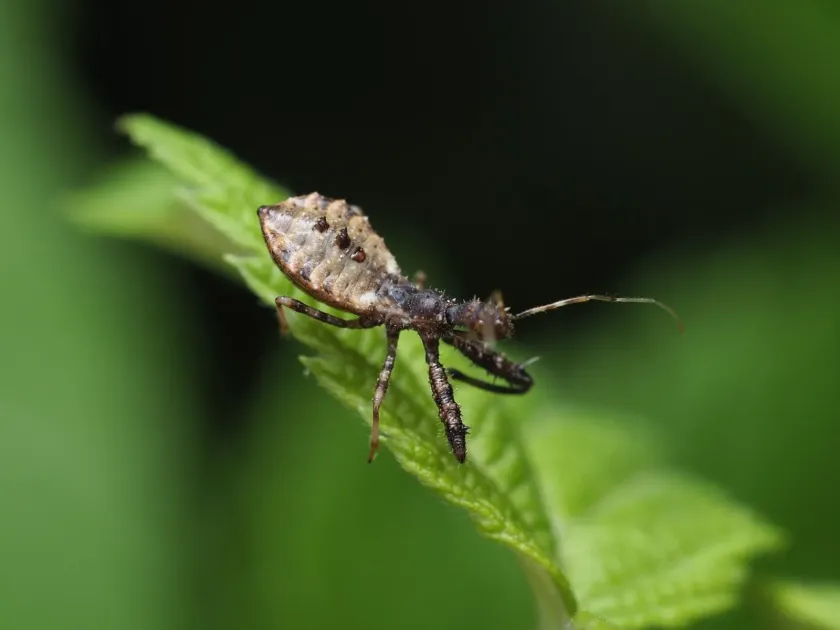
Description
How to identify
The genus Acholla belongs to the family Reduviidae (assassin bugs) within the order Hemiptera. The most recognized species is Acholla multispinosa.
These insects are characterized by their robust bodies with spines on the pronotum, which aid in camouflage against tree bark and foliage.
Adults possess a prominent, curved rostrum used for piercing the prey and injecting paralyzing digestive enzymes.
Their coloration is typically cryptic, ranging from brown to grey, allowing them to remain undetected in their natural habitat.
They develop through incomplete metamorphosis, progressing through egg, nymph, and adult stages.
What it damages
It is critical to understand that members of the genus Acholla are beneficial predatory insects, not primary plant pests.
They act as natural enemies, hunting a variety of foliage-feeding caterpillars, beetles, and other harmful insects.
In agricultural and horticultural practices, their presence is highly valued for natural pest population regulation.
They do not consume plant tissues and therefore do not cause damage to crops, fruits, or leaves.
The economic impact of Acholla is positive, as they reduce the need for synthetic pesticide applications.
When it appears
Activity typically begins in the spring once temperatures are consistently warm, usually starting in May.
The peak population and hunting activity occur during mid-summer when prey abundance is highest.
As autumn approaches, individuals prepare for winter by seeking shelter in bark crevices or under leaf litter.
Their lifecycle is closely synchronized with the development of the trees they inhabit.
Overwintering occurs primarily at the egg stage, with eggs deposited in clusters on woody substrates.
Signs of infestation
The presence of these predators is detected through careful visual inspection of tree canopies during the day.
They are ambush predators, often found waiting on the undersides of leaves or along branches.
When disturbed, they move quickly or exhibit defensive behaviors to deter potential threats.
Unlike true pests, they do not leave characteristic feeding lesions, spots, or necrotic tissue on plants.
A reliable sign of their efficacy is a marked decline in caterpillar and soft-bodied insect numbers in the vicinity.
Control measures
As Acholla is a beneficial predator, management focuses on conservation rather than eradication.
Avoiding the use of broad-spectrum insecticides is essential to preserve these natural allies in the ecosystem.
Integrated Pest Management (IPM) practices should be adopted to ensure the survival of predatory populations.
Maintaining wild edges and diverse vegetation provides necessary habitats for these insects to thrive.
- Minimize insecticide application during periods of high beneficial activity.
- Use selective, narrow-spectrum pesticides only when strictly necessary.
- Monitor pest thresholds before making any decisions regarding chemical interventions.
Taxonomy
- Latin name
- Acholla
- Order
- Hemiptera (bugs, aphids, leafhoppers)
- Family
- Reduviidae
- EPPO code
- ACLLSP
Discussion
No discussions yet — be the first.