
Coranus assassin bug
Coranus
Description
How to identify
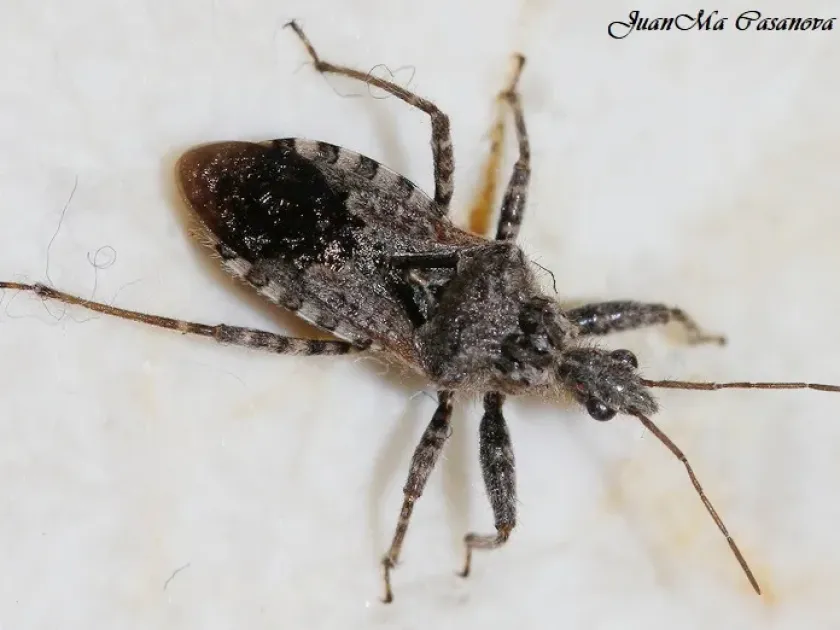
The genus Coranus belongs to the family Reduviidae, commonly known as assassin bugs. These insects are characterized by a long, narrow head, a prominent segmented rostrum (proboscis), and raptorial forelegs adapted for grabbing prey.
Adults typically exhibit earth-tone colors ranging from grey to brown, providing excellent camouflage against soil or plant debris. Their body shape is generally elongated, and they move with agility to pursue their targets.
Nymphs resemble smaller, wingless versions of adults. They pass through several developmental stages (instars) before reaching maturity, becoming more formidable predators at each phase.
This genus is widely distributed across various continents and habitats. While their appearance can be intimidating, they are significant allies in the agricultural landscape, functioning as generalist predators.
They are frequently misidentified by farmers as pests due to their resemblance to some plant-feeding bugs; however, their specialized mouthparts are built to pierce and feed on other insects, not plant tissues.
What it damages
The Coranus assassin bug causes no damage to crops. On the contrary, it acts as a beneficial entomophagous insect that plays a crucial role in suppressing pest populations naturally.
Their diet consists of a wide variety of prey, including larvae of Lepidoptera, beetles, and other small arthropods. By preying on these pests, they help reduce the damage caused by plant-eating insects.
In fields, the presence of these predators is an indicator of ecological stability. They do not consume plant sap, nor do they damage fruits, leaves, or stems of agricultural crops.
Because they are polyphagous, they do not rely on a single pest species, making them a consistent biological control agent throughout the growing season.
Managing the ecosystem to favor Coranus populations can significantly lower the need for synthetic pesticides, as they actively patrol the canopy and soil surface for prey.
When it appears
Activity starts in early spring when temperatures rise, prompting adults to emerge from overwintering sites such as leaf litter, soil crevices, or bark of nearby trees.
Lifecycle involves incomplete metamorphosis. Females lay eggs in clusters on various substrates, often choosing sheltered spots to protect the future generation from environmental stressors.
The peak activity period usually occurs during the height of the growing season (mid-summer), coinciding with the peak population density of many agricultural pests.
As temperatures drop in the autumn, these bugs seek refuge for diapause. They remain inactive during the winter, surviving in protected microhabitats until the next spring.
Depending on the latitude and climate, one or more generations per year can occur, ensuring their presence during the critical developmental phases of various crops.
Control measures
No control measures are necessary for Coranus, as they are not pests. Instead, agricultural management should focus on conserving these beneficial insects within the crop environment.
The use of broad-spectrum insecticides should be minimized or restricted to targeted applications, as these chemicals are highly toxic to assassin bugs and disrupt natural pest control services.
Implementing Integrated Pest Management (IPM) practices, which emphasize monitoring and thresholds, helps protect the resident population of Coranus.
Maintaining field margins and wildflower strips provides essential habitat and alternative prey, ensuring the long-term survival of these predators in the agroecosystem.
- Avoiding unnecessary use of pyrethroids and organophosphates.
- Promoting biodiversity in and around the crop fields.
- Using selective pest control products whenever possible.
Taxonomy
- Latin name
- Coranus
- Order
- Hemiptera (bugs, aphids, leafhoppers)
- Family
- Reduviidae
- EPPO code
- KORNSP
Discussion
No discussions yet — be the first.