
Zelus nugax
Zelus nugax
Description
How to identify
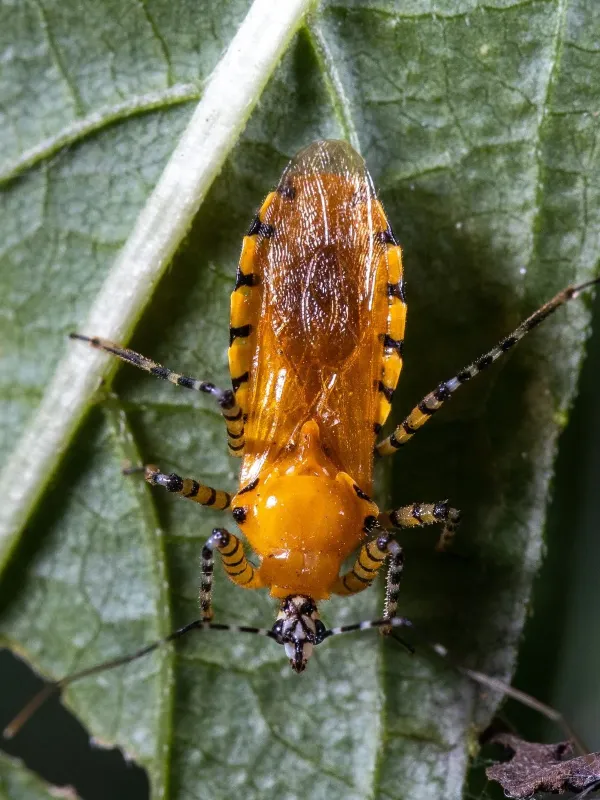
Zelus nugax belongs to the Reduviidae family, commonly known as assassin bugs, within the order Hemiptera. Adult individuals possess an elongated body characteristic of this family, often displaying yellowish-brown or dull brown coloration, which enables them to effectively camouflage themselves amidst foliage and twigs.
The pest's head is equipped with a well-developed proboscis, which remains folded against the underside of the thorax when the insect is at rest. The legs are long and often feature distinct spines, assisting in grasping prey during hunting, as this species exhibits predatory behavior alongside its plant-feeding habits.
Nymphs resemble the adults in appearance but lack wings and are smaller in size. As they develop through several instars, they gradually acquire the typical coloration and morphological features of the species, which is crucial for entomologists and farmers to consider when conducting field monitoring.
Vision is highly developed in this species, making it an active diurnal predator and pest. The antennae are long and thread-like, functioning as primary sensory organs for detecting both host plants and potential prey within their natural habitat.
For accurate identification in the field, using an insect sweep net or visual inspection of the underside of leaves is recommended. Experts often pay attention to the bug's specific movement style, which is characterized by high agility and caution when approaching plants or prey.
What it damages
Zelus nugax causes primary damage to agricultural crops by piercing plant tissues and sucking out cell sap. Despite the predatory nature inherent in many assassin bugs, this species can exhibit phytophagy, particularly when natural prey availability is low within the agroecosystem.
Crops at risk include various fruit trees, berry bushes, and several vegetable varieties. Young shoots and buds are especially sensitive to damage, often becoming deformed or drying out completely after repeated piercings by the insect's mouthparts.
Damage to vegetative organs disrupts the plant's normal photosynthesis process, which ultimately impacts overall productivity. At high population densities, widespread yellowing and premature leaf drop are observed, which is critical during the active crop maturation phase.
Beyond direct mechanical damage, the puncture sites serve as entry points for pathogenic microorganisms. This creates favorable conditions for the development of secondary fungal and bacterial infections, which often cause more significant harm to the plant than the insect's feeding alone.
The economic threshold of damage depends on the crop's growth stage. The flowering and fruit-setting periods are considered the most vulnerable, where even a minor presence of Zelus nugax can lead to a significant loss in the marketability and yield of the final produce.
When it appears
The seasonal activity of Zelus nugax is directly correlated with regional temperature conditions. The first individuals emerge in spring once average daily air temperatures consistently exceed 15 degrees Celsius, triggering their exit from diapause.
Peak population density in agroecosystems is observed during the summer months, coinciding with the period of most intensive growth and development for agricultural crops. During this interval, the insects engage in active reproduction and successive generation shifts.
In autumn, as temperatures drop and daylight hours shorten, the bugs begin preparing for hibernation. They seek sheltered locations within plant debris, under tree bark, or in the surface layer of the soil, where they survive unfavorable winter conditions.
The life cycle encompasses egg, nymph (multiple instars), and adult stages. Reproductive intensity is strongly dependent on food availability; therefore, in years with abundant weed growth, the pest population can increase significantly by the end of the season.
Monitoring seasonal population waves allows agronomists to implement preventive measures in a timely manner. The use of pheromone traps or regular visual surveys helps identify peak periods of adult and nymphal emergence within a specific farm or orchard.
Signs of infestation
A sign of Zelus nugax infestation includes characteristic microscopic dots or spots on the leaf surface, which gradually merge into necrotic patches. At the puncture sites, the tissue often pales, losing chlorophyll due to the disruption of cellular structure.
- Presence of pest excrement on leaves and stems, appearing as small dark spots.
- Deformation of young shoots and curling of leaf blades in damaged plants.
- Stunted growth and impaired development of affected specimens compared to healthy plants under identical conditions.
- Appearance of secondary symptoms, such as the wilting of individual branches, triggered by infections introduced by the bug.
On fruits, damage manifests as depressions and corky spots, which significantly lower their commercial value. Under heavy infestation, premature fruit drop may be observed, potentially leading to substantial harvest losses during the fruit formation phase.
A crucial indicator is the discovery of the bugs themselves near the damage sites. Adult insects often maintain a secretive lifestyle, hiding on the undersides of leaves, so a thorough inspection of the tree or shrub canopy is required to confirm their presence.
A specific odor, released by some assassin bugs when threatened, can also serve as a signal of their presence. While not always noticeable in field conditions, the scent becomes detectable to the observer in areas with high insect concentrations.
Control measures
Agrotechnical control methods include timely weeding and the removal of crop residues, which serve as overwintering sites for Zelus nugax. Maintaining a clean field significantly reduces the pest's chances of successful survival during the off-season.
Biological control methods involve the use of natural entomophages, such as parasitic wasps and predatory insects that hunt the bug's nymphs. Creating favorable conditions for the reproduction of these natural enemies helps keep the pest population at a manageable level.
When the economic injury threshold is reached, chemical control measures are applied. The use of systemic insecticides is recommended, as these penetrate plant tissues and effectively target sap-sucking pests, providing protection over an extended duration.
It is essential to rotate products from different chemical groups to prevent the development of resistance in Zelus nugax populations. Adherence to application protocols, including dosage and pre-harvest intervals, is a mandatory requirement for consumer safety.
Integrated Pest Management (IPM) yields the best results in combating this pest. It combines population monitoring, the use of pheromone traps, proper agrotechnical practices, and targeted insecticide application during periods of the insect's greatest vulnerability.
Taxonomy
- Latin name
- Zelus nugax
- Order
- Hemiptera (bugs, aphids, leafhoppers)
- Family
- Reduviidae
- EPPO code
- ZELUNU
Discussion
No discussions yet — be the first.