
Zelus cervicalis
Zelus cervicalis
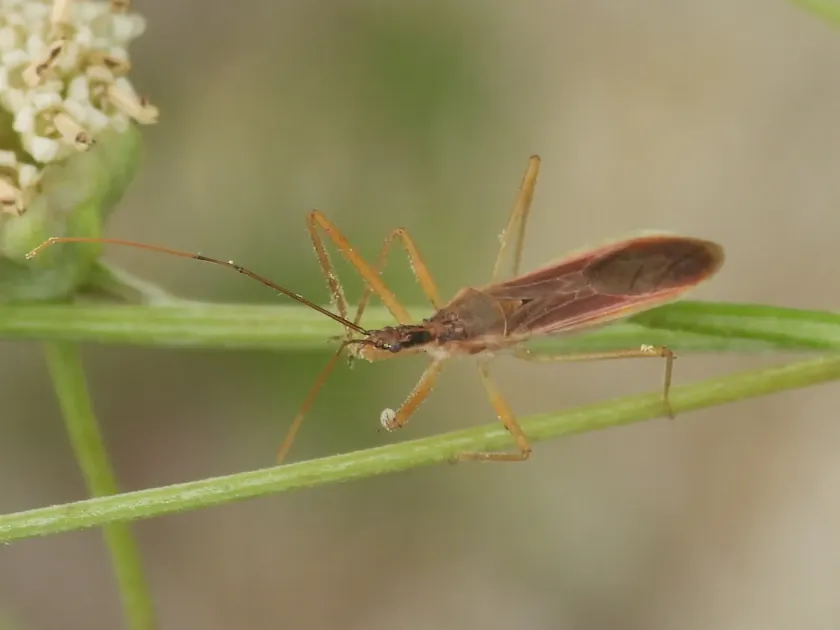
Description
How to identify
Zelus cervicalis is a species of assassin bug belonging to the order Hemiptera and the family Reduviidae. While traditionally recognized as predatory, these insects can demonstrate facultative phytophagy, causing concern for agronomists when they damage cultivated crops.
The adult insect has a slender body, long legs, and a narrow head, typical of its family. Their coloration ranges from brown to greenish-yellow, which acts as a highly effective camouflage among the stems and leaves of various host plants.
The life cycle proceeds through egg, five nymphal instars, and the adult stage. Females typically deposit their eggs in clusters on the underside of leaves, securing them with a specialized secretion that hardens into a protective, capsule-like structure.
Developmental rates are heavily dictated by ambient temperature and humidity levels. Under optimal weather conditions, multiple generations can emerge within a single growing season, leading to rapid population growth in agricultural settings.
Adults are highly mobile and exhibit efficient dispersal behavior. This ability to navigate across fields makes early detection challenging, as they can quickly shift from edge habitats to the interior of crop stands.
What it damages
The primary damage is caused by the insect using its piercing-sucking mouthparts to penetrate plant tissues. They inject saliva containing enzymes that cause localized necrosis and significantly stunt the growth of the affected plant parts.
Young shoots, flowers, and developing fruits are the most vulnerable targets. Damage at these stages leads to fruit deformation, poor physiological development, and a substantial reduction in the overall market quality of the harvest.
When infestation occurs during the flowering stage, the resulting damage can trigger premature floral abortion. This interference with reproductive development directly reduces the yield potential of the affected fields.
Beyond direct feeding damage, the puncture wounds created by Zelus cervicalis serve as entry points for various secondary fungal and bacterial pathogens. This often results in systemic infections that further weaken the plant.
In cases where traditional prey density is low within the agroecosystem, the bug shifts its feeding strategy to rely heavily on plant sap. During these periods, the insect transitions from a beneficial predator to a notable agricultural pest.
Control measures
An integrated pest management (IPM) approach is essential for controlling this species. Control strategies should focus on maintaining ecological balance while utilizing mechanical and biological interventions to reduce pressure on the crops.
Cultural practices, such as maintaining weed-free field margins, are critical. Weeds often serve as essential breeding grounds and refuges for the bugs early in the season, so their removal significantly lowers the initial pest population.
Biological control remains a preferred strategy to preserve beneficial natural enemies. Using entomopathogenic fungi or encouraging existing predatory species helps keep the Zelus cervicalis population below economic injury thresholds.
- Deployment of sticky traps for consistent population monitoring.
- Application of targeted bio-insecticides when infestation levels spike.
- Deep tillage after harvest to disrupt overwintering habitats.
- Crop rotation to break the cycle of pest colonization.
Proactive monitoring is the most vital component of a successful management plan. By identifying the presence of Zelus cervicalis early, producers can implement low-impact interventions that protect the yield without disrupting the wider ecosystem.
Taxonomy
- Latin name
- Zelus cervicalis
- Order
- Hemiptera (bugs, aphids, leafhoppers)
- Family
- Reduviidae
- EPPO code
- ZELUCE
Discussion
No discussions yet — be the first.