
Zelus
Zelus
Description
How to identify
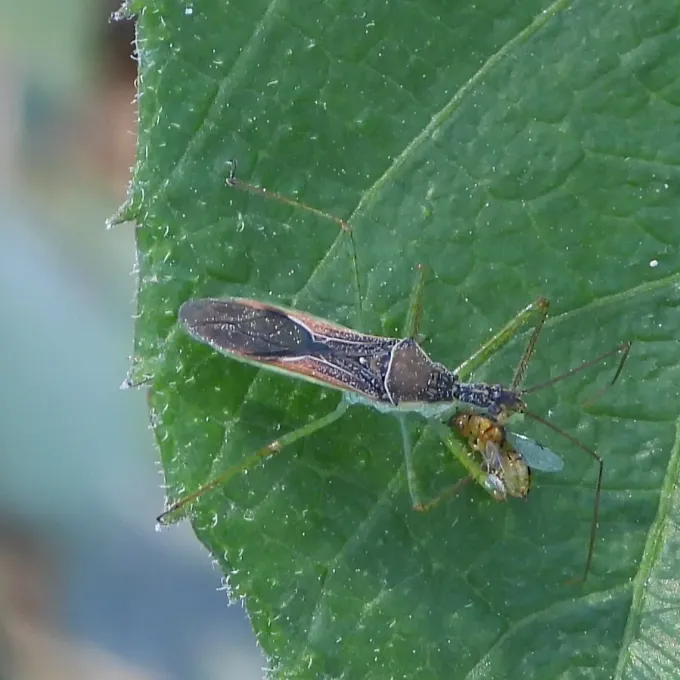
Zelus is a genus of insects belonging to the family Reduviidae, commonly known as assassin bugs. These insects are predatory in nature and are highly adapted to catching live prey.
Adult specimens typically range from 10 to 15 millimeters in length. Their coloration often ranges from green to brown or reddish-brown, providing excellent camouflage within foliage.
The head is elongated and features a robust, segmented proboscis that is tucked under the thorax when not in use. They possess large, keen eyes that allow them to spot prey from a distance.
Nymphs resemble smaller, wingless versions of adults. They are exceptionally agile and begin hunting small prey shortly after hatching from their egg clusters.
While Zelus bugs are often considered beneficial as natural predators, they are opportunistic and can become a nuisance in protected environments where they prey on managed pollinators like honeybees.
What it damages
Zelus is a generalist predator that consumes a wide range of insect species. Its diet is not strictly limited to pests, as it frequently attacks beneficial insects as well.
They prey on various caterpillars, including loopers and cutworms. However, in agricultural settings, their predation on beneficial insects can disrupt natural pest control programs.
Significant damage is often observed in greenhouse operations, where these bugs hunt down bees and bumblebees used for crop pollination, leading to decreased yields.
The damage mechanism involves the injection of digestive enzymes into the prey, which immobilizes the victim before the predator extracts the bodily fluids.
Although they do not feed on plant tissue directly, the disruption of the local insect balance can force growers to implement additional pest control measures to compensate for the loss of beneficial insects.
When it appears
The life cycle and activity of Zelus are heavily influenced by temperature. Adults typically emerge from hibernation once temperatures consistently rise in late spring.
Population peaks usually occur during the summer months when insect prey is most abundant. This period corresponds with the most active stage of reproduction and egg-laying.
They typically overwinter as adults or eggs in sheltered spots, such as tree bark, leaf litter, or crevices in the ground, ensuring high survival rates through cold winters.
The number of generations per year varies depending on the climate, with most regions supporting one or two generations during the growing season.
As temperatures drop in autumn, their activity levels decline significantly as they prepare to find suitable overwintering sites, making them less visible before the harvest.
Signs of infestation
The most common sign of a Zelus presence is the discovery of empty insect exoskeletons on plants, as these predators leave only the hollowed-out remains of their prey behind.
Observant growers can spot the bugs waiting in ambush on the underside of leaves or near flowers, where they remain motionless to deceive unsuspecting insects.
In greenhouse settings, a notable sign is the unexplained mortality of bees and bumblebees, often accompanied by the observation of these predatory bugs near hive entrances.
Clusters of eggs, which look like small, dense cylinders attached to stems or leaves, are a definitive indicator that a population is establishing itself in the area.
- Hollowed insect remains on plant stems.
- Stationary predatory bugs waiting in ambush.
- Reduction in pollinator activity in greenhouses.
Control measures
Management strategies for Zelus should be cautious to avoid harming beneficial biological control agents. Chemical intervention is generally reserved for situations with extremely high populations.
Mechanical control, including hand-picking or installing fine screens on greenhouse vents, is highly effective at preventing these bugs from entering sensitive areas.
Good agricultural practices, such as controlling weed pressure, reduce the availability of ambush sites for these predatory bugs, naturally limiting their residency.
Biological control programs should be timed carefully; monitoring the presence of Zelus is essential before releasing other beneficial insects to ensure they are not immediately consumed.
Using sticky traps for monitoring purposes allows agronomists to track population fluctuations and make data-driven decisions regarding the need for specific pest management interventions.
Taxonomy
- Latin name
- Zelus
- Order
- Hemiptera (bugs, aphids, leafhoppers)
- Family
- Reduviidae
- EPPO code
- ZELUSP
Discussion
No discussions yet — be the first.