
Wesmaelius
Wesmaelius
Description
How to identify
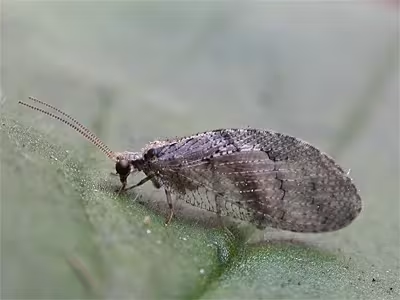
Wesmaelius is a genus of insects belonging to the order Neuroptera and the family Hemerobiidae. Often called brown lacewings, these insects possess a distinctive wing venation pattern.
Adults typically feature a cryptic, brownish coloration that provides camouflage against tree bark. Their wings are held roof-like over the body when at rest.
The larvae are fusiform in shape and are well-known predators. They possess sickle-shaped mandibles used for piercing their prey, usually aphids or scale insects.
Identifying specific species within the genus Wesmaelius is challenging without anatomical analysis. However, their presence is commonly noted by the activity of their larvae in garden and forest ecosystems.
They are fundamentally beneficial insects, serving as natural biological control agents that assist in keeping pest populations within manageable limits.
What it damages
Wesmaelius is generally not considered a primary pest. In most agricultural scenarios, these insects are valued as predators rather than viewed as a threat to plant health.
Direct damage to plant tissues is negligible. They do not feed on leaves, stems, or fruits, making them safe for inclusion in integrated pest management (IPM) programs.
Concerns about their presence arise only when they might compete with other beneficial insects or in highly specialized greenhouse conditions where any insect activity might be undesirable.
In forest nurseries, high density might lead to minor disturbances, but this is extremely rare and usually outweighed by the benefits of their predatory behavior.
Consequently, there is no established economic threshold for Wesmaelius damage, as they do not constitute a significant risk to crop yields.
When it appears
The life cycle begins early in the spring as overwintering adults emerge from dormancy. They immediately begin seeking food sources to fuel their reproductive cycle.
The peak activity period for larvae occurs in late spring and early summer, correlating perfectly with the population explosion of aphids and other small soft-bodied insects.
Depending on the climatic zone, the genus can produce multiple generations per year, ensuring sustained predatory pressure on pest populations throughout the growing season.
As autumn approaches and temperatures drop, the larvae seek protected sites, such as bark crevices, to enter a pupal state for winter hibernation.
Winter survival is highly dependent on environmental conditions, with milder winters generally leading to larger populations in the subsequent spring.
Signs of infestation
Evidence of Wesmaelius activity is often seen in the presence of cast larval skins (exuviae) left on foliage where they have been feeding on aphids.
Adults are rarely seen during the day, so their presence can be confirmed using light traps during the evening hours when they are most active.
Signs of effective predatory action include rapid declines in aphid colonies without the application of insecticides, accompanied by the presence of small lacewing eggs on the leaf underside.
The remains of consumed prey often litter the feeding site, which can be observed with a simple hand lens during regular crop inspections.
In cases of high infestation, one might observe the larvae themselves, often covered in debris or the remains of their prey for camouflage purposes.
Control measures
Since Wesmaelius are beneficial predators, control measures should be avoided. The primary goal for an agronomist is to maintain and support these populations.
The use of broad-spectrum pesticides is highly discouraged, as these chemicals do not distinguish between pests and beneficial insects like the brown lacewing.
Implementing IPM strategies, such as using selective biological agents, ensures that the predatory activity of Wesmaelius remains undisturbed.
Habitat conservation, including maintaining native plants and older trees, is the most effective way to ensure a stable population of this genus on a farm.
- Minimize pesticide use during the growing season.
- Preserve old bark and leaf litter for overwintering.
- Use selective biological controls whenever possible.
- Promote biodiversity around fields.
- Monitor populations to assess the need for minimal interventions.
Taxonomy
- Latin name
- Wesmaelius
- Family
- Hemerobiidae
- EPPO code
- WESMSP
Discussion
No discussions yet — be the first.