
Austromicromus
Austromicromus
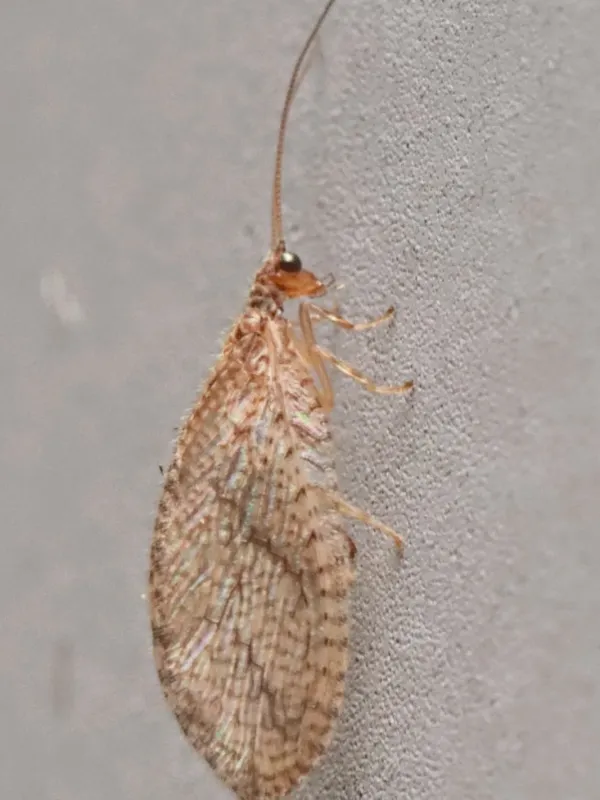
Description
How to identify
Austromicromus is a genus of insects belonging to the order Neuroptera and the family Hemerobiidae. While many neuropterans are beneficial, some members of this group are monitored by agronomists due to their impact on crop health.
Adults are small, featuring transparent wings with a complex network of veins, which is the primary diagnostic feature for this family.
The body coloration is typically brownish, providing effective camouflage against the bark of trees and foliage during the daylight hours.
Larvae possess specialized sickle-shaped mandibles, which are highly efficient for feeding, though they can cause mechanical injury to tender plant tissues.
Species identification within this genus often requires professional entomological analysis to distinguish between closely related taxa.
What it damages
This pest primarily affects fruit trees and ornamental shrubs, targeting the most tender and rapidly growing parts of the plants.
Austromicromus tends to inhabit the inner canopy of trees, where the microclimate supports its reproduction throughout the growing season.
Feeding damage is characterized by distorted leaves and necrotic spots on young shoots, which can significantly weaken the overall plant vitality.
In high densities, the larval feeding activity can lead to a reduction in the plant's photosynthetic capacity due to the degradation of young leaves.
The economic impact is most significant in nurseries and high-density orchards where plant quality is a critical factor for productivity.
When it appears
The activity cycle of Austromicromus begins in early spring, triggered by rising temperatures that signal the end of the winter diapause.
Peak population levels typically occur during mid-summer, coinciding with the most active vegetative growth phase of various garden crops.
The life cycle consists of multiple generations per year, allowing the population to expand rapidly under favorable climatic conditions.
As autumn approaches, the adults seek protected sites, such as bark crevices or leaf litter, to survive the winter period in a dormant state.
In regions with mild climates, the development cycle can continue throughout the winter if suitable host plants are available.
Signs of infestation
Visible signs of infestation include the curling and twisting of young shoot tips, which become distorted during the early stages of growth.
Small puncture marks and minor lesions on the epidermis of leaves are indicators of active feeding by the larvae of the pest.
The physical presence of the insects on the underside of leaves or within the leaf clusters is a definitive sign that requires immediate action.
Secondary symptoms include chlorosis or yellowing of foliage in the affected areas, resulting from the cumulative damage to the vascular system.
- Curled and deformed terminal shoots.
- Presence of larvae with sickle-shaped mandibles.
- Localized tissue necrosis on young foliage.
Control measures
Cultural control practices, such as proper pruning and sanitation, are essential to remove potential wintering sites and improve airflow within the canopy.
Biological control methods involving the preservation of natural predators are highly effective in maintaining the pest population below economic thresholds.
Chemical intervention should involve the use of selective insecticides that minimize the impact on beneficial insects and pollinator populations.
Rotating different classes of insecticides is crucial to prevent the development of resistance within the insect population over successive seasons.
Monitoring using yellow sticky traps is a recommended proactive measure for detecting the early arrival of the pest in commercial orchard settings.
Taxonomy
- Latin name
- Austromicromus
- Family
- Hemerobiidae
- EPPO code
- AUSRSP
Discussion
No discussions yet — be the first.