
Drepanepteryx
Drepanepteryx
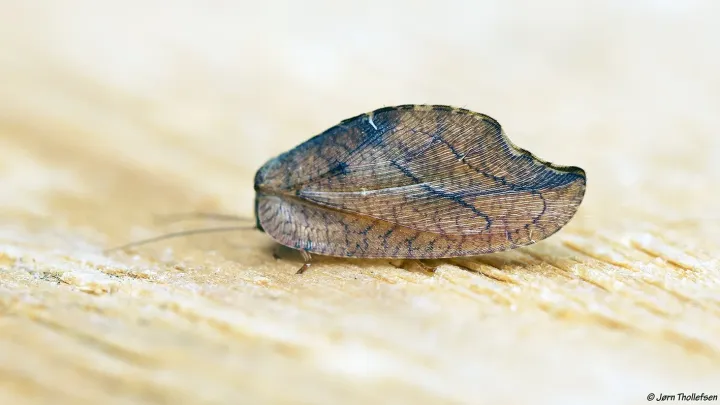
Description
How to identify
Drepanepteryx is a genus of insects belonging to the Hemerobiidae family within the Neuroptera order. These insects are easily identified by their characteristic net-like wing venation.
Adults are distinguished by the falcate or sickle-shaped form of their forewings, which serves as a key morphological marker for this specific genus.
The larvae are specialized predators. They possess elongated bodies and formidable sickle-shaped mandibles, which they use to capture and drain the fluids from their prey.
Identifying species within this group requires significant entomological skill, as they share morphological similarities with other species of brown lacewings.
In agronomy, it is crucial to recognize these insects as beneficial predators, as they contribute significantly to the suppression of pest populations in various ecosystems.
What it damages
Drepanepteryx is not a crop pest. It is categorized as a beneficial entomophage that feeds on aphids, scale insects, and other small arthropods.
In professional agriculture, these insects are sometimes misidentified as pests due to their presence on fruit trees, leading to unnecessary and harmful chemical applications.
They are commonly found in apple, pear, and cherry orchards, where their primary prey is abundant throughout the growing season.
There is no economic damage associated with this insect; rather, it provides a valuable ecosystem service by reducing the reliance on synthetic pesticides.
Preserving these populations is a key component of sustainable agricultural practices, helping to maintain a natural balance in the orchard environment.
When it appears
The lifecycle of Drepanepteryx is closely linked to the phenology of its prey. Adult activity typically commences in early spring as temperatures rise.
The peak activity period corresponds with bud burst and the development of the first aphid colonies, providing a rich food source for the growing larvae.
Eggs are laid on the bark of trees or the surfaces of leaves, where the larvae hatch and proceed through several instars before transitioning into the pupal stage.
Overwintering usually occurs in the pupal stage, with the insects creating dense, protective cocoons within bark crevices or sheltered areas.
Depending on the climatic zone and prey availability, the species may complete one or two generations within a single growing season.
Signs of infestation
The most reliable sign of presence is the observation of active larvae moving across leaves and branches while hunting for prey.
Adults are highly elusive due to their camouflage coloration, which allows them to blend perfectly with the texture and color of tree bark.
A reduction in aphid colony density in untreated orchards is often a strong indicator that predatory entomophages, such as Drepanepteryx, are actively working.
The presence of overwintering cocoons in tree bark suggests a healthy population density, which serves as a foundation for effective biological control in the following spring.
Observation should focus on distinguishing these beneficial hunters from actual agricultural pests that may be causing damage to the foliage or fruit.
Control measures
Since Drepanepteryx is a beneficial predator, no control measures should be directed against it, as doing so would disrupt the natural biological balance.
Integrated Pest Management (IPM) strategies emphasize the reduction of broad-spectrum insecticide usage to avoid harming these beneficial lacewings.
Creating biodiversity within the orchard, including planting flowering borders, helps to sustain adult populations by providing alternative food sources like nectar.
If chemical protection is absolutely required, it is essential to use selective pesticides that have low toxicity toward Neuroptera species.
Successful management involves encouraging these predators to thrive, which reduces the overall cost and environmental impact of managing orchard pests.
Taxonomy
- Latin name
- Drepanepteryx
- Family
- Hemerobiidae
- EPPO code
- DREESP
Discussion
No discussions yet — be the first.