
Boriomyia concinnus
Boriomyia concinnus
Description
How to identify
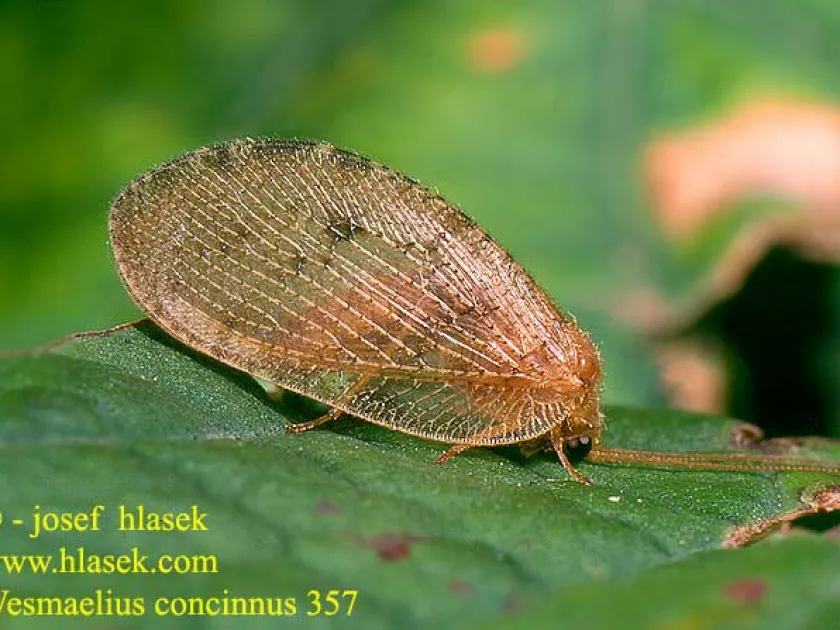
Boriomyia concinnus is an insect species belonging to the order Neuroptera and the family Hemerobiidae. These insects are characterized by their delicate, lace-like wing structure which is typical for the family.
Adult insects are generally small and inconspicuous, exhibiting brownish colors that allow them to blend into the bark of trees during their resting phases.
The larvae are active predators and scavengers, possessing elongated bodies and sharp, sickle-shaped mandibles used for piercing and sucking fluids from their prey or plant tissues.
Proper identification usually requires taxonomic expertise, focusing on wing venation patterns and male genitalia structures, as they closely resemble other brown lacewings.
Understanding their morphological characteristics is essential for identifying them in the field during regular agricultural or forestry monitoring programs.
What it damages
The damage caused by Boriomyia concinnus is primarily observed on various coniferous and broad-leaved tree species found in nurseries and forest plantations.
While often considered beneficial due to their predatory nature, in specific environments, high population densities can lead to significant stress on young, developing shoots.
Feeding activities involve creating minute punctures in the plant epidermis, which disrupts the physiological flow of nutrients and can lead to localized tissue necrosis.
These punctures often serve as entry points for secondary pathogens, such as fungi or bacteria, which can cause more substantial damage to the tree than the insect itself.
Seedlings and young trees are at the highest risk, as they are less capable of compensating for the growth inhibition caused by these feeding habits.
When it appears
The life cycle of Boriomyia concinnus is highly dependent on ambient temperatures, with activity typically commencing during the first warm days of spring.
Overwintering occurs as adults or pupae in protected habitats, such as deep bark crevices or beneath dense leaf litter near the base of host trees.
The active season spans from late spring through autumn, with multiple generations possible depending on the regional climate and available food resources.
Peak population levels are usually reached during mid-summer, coinciding with the rapid growth phase of host trees and the availability of prey.
As temperatures drop in the autumn, the insects gradually cease feeding and seek suitable locations for diapause, ensuring survival through the winter months.
Signs of infestation
One of the most noticeable signs of infestation is the presence of exuviae (cast skins) left behind on the branches after the larvae molt.
Visual inspections may reveal small, discolored spots on young shoots, which are indicative of localized feeding punctures caused by the insect.
The presence of adult insects or larvae on the underside of needles or leaves often indicates an established population requiring attention.
Reduced vigor of the tree, characterized by stunted growth of the latest season's shoots, serves as a general indicator of significant pest pressure.
- Presence of discarded larval skins on twigs.
- Discoloration or yellowing of shoot tips.
- Visible larvae on the bark or foliage.
- Reduced annual growth rates in young saplings.
Control measures
Control strategies should focus on integrated pest management practices that emphasize plant health and environmental sustainability.
Routine silvicultural activities, such as pruning diseased or infested branches and maintaining tree hygiene, can significantly reduce local populations.
Biological control, including the encouragement of natural predators like birds and spiders, plays a key role in keeping pest populations below economic damage thresholds.
Chemical intervention should be considered a last resort and should only be applied when monitoring data indicates that the damage threshold has been exceeded.
Maintaining optimal soil moisture and nutrient levels ensures that trees remain resilient, making them less susceptible to the negative effects of pest infestation.
Taxonomy
- Latin name
- Boriomyia concinnus
- Family
- Hemerobiidae
- EPPO code
- BORICO
Discussion
No discussions yet — be the first.