
Boriomyia nervosa
Boriomyia nervosa
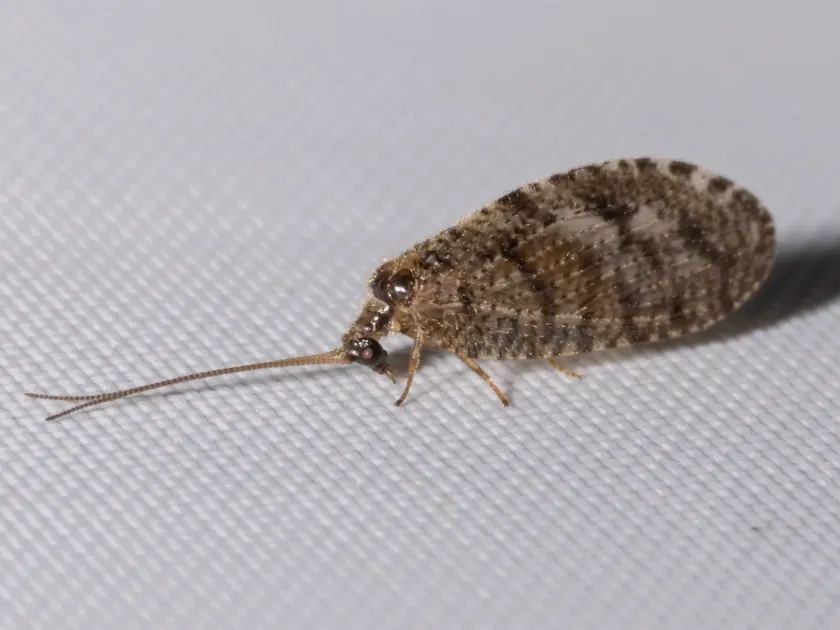
Description
How to identify
Boriomyia nervosa is a species of insect belonging to the order Neuroptera, specifically the family Hemerobiidae, commonly known as brown lacewings. Adults are characterized by their delicate, net-veined wings which are held tent-like over their bodies when at rest.
The adult insect displays a coloration ranging from yellowish-brown to dark brown, providing excellent camouflage against tree bark. Its size is relatively small, with a wingspan usually ranging between 10 to 15 millimeters, making it easily overlooked by the casual observer.
The larvae of this species are elongated and highly mobile, equipped with specialized sickle-shaped mandibles typical of predatory lacewings, though they can occasionally affect plant tissues when prey is scarce.
Taxonomically, they are closely related to other brown lacewings, requiring specialized knowledge or microscopic examination of male genitalia for definitive species identification in research settings.
While often viewed as beneficial predators due to their diet, their presence in high densities in agricultural settings can sometimes trigger the need for monitoring to ensure they do not cause secondary damage.
What it damages
The primary diet of the larvae includes soft-bodied insects such as aphids and mites, but during food shortages, they may cause mechanical damage to young buds and tender foliage.
Plants affected by this species include various deciduous and coniferous tree species, particularly those in nursery environments where high concentrations of insects may accumulate.
Damage to young plant tissues can lead to stunted growth and create entry points for opportunistic fungal pathogens and bacterial infections, compromising the plant's overall vascular health.
In orchards, significant infestations may impact the vigor of young saplings, as repeated feeding cycles can weaken the growth points of new shoots during the spring season.
While usually considered a minor pest in balanced ecosystems, their impact can increase significantly in managed landscapes where natural predator-prey dynamics are disrupted.
When it appears
The life cycle of Boriomyia nervosa is highly dependent on ambient temperatures, with adult activity typically commencing as temperatures rise above 10°C in early spring.
A typical season may involve one or two generations, with peak larval activity occurring during the summer months when aphid populations are most abundant on host plants.
Reproduction follows a standard seasonal pattern, with eggs laid on bark or leaves, followed by a rapid larval development phase that lasts several weeks depending on food availability.
As autumn approaches and temperatures decline, the insects seek overwintering sites, often hiding deep within bark crevices or amongst leaf litter to survive the winter dormant phase.
The transition from hibernation to active status in the following spring is triggered by increasing day length and consistent warming trends in the environment.
Signs of infestation
Signs of infestation include the observation of adult brown lacewings resting on the trunks or branches of trees, especially during the early evening or morning hours.
Larval presence can be confirmed by examining infested foliage or aphid colonies, where these mobile insects can be spotted moving quickly across the plant surface.
One may notice abnormal pitting or small necrotic spots on young buds, which serve as physical indicators of the larvae having fed on the plant tissues in the absence of sufficient prey.
Empty pupal cases or cast-off larval skins (exuviae) left on the bark are clear indicators that a population cycle has successfully occurred on the specific tree.
- Adults visible on tree trunks in spring.
- Presence of mobile larvae within aphid clusters.
- Pitted or deformed young terminal buds.
- Cast-off larval skins found in bark crevices.
Control measures
Effective management begins with good horticultural practices, such as maintaining healthy tree vigor and removing loose, old bark where the insects prefer to overwinter.
Promoting a garden environment that supports a wide range of natural predators is the most sustainable way to keep Boriomyia nervosa populations in check.
If chemical intervention is strictly necessary due to severe damage, selective contact-acting insecticides should be used carefully to minimize harm to non-target beneficial species.
Integrated Pest Management (IPM) strategies, including regular monitoring of nursery stocks, help identify outbreaks early, often allowing for manual control or spot treatments.
Ensuring proper nutrition and adequate water supply for trees increases their natural resistance, making them less susceptible to the secondary damages caused by these insects.
Taxonomy
- Latin name
- Boriomyia nervosa
- Family
- Hemerobiidae
- EPPO code
- BORINE
Discussion
No discussions yet — be the first.