
Common European adder
Vipera
Description
How to identify
The Common European adder (Vipera berus) is a venomous snake belonging to the Viperidae family, commonly found across Europe and parts of Asia.
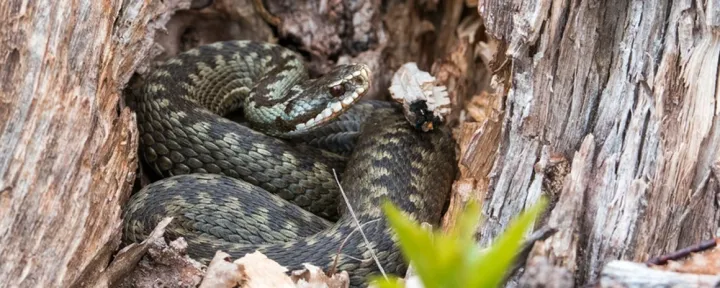
Adult adders typically reach a length of 60 to 80 cm, featuring a robust body shape and a distinct triangular-shaped head.
The most recognizable feature is the dark zigzag pattern running along the length of the back, though some individuals may be entirely black.
Their eyes feature a vertical pupil, which is a classic physiological characteristic distinguishing them from non-venomous snake species.
While they are venomous, they are generally shy and will avoid human interaction whenever possible, preferring to retreat into cover.
What it damages
The common adder is not an agricultural pest as it is a strictly carnivorous predator that feeds on rodents, lizards, and small birds.
It does not consume plants, nor does it cause any mechanical damage to crops, roots, or fruits during its daily activities.
Instead of being harmful to plants, the adder can actually provide a benefit by naturally controlling the population of mice and voles that damage gardens.
The perceived harm associated with adders is primarily the danger they pose to humans and pets, which interferes with gardening tasks.
Therefore, they should be viewed as natural residents of the ecosystem rather than enemies of the harvest or agricultural productivity.
When it appears
Adders emerge from hibernation in early spring, typically when soil temperatures begin to rise above 10 degrees Celsius.
The peak activity period occurs during the mating season in spring, leading to increased movement across the landscape.
During the summer months, they spend considerable time basking in the sun to regulate their body temperature, especially on rocks or garden paths.
As autumn temperatures drop, they return to their hibernation sites, which often include deep crevices, hollows, or even abandoned burrows.
Activity levels are highly dependent on the daily weather; they are most active during warm, sunny days and remain hidden during cold or rainy conditions.
Signs of infestation
Evidence of adder presence includes the discovery of shed snake skins (sloughs), which are often found near sheltered, warm spots in the garden.
Smooth, winding tracks left in soft soil or damp areas can indicate recent movement through the garden beds.
Consistent sightings of snakes basking on stone walls or near garden structures are the most reliable indicators of a local population.
Strange behavior from pets, such as barking or jumping away from specific areas of the garden, may suggest the presence of a snake.
Piles of wood, debris, or overgrown vegetation serve as primary attraction points where adders seek refuge and hunting grounds.
Control measures
The most effective strategy for managing snakes in your garden is to remove the conditions that make the environment hospitable to them.
Keep the lawn mowed short and clear away any brush, woodpiles, or discarded materials that offer shelter and shade.
- Regularly trim thick grass and clear overgrown areas.
- Eliminate debris piles to reduce hiding spots.
- Seal any holes in sheds or foundations to keep snakes out.
- Wear protective footwear when working in areas with high vegetation.
Since adders are often a protected species, it is essential to manage them humanely by encouraging them to move away rather than harming them.
If you have a significant issue, contact local wildlife management services to have the snakes safely relocated to a more suitable wild habitat.
Taxonomy
- Latin name
- Vipera
- Family
- Viperidae
- EPPO code
- VIPESP
Discussion
No discussions yet — be the first.