
Gaboon viper
Bitis gabonica
Description
How to identify
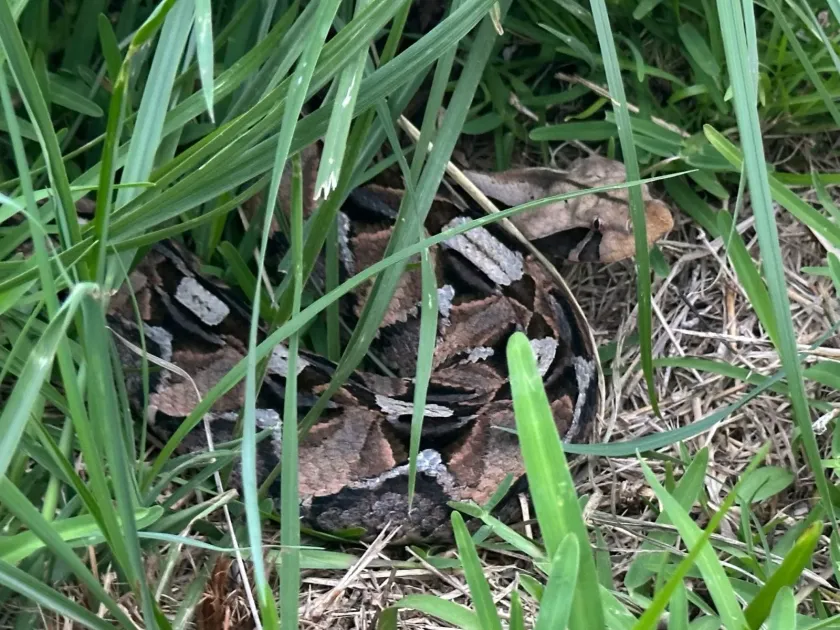
The Gaboon viper (Bitis gabonica) is a highly venomous snake belonging to the Viperidae family and the order Squamata. It is characterized by a massive, robust body that can reach lengths of up to 1.5 to 2 meters.
The viper's appearance is defined by an intricate geometric pattern of brown, yellow, and pink hues, which provides exceptional camouflage against leaf litter in rainforests.
Distinctive features include two horn-like scales above the nostrils, giving it a unique look, and a broad, triangular head that is clearly separated from its heavy, thick trunk.
This species possesses the longest fangs of any snake, reaching up to 5 centimeters, along with extremely large venom glands, making it a critical threat to agricultural workers.
Despite its generally sedentary nature, its cryptic coloring makes accidental encounters highly probable during fieldwork in affected regions.
What it damages
While the Gaboon viper does not feed on crops, its presence on coffee, cocoa, or oil palm plantations poses a significant threat to agricultural operations.
The primary damage lies in the creation of high-risk zones that force the suspension of all agricultural activities, including manual harvesting and weeding.
Managing the presence of this species often requires the involvement of specialized wildlife control services, leading to increased operational costs for farms.
The psychological factor of constant danger significantly reduces worker productivity and complicates the labor-intensive harvesting cycles in equatorial regions.
Consequently, the Gaboon viper must be managed as a critical biological hazard that directly disrupts standard agricultural workflows.
When it appears
Activity levels for the Gaboon viper remain consistent throughout the year due to the stable, warm climate of tropical regions where this snake naturally occurs.
The snake is primarily nocturnal, making workers vulnerable during early morning and late evening shifts often utilized to avoid mid-day heat.
During rainy seasons, when humidity increases, these snakes may migrate toward open spaces and pathways, which are frequently used as access routes for farm machinery.
Reproductive periods can occasionally trigger territorial behavior, increasing the chance of defensive strikes if a worker approaches too closely.
Field managers should remain vigilant during peak harvesting months when personnel are most likely to interact with dense ground cover.
Signs of infestation
A tell-tale sign of a Gaboon viper's presence is the occurrence of distinctive, broad, ribbon-like tracks on damp soil, characteristic of a heavy, slow-moving reptile.
A sudden, unnatural silence in an area where local bird or rodent activity is usually high may serve as an indicator that a predator is present.
Accumulated rodent burrows near storage facilities or thick vegetation often act as an attractant for the viper, which relies on small mammals for sustenance.
The discovery of shed skin during field surveys provides clear evidence of a resident population, necessitating immediate inspection of the work area.
- Use long-handled tools to probe dense foliage before entering.
- Wear puncture-resistant boots and protective leg gaiters.
- Listen carefully for a loud, warning hiss that sounds like a sustained breath.
Control measures
The primary preventative measure is to maintain clean, well-cleared fields, regularly removing thick brush and tall grass that provides shelter for the snakes.
Installing physical barriers around farm buildings and worker rest areas helps prevent the intrusion of large reptiles into human activity zones.
Effective rodent control programs are essential, as removing the food source (small mammals) significantly reduces the attractiveness of the plantation to the viper.
Staff must receive professional safety training on how to identify the species and the correct emergency procedures to follow in the event of an encounter.
If a specimen is sighted, all work in the immediate area should stop, and professional wildlife removal services should be contacted for relocation.
Taxonomy
- Latin name
- Bitis gabonica
- Family
- Viperidae
- EPPO code
- BITIGA
Discussion
No discussions yet — be the first.