
Saharan horned viper
Cerastes
Description
How to identify
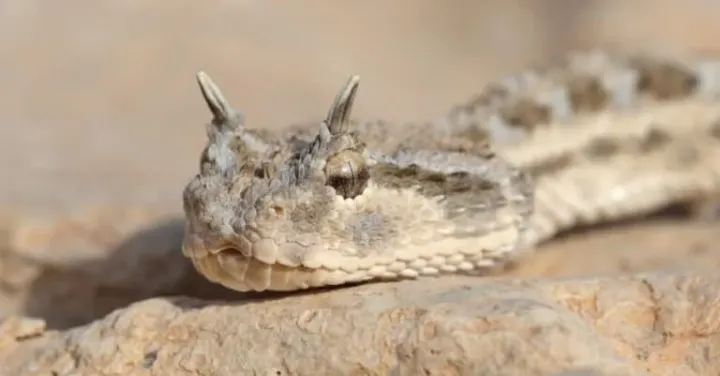
The Saharan horned viper (genus Cerastes) is a member of the Viperidae family, easily recognizable by the horn-like scales located above its eyes.
This desert reptile has a thick, flattened body covered with keeled scales that perfectly match the sandy environment in which it lives and hunts.
Typically measuring between 50 and 80 cm, it features a broad, triangular head that is clearly distinct from its slender neck and robust torso.
Its method of movement, known as sidewinding, creates unique, disconnected S-shaped tracks on soft, sandy terrain, serving as a key indicator of its presence.
As a venomous species, it demands significant caution during any agricultural activity conducted in arid or semi-arid climates.
What it damages
From an agronomic perspective, the Saharan horned viper is not a crop pest; rather, it is a predatory species that plays a beneficial role in the field.
Its diet consists primarily of small rodents and lizards, which are known to cause substantial damage to crops by consuming seeds and damaging seedlings.
By keeping rodent populations under control, the viper acts as a natural biological control agent, indirectly protecting agricultural yields from pests.
There is no evidence that this species causes any physical damage to plants, as it does not consume vegetable matter or burrow into root systems.
The primary concern for farmers is not crop loss but the potential health risk to workers if a viper is accidentally stepped on or disturbed during harvest.
When it appears
The activity of the Saharan horned viper is heavily influenced by ambient temperature, as it requires heat to maintain its metabolic functions.
Activity increases during the spring and early summer months, coinciding with the peak of agricultural field preparation and sowing activities.
During the intense heat of summer, these snakes shift to a nocturnal or crepuscular lifestyle, meaning they are rarely seen during the hottest part of the day.
As autumn approaches, activity slows down, and the snakes seek shelter in deep burrows or rocky crevices to begin their dormant winter phase.
Migration periods can lead to snakes venturing closer to irrigated fields, where the presence of moisture and prey attracts both rodents and their predators.
Signs of infestation
Identifying the presence of a Saharan horned viper in or near a field involves observing a few key environmental indicators:
- Distinctive, discontinuous tracks left in loose sand or loose soil patterns.
- The presence of abandoned rodent burrows which are frequently repurposed by vipers as shelters.
- Shed skin (slough) found near large rocks or brush where the viper seeks temporary cover.
- A low, harsh hissing sound, which is produced by rubbing the scales of the body together.
- A lack of small prey animals, often signaling the presence of a resident predator in the vicinity.
Control measures
Since the Saharan horned viper is not a pest and provides ecosystem services, there is no justification for eradication or chemical control methods.
Management should focus on farm sanitation, such as clearing away debris and brush piles, which minimizes potential hiding spots near working areas.
Workers should be equipped with appropriate personal protective equipment, including thick leather boots, to prevent accidental injury during field inspections.
When working in areas where vipers are known to inhabit, using long-handled tools for clearing vegetation is a safe and effective practice.
Education is the most critical control measure; ensuring that staff understand the behavior of the snake helps prevent unnecessary panic and reduces the risk of bites.
Taxonomy
- Latin name
- Cerastes
- Family
- Viperidae
- EPPO code
- KERSSP
Discussion
No discussions yet — be the first.