
Halys pit viper
Agkistrodon halys
Description
How to identify
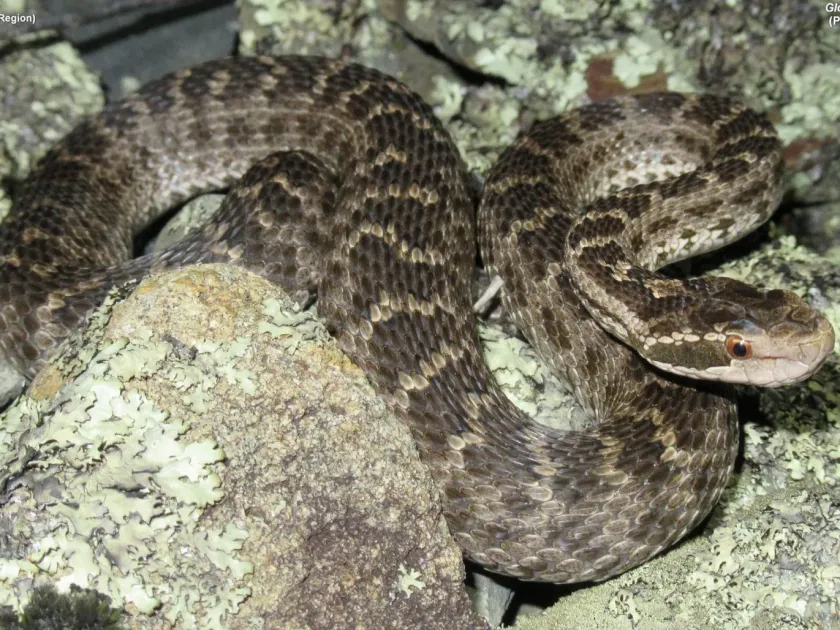
The Halys pit viper (Agkistrodon halys) is a venomous snake belonging to the Viperidae family. It is uniquely characterized by heat-sensing pits located between the eyes and nostrils.
Its coloration typically ranges from gray to reddish-brown, featuring distinct dark crossbands across the body. The head is covered with large, shield-like scales, which is the origin of its common name.
Adult snakes usually reach lengths of 60 to 70 centimeters. The scales have a rough, keeled texture, which helps the snake blend into dry grass, soil, and rocky terrain.
As a pit viper, it is well-adapted to detecting warm-blooded prey in low-light conditions. When threatened, it may vibrate its tail tip, creating a dry, buzzing sound similar to some insects.
This species belongs to the Squamata order and is widely distributed across temperate regions of Asia, frequently interacting with agricultural ecosystems.
What it damages
The Halys pit viper is not an agricultural pest in terms of consuming crops or causing direct plant damage. It is a predatory species that primarily feeds on small mammals, birds, and frogs.
The primary concern for farmers is the safety hazard it poses to agricultural workers. Encountering a venomous snake during manual labor, such as harvesting or weeding, creates significant risks.
Its presence in fields can disrupt operational efficiency, as workers must take extra precautions, particularly in areas with dense vegetation or near irrigation ditches.
While the snake provides a service by preying on agricultural pests like rodents, the health risks to farm staff and livestock usually outweigh this minor ecological benefit in managed areas.
Consequently, the snake is categorized as an unwanted occupant of farm property rather than a direct threat to the quality or quantity of the crop yield.
When it appears
The activity period for the Halys pit viper begins in early spring, typically April, once soil temperatures allow them to emerge from hibernation sites.
During the summer, these snakes are most active in the early morning and late evening. During the heat of the day, they prefer to retreat to shaded, humid areas within the crop canopy.
A secondary peak of activity occurs in September and October, as snakes prepare for winter. During this time, they migrate toward deep burrows or human structures for hibernation.
Winter dormancy is spent in protected environments, such as cracks in the ground, rodent burrows, or under building foundations, where they can survive low temperatures.
Understanding these seasonal patterns is essential for farm managers to schedule work in high-risk areas during periods when snake activity is at its lowest.
Signs of infestation
Signs of presence include shed skins, which are often found in secluded, warm areas like debris piles, stone fences, or near storage sheds on the farm premises.
On moist soil, one may find distinct zigzag tracks left by the snake, which are more pronounced than those left by non-venomous species found in the same region.
A high density of small rodents in the field often indicates a potential habitat for the pit viper, as they follow their food source into the agricultural area.
If a buzzing or rattling sound is heard in the dry grass during a field walkthrough, it is a significant indicator of the snake's defensive posture and immediate presence.
Frequent sightings of these snakes near utility sheds or field perimeters are clear signs that the local population has established a home range within the farm ecosystem.
Control measures
The most effective method of control is habitat modification. Keeping farm areas clean by removing brush, woodpiles, and debris eliminates the shelters snakes rely on.
Workers should wear appropriate personal protective equipment, including sturdy leather boots and thick trousers, to reduce the risk of injury during field activities.
Managing rodent populations is a dual-purpose strategy; it protects crops from damage and reduces the primary attractant that brings pit vipers into the fields.
For areas where snake density is high and threatens the safety of workers or livestock, consider hiring professional animal removal services to relocate the snakes safely.
Avoid using harsh chemical repellents, as they are often ineffective and can be harmful to the environment, soil health, and the safety of domestic animals on the farm.
Taxonomy
- Latin name
- Agkistrodon halys
- Family
- Viperidae
- EPPO code
- AGKIHA
Discussion
No discussions yet — be the first.