
Common lancehead
Bothrops atrox
Description
How to identify
The Common lancehead (Bothrops atrox) is a venomous viper species native to the tropical rainforests of South America. It is not considered a crop pest, as it strictly belongs to the carnivorous dietary group.
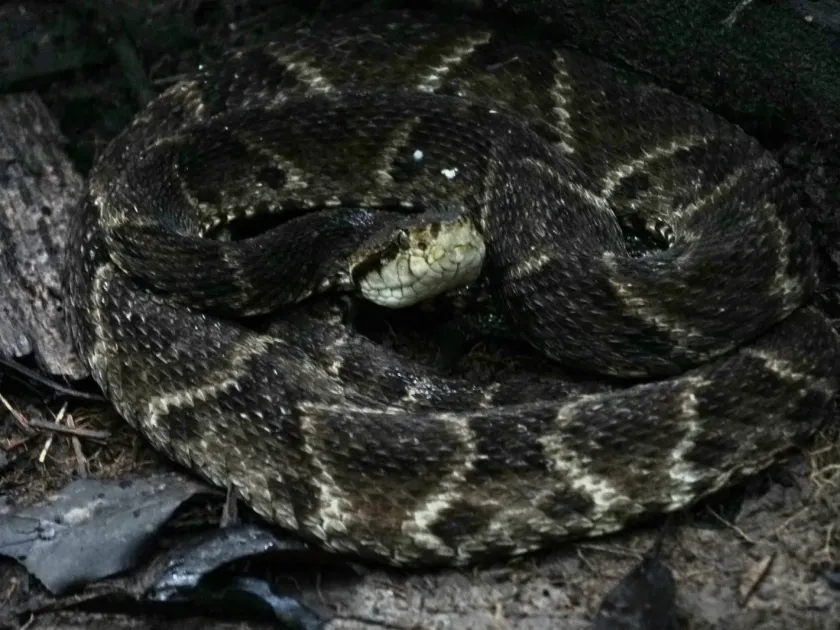
Adult specimens typically measure between 1.5 and 2 meters. Their skin features a complex pattern of dark triangles against a grey or brown background, providing exceptional camouflage among leaf litter.
The snake is recognized by its distinctively triangular head. It possesses heat-sensing pits located between the eyes and nostrils, allowing it to accurately strike at warm-blooded prey in low-light conditions.
Primarily nocturnal, these snakes spend daylight hours hidden in cool, damp areas. In agricultural settings, they are often found lurking at the fringes of forests or within unkempt fields.
For agricultural management, the lancehead represents a severe safety hazard to field workers due to the high toxicity of its venom and its defensive nature when approached.
What it damages
This species causes no direct damage to plants. It does not feed on vegetation, fruits, or roots, and therefore does not impact crop yield through ingestion or mechanical harm.
The indirect economic impact is significant, as the presence of these snakes can lead to the suspension of field operations, such as harvesting coffee, cocoa, or bananas, to ensure worker safety.
Conversely, the lancehead may provide an ecosystem service by preying on rodents, which are major pests in many tropical agricultural systems.
Cultural control methods, such as removing debris, thinning dense undergrowth, and maintaining clean fields, are highly effective in making the habitat less suitable for the snake.
Chemical control against the species is strictly prohibited and scientifically unsupported, as the snake is a predator and not a biological pest requiring extermination via pesticides.
When it appears
Activity levels fluctuate with rainfall; the snake is most active during the wet season when moisture levels favor movement and reproductive behavior.
Being nocturnal, it remains hidden during the day. However, seasonal shifts in climate can force these snakes to seek different habitats, occasionally moving into more open agricultural land.
Plantation managers must note that peak harvesting seasons often overlap with periods of high snake activity, necessitating proactive safety protocols for field staff.
Reproductive cycles can also influence movement, as snakes may become more territorial or migrate in search of specific conditions for their offspring.
Monitoring should be most intense during the transition from dry to wet seasons, when vegetation density increases and provides ample cover for the reptiles.
Signs of infestation
Evidence of presence includes the discovery of shed skins (exuviae), typically found in shaded, humid areas near the base of plantation crops.
Visible trails on moist soil indicate recent movement of a large individual; these are usually wide and show the characteristic rhythmic path of the snake.
Disturbed behavior of local fauna, such as birds or small mammals giving alarm calls, often indicates the movement or presence of a predator in the immediate vicinity.
Pressed-down patches of grass or litter reveal the location of resting spots where the snake spends its daytime hours protected from heat.
A sudden decline in rodent population on a specific plot, despite the absence of trapping or control efforts, can be an indirect signal of a resident predator.
Control measures
Standardized safety measures are the best defense. Workers should wear high-cut, durable leather boots and protective gaiters while working in dense vegetation.
Field maintenance, including mowing and weeding, is essential. Keeping rows clear of thick debris and overgrown weeds removes the snake's primary hiding spots.
Proper storage of agricultural products is required to prevent rodent infestations, which in turn prevents the arrival of snakes looking for a consistent food source.
In cases of high snake density, site managers should coordinate with professional wildlife relocation services rather than attempting removal by untrained staff.
A comprehensive safety program must include training on rapid first aid for snake bites and an established emergency evacuation plan to reach medical facilities quickly.
Taxonomy
- Latin name
- Bothrops atrox
- Family
- Viperidae
- EPPO code
- BTHPAT
Discussion
No discussions yet — be the first.