
Vehilius vetula
Vehilius vetula
Description
How to identify
Vehilius vetula is a species of butterfly belonging to the order Lepidoptera and the family Hesperiidae (skippers). These insects are primarily documented in tropical and subtropical regions across the Americas.
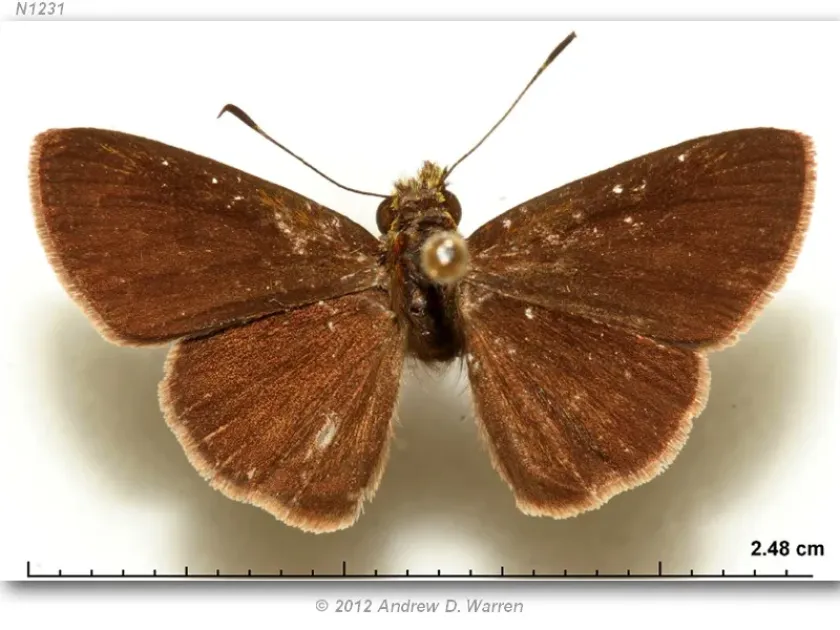
Adult butterflies exhibit the characteristic morphology of the family, featuring robust bodies and triangular-shaped wings. Their coloration consists mainly of dark brown hues accented with small translucent or ochre spots.
The larvae (caterpillars) possess cylindrical, tapering bodies and a distinct, well-developed head capsule. Their coloration is usually cryptic, allowing them to blend seamlessly with the foliage of their host plants.
Eggs are typically deposited singly or in small clusters on the leaves of host grasses. Development duration is highly dependent on ambient temperatures, which dictate the number of generations per year in specific climatic zones.
Accurate identification of the species within the field often requires careful examination of wing patterns, although distinguishing them from other Vehilius species may sometimes require genital dissection.
What it damages
The larvae of Vehilius vetula are specialized feeders on plants from the Poaceae family. Significant agricultural concerns involve their presence on maize (corn) and sugarcane crops.
Caterpillars cause damage by chewing leaf margins or creating irregular holes in the middle of leaf blades. Such feeding behavior reduces the surface area available for photosynthesis, thereby stunting plant development.
A notable behavior of the larvae is the construction of leaf shelters. By folding leaves and securing them with silk, the larvae create a protective habitat that buffers them against predators and contact pesticides.
Severe infestations can lead to significant defoliation, particularly during the early vegetative stages of the crop. This impact can translate into reduced grain filling and overall yield loss at harvest.
The presence of these larvae in high density creates stress for the plant, potentially increasing susceptibility to pathogens and environmental stressors during the growing season.
Control measures
Integrated Pest Management (IPM) is essential for controlling Vehilius vetula. Regular monitoring using light traps or pheromone traps helps determine the timing and intensity of adult activity.
Cultural practices, including the eradication of weeds that serve as alternate hosts, are vital for reducing the initial pest population on agricultural land.
Biological control agents, such as parasitoid wasps (e.g., Trichogramma spp.), play a significant role in suppressing larval populations by targeting the egg stage of the moth.
Chemical intervention is warranted only when pest population levels exceed the economic threshold. The selection of insecticides should favor options that minimize toxicity to non-target beneficial insects.
To maximize efficacy, insecticide applications should be timed to coincide with the period when larvae are most exposed, avoiding the times when they are well-protected inside their leaf shelters.
Taxonomy
- Latin name
- Vehilius vetula
- Order
- Lepidoptera (butterflies)
- Family
- Hesperiidae
- EPPO code
- VEHIVE
Discussion
No discussions yet — be the first.