
Borbo
Borbo
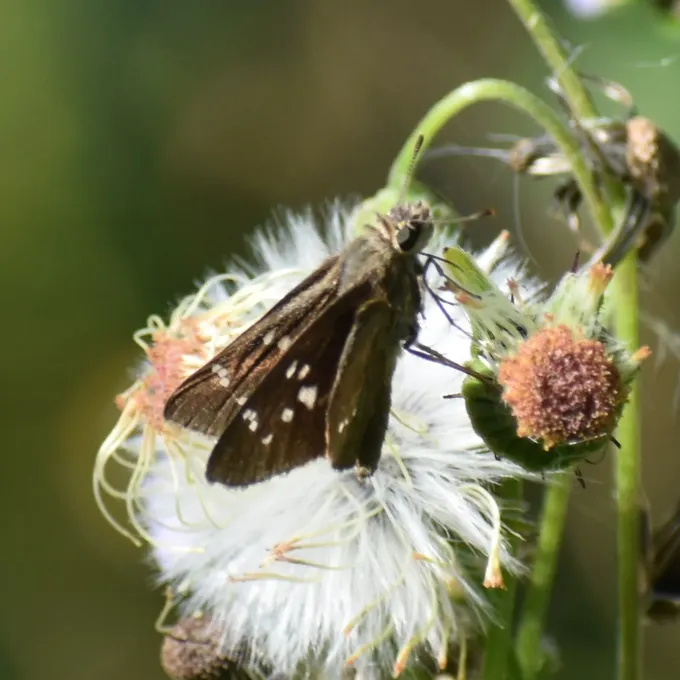
Description
How to identify
The genus Borbo belongs to the family Hesperiidae (skipper butterflies) within the order Lepidoptera. These insects are characterized by their stout bodies, broad heads, and rapid, darting flight patterns.
Adult butterflies typically exhibit brown or ochre wing coloration adorned with translucent pale spots. This camouflage allows them to blend seamlessly with dry grasses and agricultural foliage.
The larvae (caterpillars) are spindle-shaped, usually exhibiting a green hue with a distinct dark dorsal stripe and a large, prominent head capsule typical of the skipper family.
Their life cycle consists of complete metamorphosis: egg, larva, pupa, and adult. Females lay eggs individually on the leaves of host plants, which makes early detection a challenge for field scouts.
Distinguishing species within the Borbo genus often requires microscopic examination of genital structures; however, identifying the genus in the field is possible through characteristic damage patterns.
What it damages
Cereal crops, particularly rice (Oryza sativa), are the primary hosts for Borbo species. In several regions, these insects are considered significant pests capable of impacting yield quality.
Besides rice, these pests may infest millet, sorghum, and various wild grass species, which serve as alternative hosts throughout the growing season.
The larvae are responsible for the damage, as they feed voraciously on the leaf blades. This feeding activity reduces the overall photosynthetic capacity of the plant.
Severe infestations lead to extensive defoliation, which causes stunted growth, weakened stalks, and a notable decrease in grain weight and overall harvest quantity.
Damage is most critical during the tillering and jointing stages, when the plant requires maximum foliage to support the development of reproductive tillers and grain heads.
When it appears
Borbo activity is highly dependent on ambient temperature and humidity levels, as they thrive in the warm, humid climates found in tropical and subtropical rice-growing areas.
Multiple generations can occur within a single growing season, leading to persistent pest pressure from late spring until the early autumn months.
Adult flights and subsequent oviposition are most intense during the evening and twilight hours, when temperatures are moderate and the microclimate is favorable for egg survival.
Overwintering typically occurs in the pupal or larval stage within plant debris, which underscores the importance of sanitation practices after the harvest is complete.
Monitoring should begin as soon as crops emerge, utilizing pheromone traps and systematic field inspections to detect the presence of adults and early-instar larvae.
Signs of infestation
The most distinctive sign of a Borbo infestation is the presence of leaves rolled into tubes or tunnels, held together by silk webbing created by the larvae.
Inside these rolled leaves, one can observe irregular feeding damage, such as chewed leaf margins and holes, along with larval frass (excrement) accumulated within the shelter.
Heavily infested fields may show clusters of yellowed and withered leaves, as the loss of plant tissue disrupts water and nutrient transport, leading to localized necrosis.
Scouts should look for the characteristic "rolled leaf" symptom, as this is the primary indicator that the pest is actively feeding and establishing populations in the crop canopy.
Plant development may be visibly uneven, and in severe cases, the entire canopy may exhibit a ragged appearance, significantly reducing the crop's vigor and competitiveness.
Control measures
Effective management requires an integrated approach that focuses on reducing larval survival and breaking the insect's life cycle through sustainable practices.
Cultural control is vital: clearing weeds and crop residues from the field edges reduces the survival rate of overwintering populations significantly.
Biological control methods, such as the application of Bacillus thuringiensis (Bt) based formulations, are highly effective against young larvae and are considered environmentally friendly.
Chemical control should be employed only when monitoring thresholds are exceeded, utilizing selective insecticides that minimize harm to beneficial insects and pollinators.
- Conduct weekly field scouting and threshold monitoring.
- Implement proper crop rotation to disrupt the pest cycle.
- Use resistant or tolerant crop varieties where available.
Taxonomy
- Latin name
- Borbo
- Order
- Lepidoptera (butterflies)
- Family
- Hesperiidae
- EPPO code
- BORBSP
Discussion
No discussions yet — be the first.