
Rice swift
Borbo cinnara
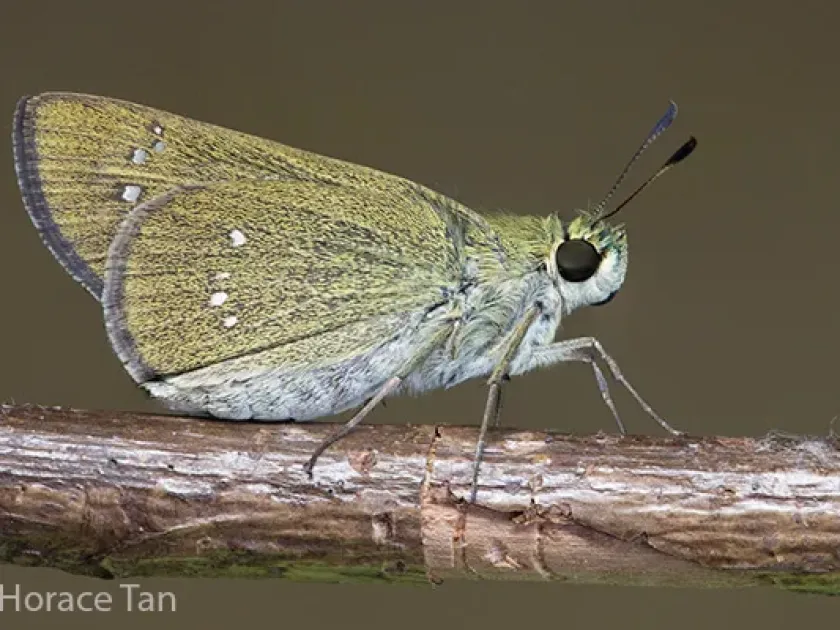
Description
How to identify
The rice swift (Borbo cinnara) is a butterfly belonging to the family Hesperiidae, commonly known as skippers, which are widespread in many agricultural regions.
Adult butterflies have a wingspan of approximately 30–35 mm, with wing coloration ranging from dark brown to olive, featuring characteristic translucent white spots on the forewings.
The larvae are pale green with a darker dorsal stripe and a distinctive heart-shaped head, which is typical for the instar stages of this moth species.
Pupae are generally elongated and green or brownish, often found hidden within the folded leaf structures constructed by the larvae during their growth phase.
Adults are known for their rapid, darting flight patterns, making them highly active during daylight hours, which is helpful for identification in the field.
What it damages
This pest primarily attacks rice (Oryza sativa) crops, although it can also feed on other grasses such as millet and sorghum when preferred hosts are scarce.
The primary damage is caused by the larvae, which feed on the leaf blades, often resulting in significant defoliation of the crop if the population density is high.
Young larvae initially graze on the leaf margins, while older larvae may skeletonize the leaves, severely affecting the plant's photosynthetic capacity.
By rolling and webbing the leaves together, the larvae create protective shelters, which not only provide safety but also interfere with the plant's normal growth processes.
Severe infestations can lead to substantial yield losses, reduced grain quality, and a higher vulnerability to secondary infections entering through the damaged tissue.
When it appears
The lifecycle and seasonal presence of the rice swift are closely tied to the climate and the growth stages of the host plants, particularly rice.
In tropical and subtropical regions, the pest can undergo multiple generations per year, leading to a constant threat during the entire rice growing season.
Peak populations usually occur during the active tillering and elongation phases of the rice plant, when vegetation is most abundant and succulent.
Warm temperatures and optimal humidity significantly accelerate the larval development, allowing populations to build up rapidly in short periods.
During the off-season, populations persist on alternative grassy weeds, which serve as reservoirs until the next planting cycle begins.
Signs of infestation
The most diagnostic sign of infestation is the presence of rolled rice leaves, which form tubular shelters held together by thin silken threads.
Inside these tubes, one can find the larvae, which are often green and match the leaf color, along with their characteristic granular frass.
Leaves on infested plants show irregular notches along the margins or holes in the leaf lamina where the larvae have been feeding intensely.
In fields with high pressure, many leaves will appear ragged or withered, leading to a noticeable thinning of the canopy and yellowing of the crop.
- Rolled, tube-like rice leaves (leaf folders).
- Irregular, notched leaf margins.
- Accumulation of larval excrement (frass) within leaf rolls.
- Presence of larvae upon inspecting the folded leaves.
- General decline in plant vigor and ragged leaf appearance.
Control measures
Cultural control measures include regular weeding of grassy weeds in and around the rice paddies, as these serve as initial breeding grounds for the pest.
Biological control using Bacillus thuringiensis sprays has proven effective in managing larval populations without significant environmental impact.
Chemical control should be implemented based on scouting data and when the economic threshold is exceeded, using registered systemic or contact insecticides.
Maintaining balanced fertilization and appropriate irrigation schedules helps plants withstand and recover from the damage caused by the larvae.
Encouraging the presence of natural enemies, such as parasitic wasps and predatory insects, is essential for long-term population management of the rice swift.
Taxonomy
- Latin name
- Borbo cinnara
- Order
- Lepidoptera (butterflies)
- Family
- Hesperiidae
- EPPO code
- BORBCI
Discussion
No discussions yet — be the first.