
Ancyloxypha numitor
Ancyloxypha numitor
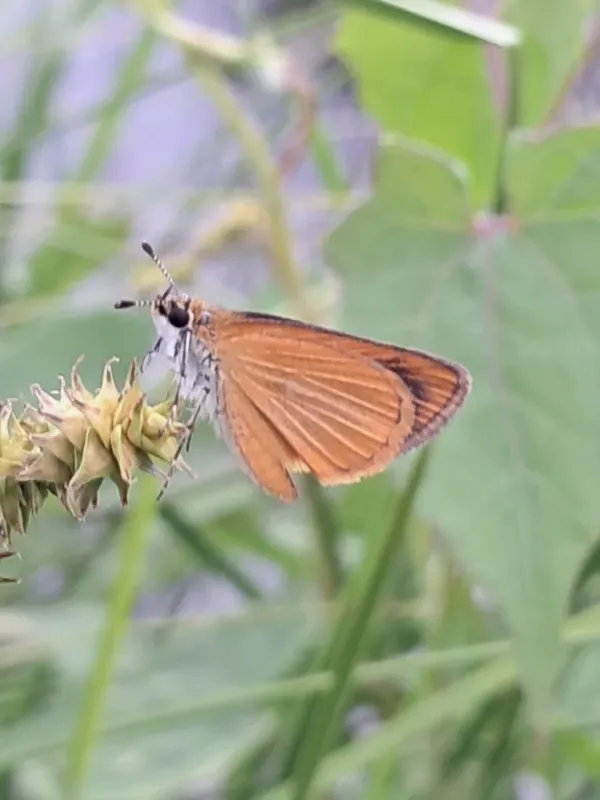
Description
How to identify
Ancyloxypha numitor, commonly known as the Least Skipper, is a small butterfly belonging to the Hesperiidae family within the order Lepidoptera. It is recognized by its compact build, relatively large head, and clubbed antennae.
The wingspan of the adult insect is approximately 2 to 2.5 centimeters. The dorsal surface of the wings is typically dark brown with bright orange or golden patches, providing excellent camouflage among dried grasses.
The larvae, or caterpillars, are pale green with subtle light-colored longitudinal stripes. This coloration helps them blend into the foliage of their host plants, making them difficult to detect by predators.
The pupa is usually green or brownish and is formed within a leaf rolled by the caterpillar and secured with silk threads, providing a protective environment during the metamorphosis process.
This species is predominantly found in moist habitats, such as wetlands, low-lying meadows, and areas near water bodies, where their host plants thrive in abundance throughout the growing season.
What it damages
The Least Skipper primarily feeds on various grass species. Common host plants include timothy grass, bluegrass, and several species of bentgrass, which are vital components of both native and managed grasslands.
While typically restricted to wild habitats, in years of high population density, these caterpillars can migrate to pasture lands or hay fields, reducing the quality and quantity of the available forage biomass.
Larvae consume the leaf blades of host plants, starting from the edges or creating distinct holes in the center of the leaf. This feeding behavior stunts the plant's growth and reduces its photosynthetic capacity.
Significant infestations can lead to thinning of the grassland, making it less productive for grazing livestock. Furthermore, damaged plants are more susceptible to secondary fungal and bacterial infections.
Adult butterflies contribute to the dispersal of the species across fields by laying eggs, but they do not cause direct damage to agricultural crops, as they subsist entirely on flower nectar.
When it appears
The flight period for the Least Skipper spans from late spring through the summer months. Depending on the local climate and latitude, the species may undergo one or two generations per year.
Larval activity peaks during the first half of the summer, coinciding with the most vigorous growth phase of local grasses. This ensures the caterpillars have a constant supply of succulent nutrition.
Overwintering typically occurs during the larval stage. Caterpillars seek refuge in the thatch layer or near the base of the host plants, where they are protected from extreme cold and temperature fluctuations.
As temperatures rise in the spring, the larvae resume feeding to complete their development. The synchronization between larval emergence and grass growth is critical for the survival of each generation.
Environmental conditions, particularly humidity and precipitation levels, dictate the success of the population. Wet seasons often lead to higher survival rates for the larvae compared to drought conditions.
Signs of infestation
One of the most characteristic signs of an infestation is the presence of rolled leaves secured with silk, which serve as protective shelters and feeding sites for the caterpillars.
Irregular, notched leaf edges or holes appearing in the middle of grass blades are clear visual indicators that larvae have been grazing on the foliage within that specific area of the field.
The accumulation of frass (larval droppings) near the base of the host plant or inside the protective leaf rolls is a reliable indicator of active feeding and high population levels.
During the day, adults can be spotted making short, low-altitude flights over the grass. They are easily disturbed and often dart into the thick vegetation to hide when approached.
The presence of fine silk webbing on the leaves is a subtle sign that can help scouts identify early-stage larvae before more extensive damage to the grass crop becomes visible to the naked eye.
Control measures
Good agricultural practices, such as routine mowing of field borders and non-crop areas, help destroy the breeding habitats of the Least Skipper, effectively limiting their population growth.
Promoting a healthy environment for natural predators, including parasitic wasps and predatory bugs, is an essential part of an integrated pest management strategy to keep butterfly numbers in check.
Biological control agents, particularly those containing Bacillus thuringiensis, provide a selective and environmentally friendly way to manage caterpillar populations without harming beneficial insect species.
Chemical intervention should be considered only as a last resort, following a thorough assessment of the infestation density and the potential economic impact on the crop yield or forage quality.
Ongoing monitoring of flight activity and larval development allows farmers to predict potential outbreaks and implement preventive measures, ensuring that crop protection efforts remain targeted and efficient.
Taxonomy
- Latin name
- Ancyloxypha numitor
- Order
- Lepidoptera (butterflies)
- Family
- Hesperiidae
- EPPO code
- ANCXNU
Discussion
No discussions yet — be the first.