
Vehilius inca
Vehilius inca
Description
How to identify
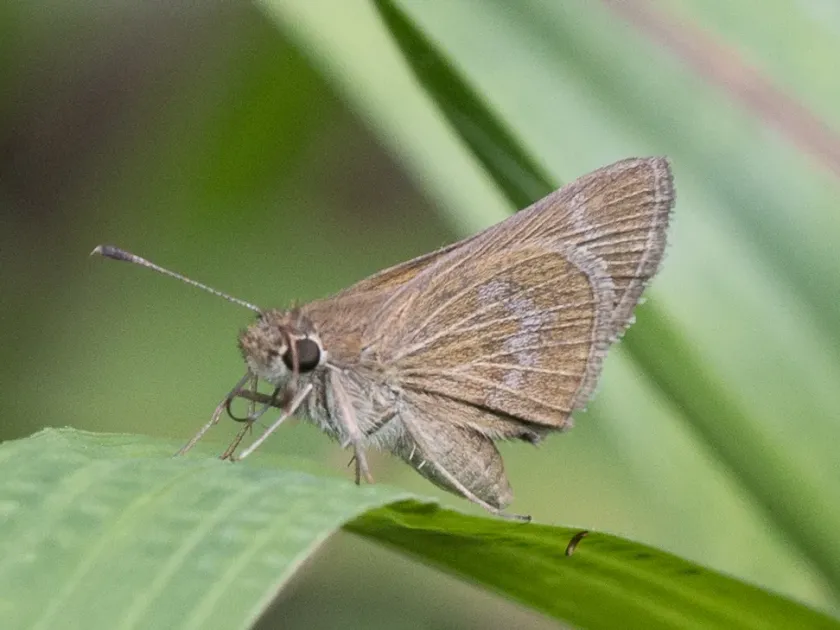
Vehilius inca is a species of butterfly belonging to the Hesperiidae family (skippers). Adult specimens typically have a wingspan of approximately 25–30 mm, with their wings displaying a predominantly dark brown coloration marked by distinct light or yellowish spots on the forewings.
The insect possesses a stout, robust body densely covered in hair-like scales. Their antennae are characterized by a club-shaped tip, which is a diagnostic feature for members of this family.
The larvae (caterpillars) of Vehilius inca are cylindrical in shape and generally exhibit a greenish or greyish-green hue, featuring a well-developed head capsule optimized for consuming plant tissues.
The insect undergoes complete metamorphosis, passing through four distinct stages: egg, larva, pupa, and adult. Each stage is strictly influenced by ambient temperature and humidity levels.
Identification of the adult stage in the field can be challenging due to their rapid, darting flight pattern and morphological similarities to other skipper species, often requiring genital analysis for precise identification.
What it damages
The primary food source for Vehilius inca larvae consists of plants within the Poaceae (grass) family. In various regions, this pest poses a significant risk to rice crops and native pasture grasses.
The larvae target young, tender foliage, consuming irregular patches of the leaf tissue. When population density is high, this feeding behavior can lead to the near-total skeletonization of the leaf blades.
Feeding damage significantly reduces the plant's photosynthetic capacity, which directly suppresses overall growth and leads to substantial yield losses in cereal crops.
Damage is most severe during the tillering and jointing stages, when foliage integrity is crucial for the development of reproductive organs and overall plant vigor.
In addition to direct tissue loss, the presence of larval colonies promotes the entry and development of secondary fungal and bacterial infections at the feeding sites.
When it appears
The active flight period of adult Vehilius inca is closely tied to warmer seasons. In tropical environments, breeding can occur throughout the year, provided there is a continuous supply of host plants.
Mass emergence of adults usually correlates with the onset of the rainy season, which triggers rapid growth in host grass species.
The life cycle from egg to adult generally ranges between 30 and 50 days, depending heavily on the daily mean temperature and moisture availability.
In temperate or high-altitude environments, the pest's phenology is regulated by soil temperature, which determines the timing of larval emergence from diapause.
Implementing monitoring programs using pheromone or light traps allows farmers to predict egg-laying peaks and optimize the timing of integrated pest management interventions.
Signs of infestation
The primary indicator of an infestation is the presence of irregular "windows" or consumed leaf margins, which larvae often curl and secure with silk webbing to form protective shelters.
The accumulation of larval frass (excrement) on the leaf surface or near the base of the plant stem provides clear evidence of active feeding by the caterpillar population.
When inspecting fields, scouts should look for curled or folded leaves, as these often contain larvae of early to mid-instars hiding from predators and environmental conditions.
Areas of high infestation exhibit noticeable yellowing and premature desiccation of the leaf tissue, particularly in the lower and mid-canopy sections of the field.
- Irregularly notched or consumed leaf edges.
- Leaves curled or folded and held together by silk threads.
- Presence of dark granular frass on foliage.
- Localized patches of crop discoloration resembling scorching.
Control measures
Effective management of Vehilius inca requires an integrated approach combining agrotechnical practices with targeted chemical applications.
Maintaining clean fields by eliminating grass weeds during the off-season is essential, as many common weeds serve as alternative hosts and reservoirs for the pest.
Biological control strategies include the application of bio-insecticides containing Bacillus thuringiensis, which are highly effective against younger larval instars.
When infestation levels exceed the established economic threshold, chemical control using systemic or contact insecticides registered for the specific crop should be employed.
Rotation of chemical products with different modes of action is critical to manage the pest effectively and mitigate the risk of resistance development within the population.
Taxonomy
- Latin name
- Vehilius inca
- Order
- Lepidoptera (butterflies)
- Family
- Hesperiidae
- EPPO code
- VEHIIN
Discussion
No discussions yet — be the first.