
Vehilius
Vehilius
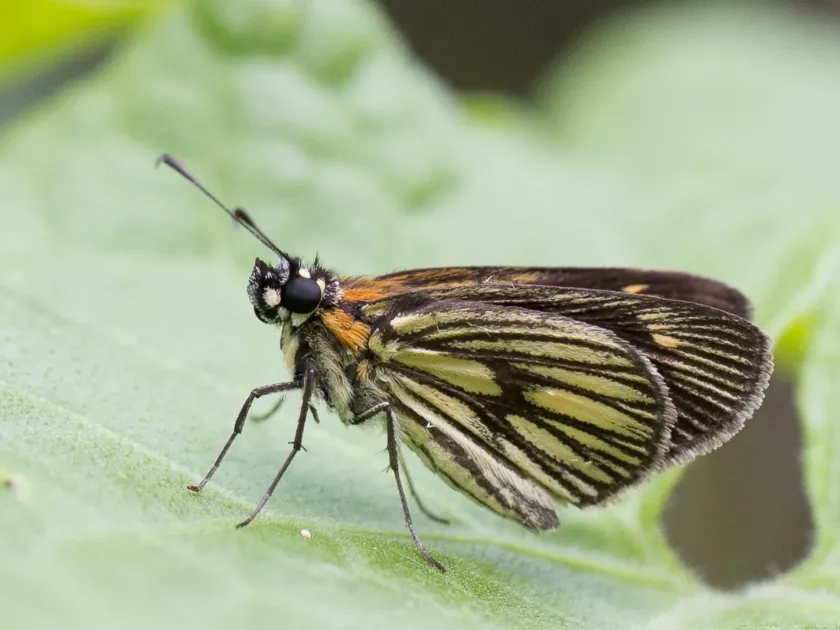
Description
How to identify
The Vehilius genus belongs to the family Hesperiidae, commonly known as skippers. These insects are characterized by their robust bodies and quick, erratic flight patterns, which distinguish them from many other butterfly species found in agricultural landscapes.
Adult moths typically have a wingspan ranging from 25 to 30 mm. Their coloration is generally dark brown, often accented with gold or ochre spots, providing camouflage against the diverse vegetation of their habitats.
The larvae, or caterpillars, are the primary focus for agronomists. They possess a cylindrical shape and a prominent head capsule. They are known for their secretive nature, often spinning silk threads to fold or roll leaves into protective shelters.
Systematically, Vehilius is part of the Lepidoptera order. While many skippers are beneficial pollinators, members of this genus can occasionally reach pest status when environmental conditions favor their mass reproduction.
The life cycle follows a complete metamorphosis: egg, larva, pupa, and adult. The number of generations per year is highly dependent on the local climate, with multiple cycles possible in warmer, tropical or subtropical regions.
What it damages
Damage to crops is primarily caused by larval feeding. Caterpillars consume leaf tissue, which reduces the plant's overall photosynthetic capacity. In young plants, severe defoliation can lead to stunted growth or even plant death.
The pest tends to target specific grasses and industrial crops. By skeletonizing the leaves, they limit the plant's ability to transport nutrients, leading to reduced vigor and diminished grain or biomass yield.
The silk-spinning activity not only creates shelters but also deforms the leaves, hindering normal physiological processes. These rolled leaves become micro-environments that may trap moisture and promote secondary infections by pathogens.
In cases of high infestation, the pest can cause significant aesthetic and structural damage to foliage. This makes the plants more susceptible to environmental stressors such as drought and extreme heat.
Economic damage threshold varies by crop variety and the timing of the infestation. Early-stage detection is crucial to prevent the pest from causing irreversible loss in crop development.
Signs of infestation
The most visible indicator of Vehilius activity is the presence of tightly rolled or folded leaves on the upper parts of the plant. These act as larval retreats and are clear markers for scouting.
Irregular, jagged edges on the leaf margins are another hallmark symptom. Unlike insects that chew holes in the middle of a leaf, these larvae typically graze along the edges, moving inward toward the main vein.
Larval frass, appearing as small, granular excrement, is often found near the leaf shelters. This is a reliable sign of active feeding and the presence of larvae within the vicinity.
Adult butterflies can be seen during sunny periods, indicating potential egg-laying activity. Identifying these adults in the field is a proactive way to anticipate the emergence of the next generation of larvae.
Scouting should also reveal local patches of damaged plants. Because female moths often lay clusters of eggs, the infestation usually starts in pockets rather than being uniformly distributed across the entire field.
Control measures
Effective management of Vehilius integrates cultural and chemical strategies. Crop rotation remains one of the most effective methods to break the pest's life cycle and reduce its overall population density in the soil.
Mechanical destruction of crop residues through post-harvest plowing is essential. This practice exposes pupae to harsh conditions and natural predators, significantly decreasing the survival rate of the wintering generation.
Chemical control should be implemented using selective insecticides during the peak of larval activity. It is important to rotate active ingredients to prevent the development of resistance within the insect population.
Biological control using Bacillus thuringiensis (Bt) sprays has proven successful in targeting larvae while sparing beneficial insects such as natural predators and pollinators.
Regular field monitoring, including the use of sticky traps and visual inspection of leaf clusters, allows farmers to make informed decisions about when to apply treatments, ensuring efficacy and environmental safety.
Taxonomy
- Latin name
- Vehilius
- Order
- Lepidoptera (butterflies)
- Family
- Hesperiidae
- EPPO code
- VEHISP
Discussion
No discussions yet — be the first.