
Grass Demon
Udaspes folus
Description
How to identify
The Grass Demon (Udaspes folus) is a butterfly belonging to the Hesperiidae family (skippers) within the order Lepidoptera. It is recognized by its broad wings and robust thorax.
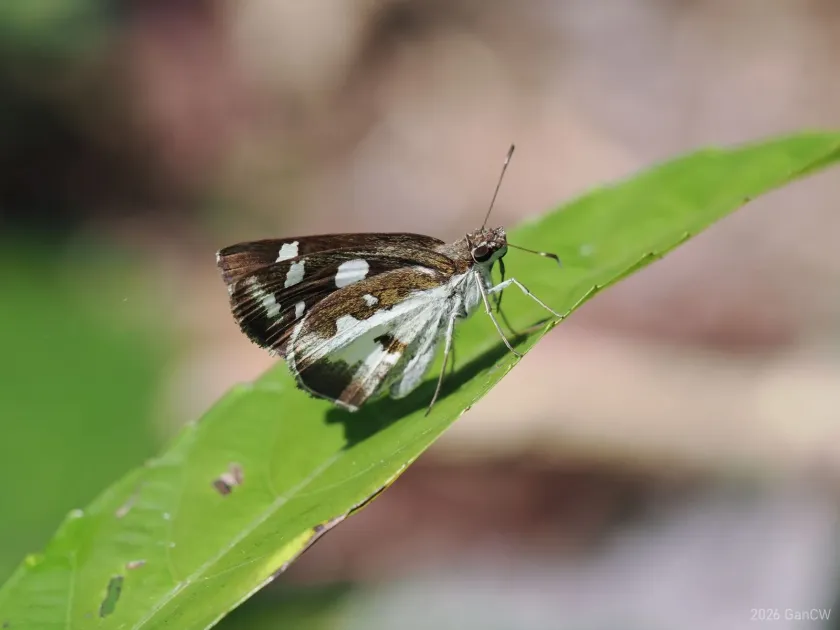
The adult butterfly typically has a wingspan of 40–50 mm. Its wings are dark brown to black in color, featuring prominent white spots that distinguish it from other skippers.
The larvae (caterpillars) are greenish in color and are easily identified by their large, dark heads. This head capsule is a key feature when scouting for the pest.
Pupae are found within rolled leaves of the host plant. They are smooth and usually light green or whitish, providing excellent camouflage against the host's foliage.
The life cycle involves four stages: egg, larva, pupa, and adult. Females deposit eggs singly on the underside of leaves to ensure food availability for emerging larvae.
What it damages
The primary hosts of the Grass Demon are plants in the Zingiberaceae family. It is a well-known pest of economic importance in ginger and turmeric cultivation.
The pest may also infest various ornamental plants within the ginger family, impacting both home gardens and large-scale botanical collections.
The larvae feed on the foliage by chewing the leaf blades, starting from the edges or creating holes within the leaf tissue, leading to significant defoliation.
Heavy feeding by the larvae reduces the plant's photosynthetic capacity, which directly negatively affects the development and yield of rhizomes.
Under favorable environmental conditions, large larval populations can strip a young crop of its leaves in a very short amount of time, causing severe stress.
Signs of infestation
The most visible sign of infestation is the presence of rolled leaves. The larva uses silk to pull the edges of a leaf together, creating a tubular shelter.
Inside these rolled leaves, one can often find frass (insect excrement), which serves as a clear indication that a larva has been feeding in that specific location.
Leaf margins show irregular chewing patterns, and older caterpillars may leave large, jagged holes in the center of the leaf blades.
The general health of the plant declines, with stressed leaves turning yellow or drying out, often indicating a well-established larval colony.
Monitoring for adult butterflies hovering near the crop is a useful indicator that the pest has begun its egg-laying cycle in the field.
Control measures
Manual removal of rolled leaves is the most effective and eco-friendly method for small-scale gardens. Simply collect and destroy the leaves containing larvae.
Biological control agents, specifically products containing Bacillus thuringiensis, provide effective control by targeting larvae without harming beneficial pollinators.
Chemical intervention using registered systemic insecticides should be considered as a last resort, specifically when local thresholds for damage are exceeded.
Good agricultural practices, such as weed management, are crucial as some wild Zingiberaceae weeds can act as alternative hosts for the Grass Demon.
Regular scouting and early detection are essential to prevent the spread of the insect. Maintaining healthy crop vigor also helps plants better withstand attacks.
Taxonomy
- Latin name
- Udaspes folus
- Order
- Lepidoptera (butterflies)
- Family
- Hesperiidae
- EPPO code
- UDASFO
Discussion
No discussions yet — be the first.