
Trigona spinipes
Trigona spinipes
Description
How to identify
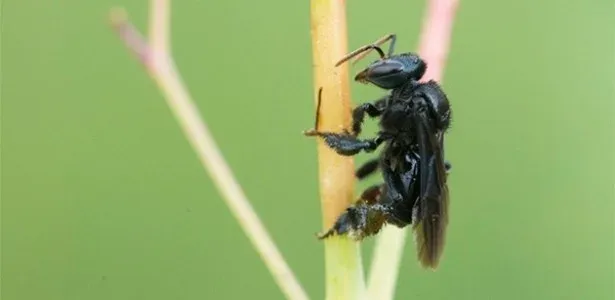
Trigona spinipes is a species of social stingless bee belonging to the family Apidae and the subfamily Meliponinae. These insects are characterized by their black coloration, robust chitinous exoskeleton, and distinct spine-like projections on their hind tibiae, which give them their name.
Unlike common honeybees, these individuals lack a stinger but possess powerful mandibles designed for cutting plant tissues. Their colonies are typically established in tree hollows or built externally on branches using a mixture of resin, wax, and mud.
Worker bees measure approximately 7–9 millimeters in length. They are known for being highly defensive of their nests and exhibit a unique foraging behavior that makes them potential pests in tropical and subtropical orchard environments.
The biology of this species involves the continuous construction of nests, requiring them to constantly collect plant saps and resins from various tree species. This search for building materials often leads to significant damage to tender plant parts.
A colony can persist for many years due to the queen's continuous egg-laying capacity. The high number of workers per colony enables them to aggressively exploit local resources, often leading to noticeable agricultural damage.
What it damages
The primary crops affected by Trigona spinipes include citrus trees, avocados, mangoes, grapes, and many other fruit-bearing species. They cause harm to both mature trees and young saplings in nursery conditions.
Damage is primarily inflicted during the harvesting of plant juices and construction materials. Workers scrape off the bark of young branches, which disrupts the tree's vascular system and can lead to the wilting and death of the affected parts.
These open wounds serve as entry points for secondary infections, including various fungal and bacterial pathogens that cause necrosis, rot, and long-term decline in tree health.
The most severe damage occurs during active growth periods when the bark is soft and easy for the bees to scrape. Such activities can lead to significant yield losses and stunted tree development throughout the season.
In addition to bark damage, intense foraging activity can cause deformation of fruit and destruction of flower buds, effectively reducing the reproductive output and productivity of the entire plantation.
Signs of infestation
The first sign of infestation is the appearance of distinct scraped patches or stripes on young branches where the bark has been partially or completely removed. These areas appear as fresh, raw wounds often covered in tree resin.
The presence of large, dark nests constructed of compressed material on branches is a direct indicator of a Trigona spinipes colony. These nests often resemble irregular spheres or ellipsoids attached to the trunk or limbs.
Massive gatherings of black bees on the tips of branches during daylight hours confirm their active foraging behavior. They often move in coordinated groups while gathering resources from the surface of the plant.
The wilting of specific branches or sections of the canopy near the damaged areas indicates that the transport of nutrients has been severed, highlighting the impact of the bees on the plant's overall physiology.
Resinous traces left behind by the bees as they work are characteristic of this species. These markers distinguish them from other wood-boring or sap-sucking insects and help in the accurate diagnosis of the damage.
Control measures
Mechanical removal of nests is the most effective method for controlling the population of Trigona spinipes. Nests should be carefully removed and destroyed, preferably during cooler hours of the day when bee activity is at its lowest.
The use of protective netting on young saplings prevents access to vulnerable bark during critical growth stages. This physical barrier is highly effective in shielding sensitive plants from potential foraging damage.
Applying repellent substances with strong odors can temporarily discourage the bees from visiting specific orchard areas. However, this method requires frequent reapplication to maintain efficacy.
Chemical control should be approached with extreme caution to avoid harming beneficial pollinators. Targeted applications of narrow-spectrum insecticides are recommended only when foraging activity is confirmed and mechanical controls are insufficient.
- Regular monitoring of orchard health during peak growth periods.
- Timely pruning and disposal of branches with severe bark damage.
- Enhancing plant immunity to support faster healing of surface wounds.
- Installing bait traps to monitor and assess the population density of the bees.
Taxonomy
- Latin name
- Trigona spinipes
- Order
- Hymenoptera
- Family
- Apidae
- EPPO code
- TRGOSI
Discussion
No discussions yet — be the first.