
Honey bee
Apis
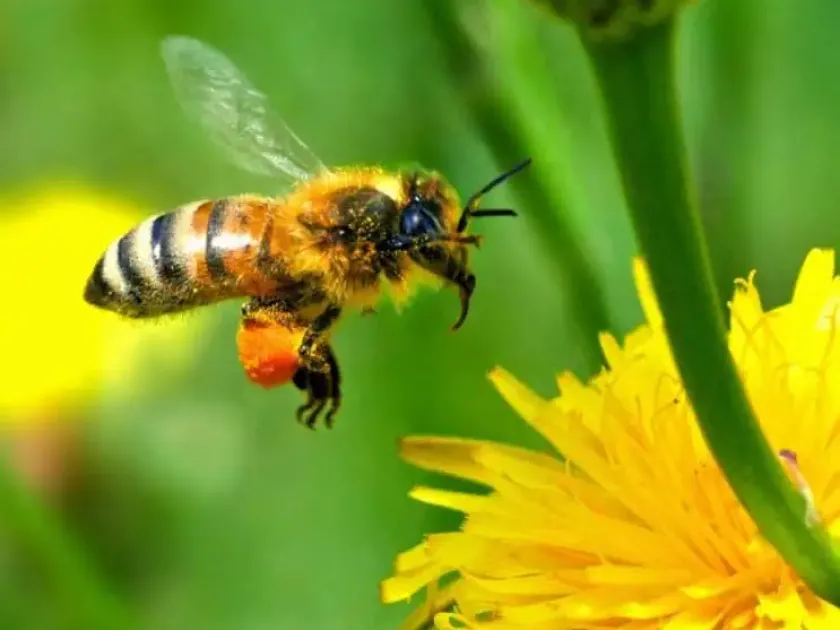
Description
How to identify
The honey bee (Apis mellifera) belongs to the order Hymenoptera and the family Apidae. It is a social insect known for its highly structured colony life.
Adult bees are characterized by striped abdomens and dense hair, with specialized body parts for pollen collection and nectar storage.
Their life cycle involves complete metamorphosis, moving through egg, larva, and pupa stages within the honeycomb environment of the hive.
While fundamentally beneficial as pollinators, in specific agricultural scenarios, they can exhibit behaviors that impact crop quality negatively.
Workers are typically 12-15 mm in size, allowing them to access and feed from various plant sources, sometimes impacting sensitive fruit surfaces.
What it damages
Honey bees can cause mechanical damage to thin-skinned fruits and berries like grapes, raspberries, and peaches, particularly during nectar shortages.
By piercing the skin of ripe fruits, bees create entry points for fluids, which can lead to fermentation, decay, and the onset of fungal diseases.
In greenhouses, excessive bee presence may occasionally result in the damage of delicate flower petals or emerging fruit buds.
The loss of fruit integrity reduces marketability, making the produce unsuitable for fresh consumption or storage.
Damage caused by bees often attracts secondary pests, such as wasps and flies, which exacerbate the degradation of the harvest.
When it appears
Damage risks are highest during hot, dry summer months when natural floral nectar sources become scarce for the colonies.
The ripening period of susceptible crops overlaps with the peak activity phase of the hive, leading to competition for sugar resources.
Daytime activity is typically highest, as bees forage extensively during warmer hours to sustain their colony's needs.
Drought conditions significantly alter foraging habits, driving bees to target succulent, sugar-rich fruits as an alternative source of hydration.
As autumn approaches and temperatures drop, the foraging activity of the bees naturally decreases, reducing the threat to late-season crops.
Signs of infestation
The presence of bees on crops can be detected by constant buzzing and visual observation of high insect concentrations on ripening fruit.
Small punctures or ragged holes on the skin of fruits and berries, often leaking juices, are primary indicators of insect damage.
Localized fruit rotting and the presence of fruit-feeding insects indicate that the crop has been compromised by previous feeding activity.
Decreased sweetness and the premature dropping of fruit are signs that the crop is being subjected to sustained foraging pressure.
Regular monitoring of fruit clusters or berry patches is essential to identify these signs before major damage occurs.
Control measures
The most effective management strategy is timely harvesting, ensuring that ripe produce is moved from the field before attracting foragers.
The use of protective netting or mesh is a highly effective way to physically isolate sensitive crops from honey bees, wasps, and birds.
Providing alternative water sources or sugar feeders near apiaries can divert bees away from fields, especially during dry periods.
Applying chemical pesticides during the fruit ripening phase must be avoided to prevent harming bee populations, which are essential for crop pollination.
Integrated farm planning, including the strategic placement of secondary nectar sources, helps keep bees focused away from vulnerable produce.
Taxonomy
- Latin name
- Apis
- Order
- Hymenoptera
- Family
- Apidae
- EPPO code
- APISSP
Discussion
No discussions yet — be the first.